
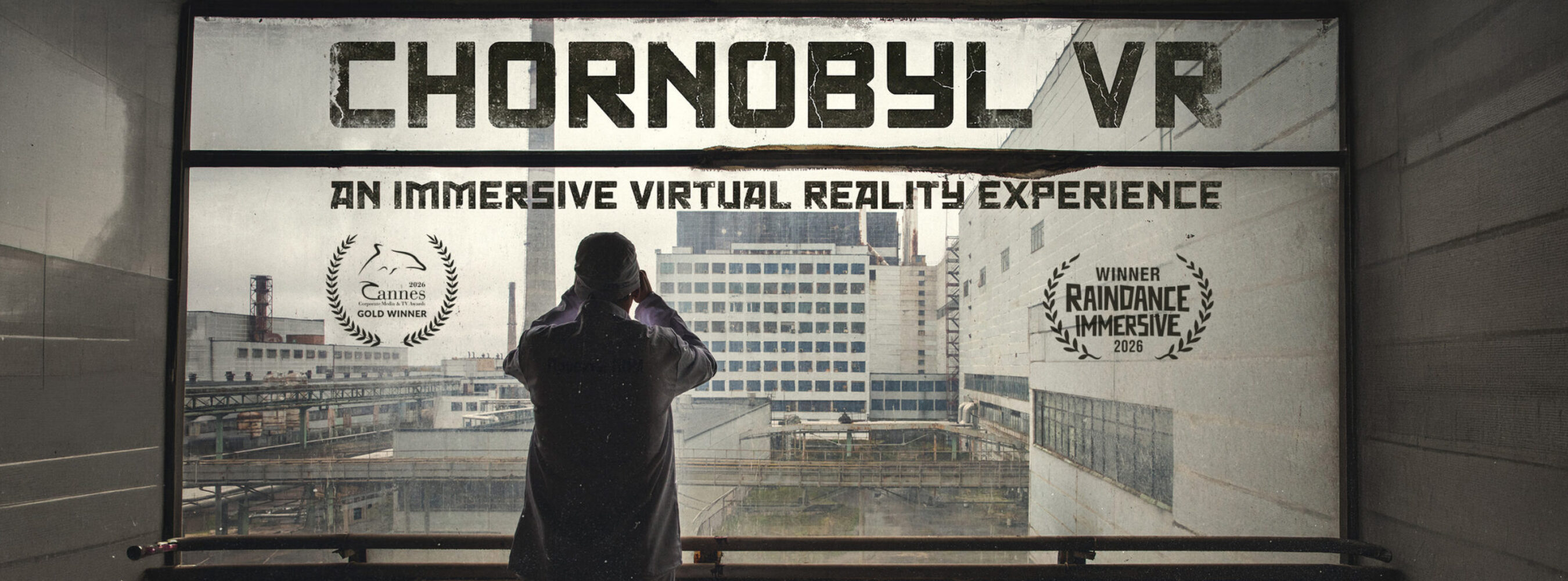
Chornobyl: 360 Inside the New Safe Confinement
A 360 VR film for the EBRD, marking the 40th anniversary of the disaster
Forty years on from the world’s worst nuclear accident, the structure built to contain it is failing. In February 2025, an Iranian-designed Shahed drone tore a 15 square metre hole through the New Safe Confinement – the €1.5bn steel arch covering the ruins of Reactor 4. The European Bank for Reconstruction and Development now needs more than €500m to put it right. We were commissioned to take stakeholders inside the damaged dome – in 360 – to make the case in a way no photograph or report ever could.
The Challenge
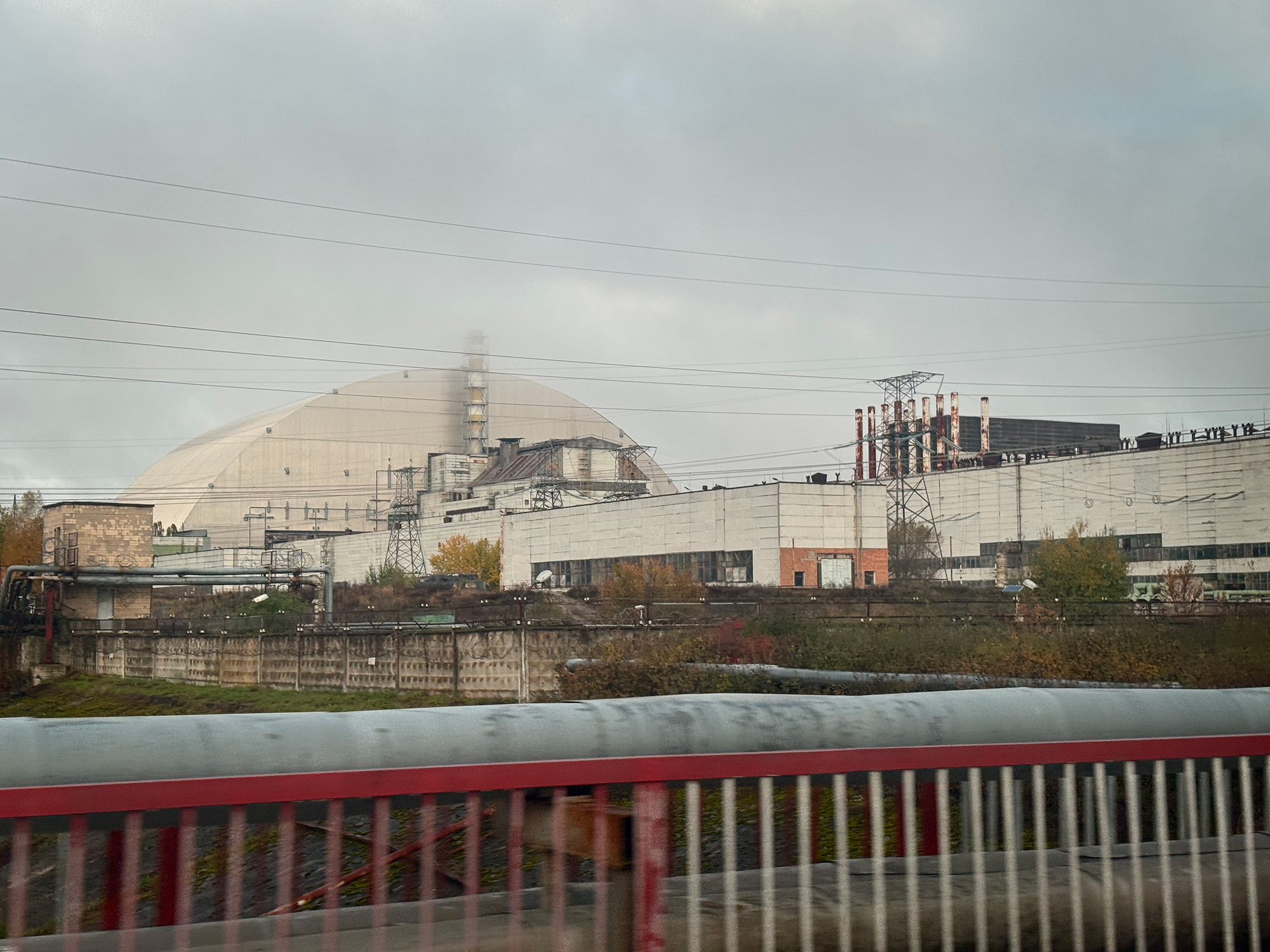
The EBRD has led international efforts to make Chornobyl safe since 1997. Their flagship project, the New Safe Confinement, was the largest land-based moveable structure ever built – tall enough to house the Statue of Liberty, three times the weight of the Eiffel Tower. It was designed to last a century. It lasted six years before a Russian drone strike compromised it.
Now the Bank needs to raise more than €500m to repair the arch, restore its ventilation system, and prevent corrosion that experts say could set in by the end of the decade. The donors who fund this work – governments, multilaterals, philanthropists – are scattered across Europe and beyond. None of them can visit the site. And almost none of them grasp the scale of what is at stake from a press release alone.
Our brief: produce a 360 VR film that could transport those decision-makers to the heart of the exclusion zone, into the control rooms, up onto the damaged arch, and into the shadow of the sarcophagus beneath. A film that could be deployed in headsets at fundraising events, board meetings and ministerial briefings, and turn the abstract into the unmistakable.
The Solution
We worked with the EBRD’s video team, led by presenter and director Jonathan Wells, to develop a 360 documentary that moves between three time periods: the night of 26 April 1986, the decades of containment that followed, and the urgent present-day crisis. The film is built around two pieces of eyewitness testimony – Natalia, who was evacuated from Pripyat aged 24 with a nine-month-old baby, and Viktor, a current shift supervisor at the plant – and a series of unprecedented 360 captures of locations almost no one has ever filmed in this format.
The shoot took place over a tightly scheduled production block in 2025, with our crew flying into Lublin in eastern Poland and crossing the border into Ukraine in B7 armoured vehicles, escorted by a security detail of off-duty frontline soldiers on R&R. The hotel we stayed at on the way had a bunker beneath it – a condition of our insurance. Russian missiles and Shahed drones bound for Kyiv routinely passed overhead, and the alerts came at all hours. By the final nights, we had simply moved our beds onto the basement floor.
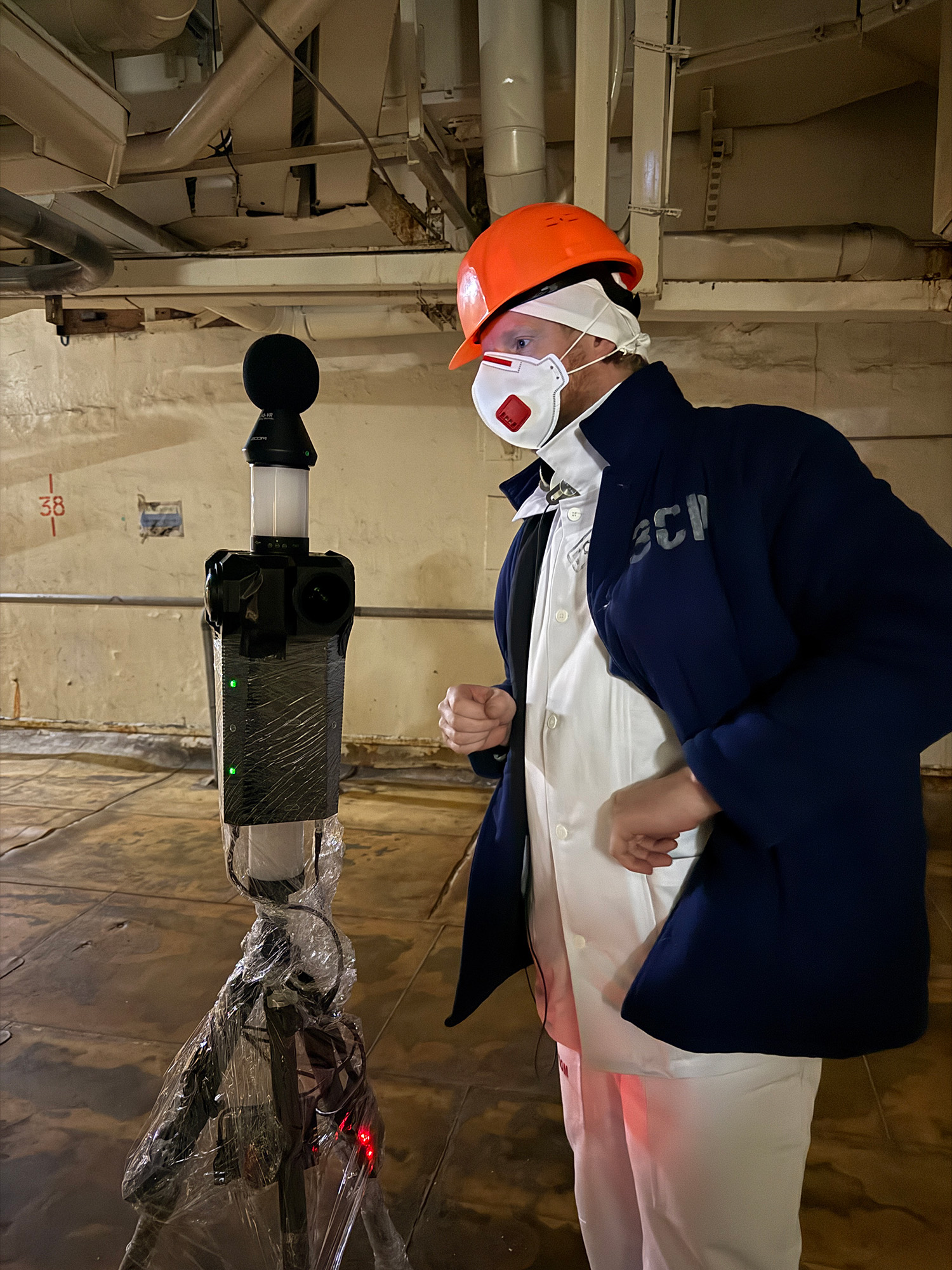
Henry Stuart filming with the Meta Three in Reactor Hall 3
Inside the Exclusion Zone
Chornobyl is now a heavily militarised site. On arrival you are issued with a personal dosimeter to log your radiation dose, and a guide with a Geiger counter follows you everywhere – empowered to confiscate any piece of kit that reads above the threshold. Cameras, tripods, audio kit and cables were all wrapped in clingfilm in advance to limit contamination. Everything is checked again on the way out.
Production wardrobe was prescribed by the plant: white cotton base layers, a second white coverall on top, then a heavy blue Soviet-era woollen jacket and helmet. The corridors that led to the upper reactor halls were rickety, the wall tiles loose underfoot, the dosimeters chirping a little louder with every level we climbed. Around two thousand people still work at the plant – decommissioning the remaining reactors, managing nuclear waste, and now maintaining the damaged arch.
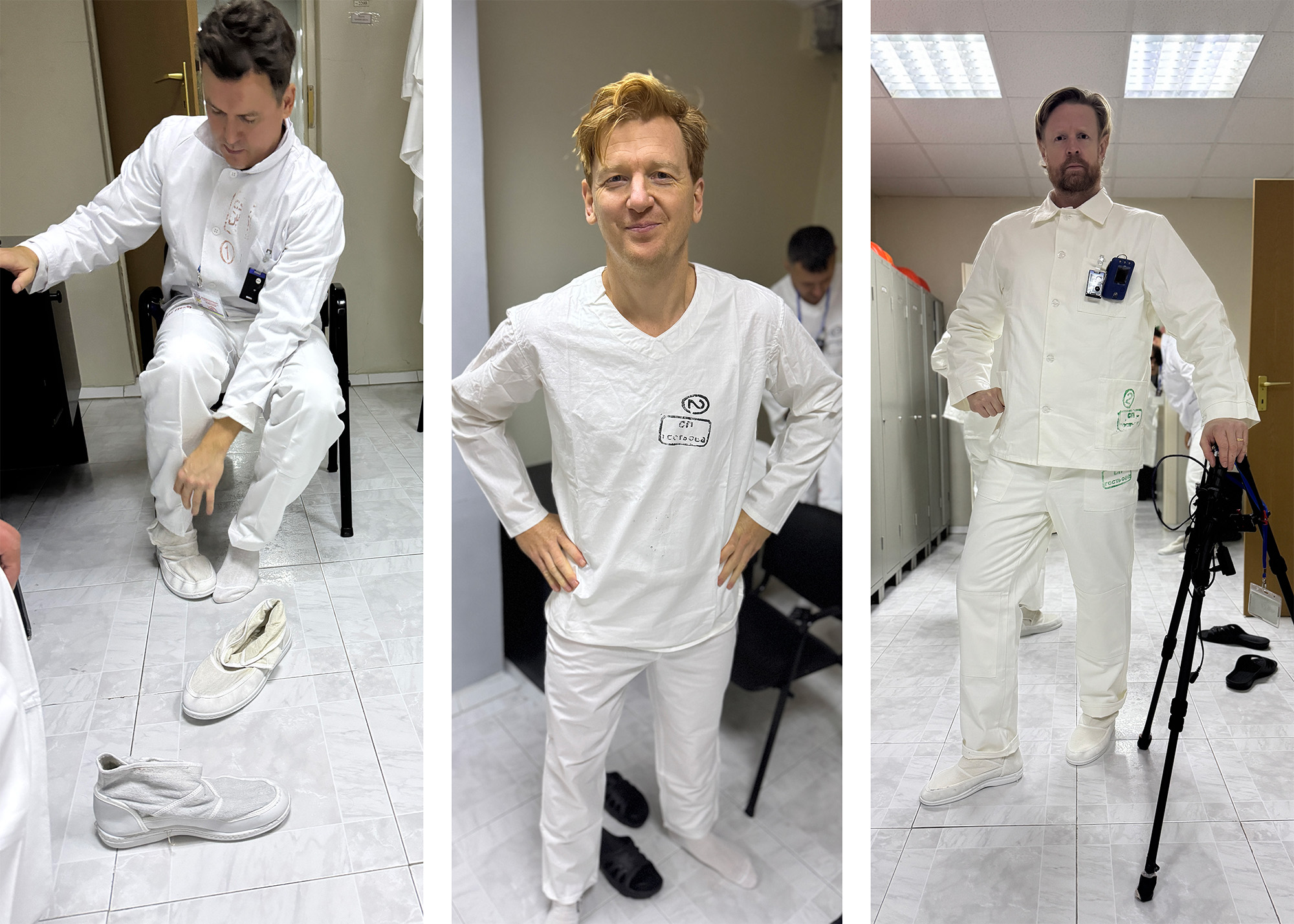
Chris West, Jonathan Wells and Henry Stuart
The Control Room, Frozen in Time
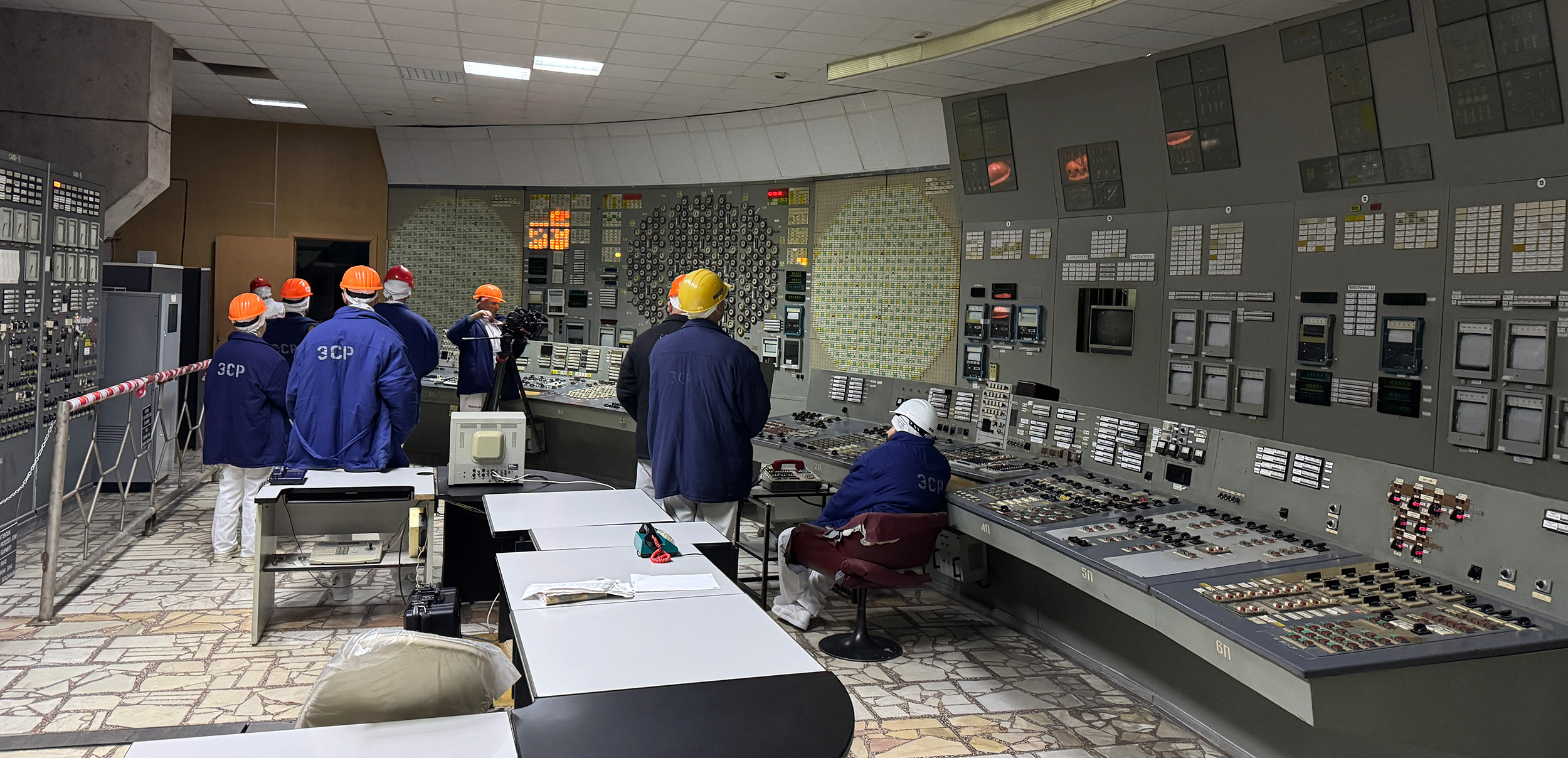
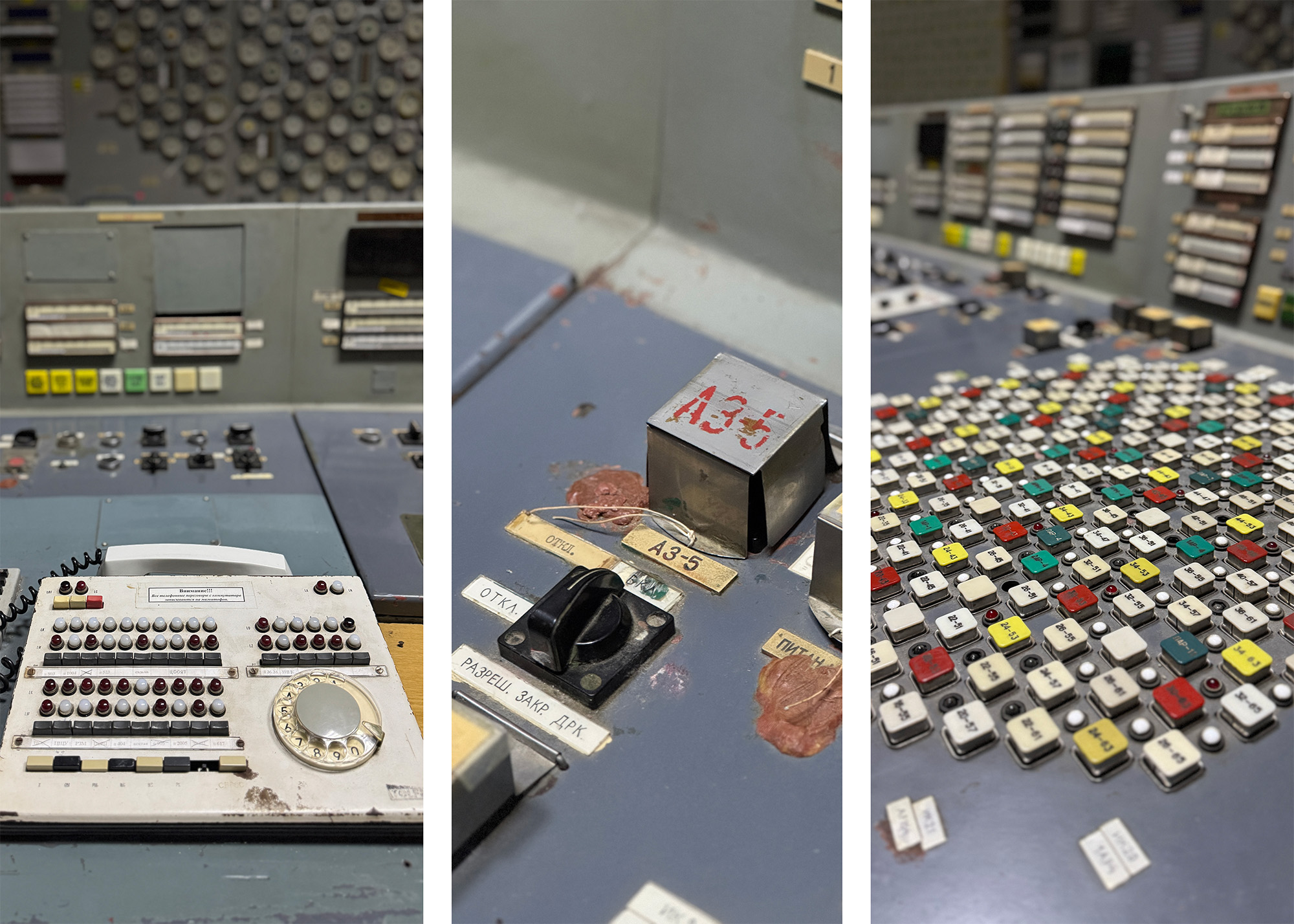
One of the most affecting captures in the film is inside the control room of Unit 3 – identical to Unit 4 where the disaster began, but accessible to film. The phones still have rotary dials. Old radios pump out faint music. Ashtrays sit on the panels. The AZ-5 button – the emergency shutdown that should have made Unit 4 safe and instead triggered the chain reaction – sits exactly where it was on the night of 26 April 1986.
360 is uniquely suited to this kind of space. It does not crop or compose; it gives the viewer the room as it actually is. Stood in the middle of that control room with a headset on, donors and decision-makers can read the dials, look up at the ceiling, turn 180 degrees and see the desk where the shift supervisor stood. It collapses the distance between Brussels boardroom and Soviet shift floor in a way nothing else can.
“This isn't a 'Ukrainian problem'. It is a continental threat that is being ignored.”
Serhii Tarakanov, General Director, Chornobyl NPP
Inside the Damaged Dome
The New Safe Confinement is an active building. Its outer and inner shells form a pressurised double-membrane designed to keep relative humidity below 40 per cent in the annular space between them – the technical safeguard that stops corrosion and contains radioactive dust. The Shahed strike in February 2025 punched through the outer cladding, ignited a fire that smouldered for 17 days, and disabled the ventilation system that keeps the whole assembly working. Without repairs, officials warn, structural corrosion will set in within four years.
We took a 360 camera into the upper reaches of the arch, with experts on hand to talk through the damage. The result is a sequence that shows the scale of the problem from the inside – not as a graphic or an animation, but as the room itself.
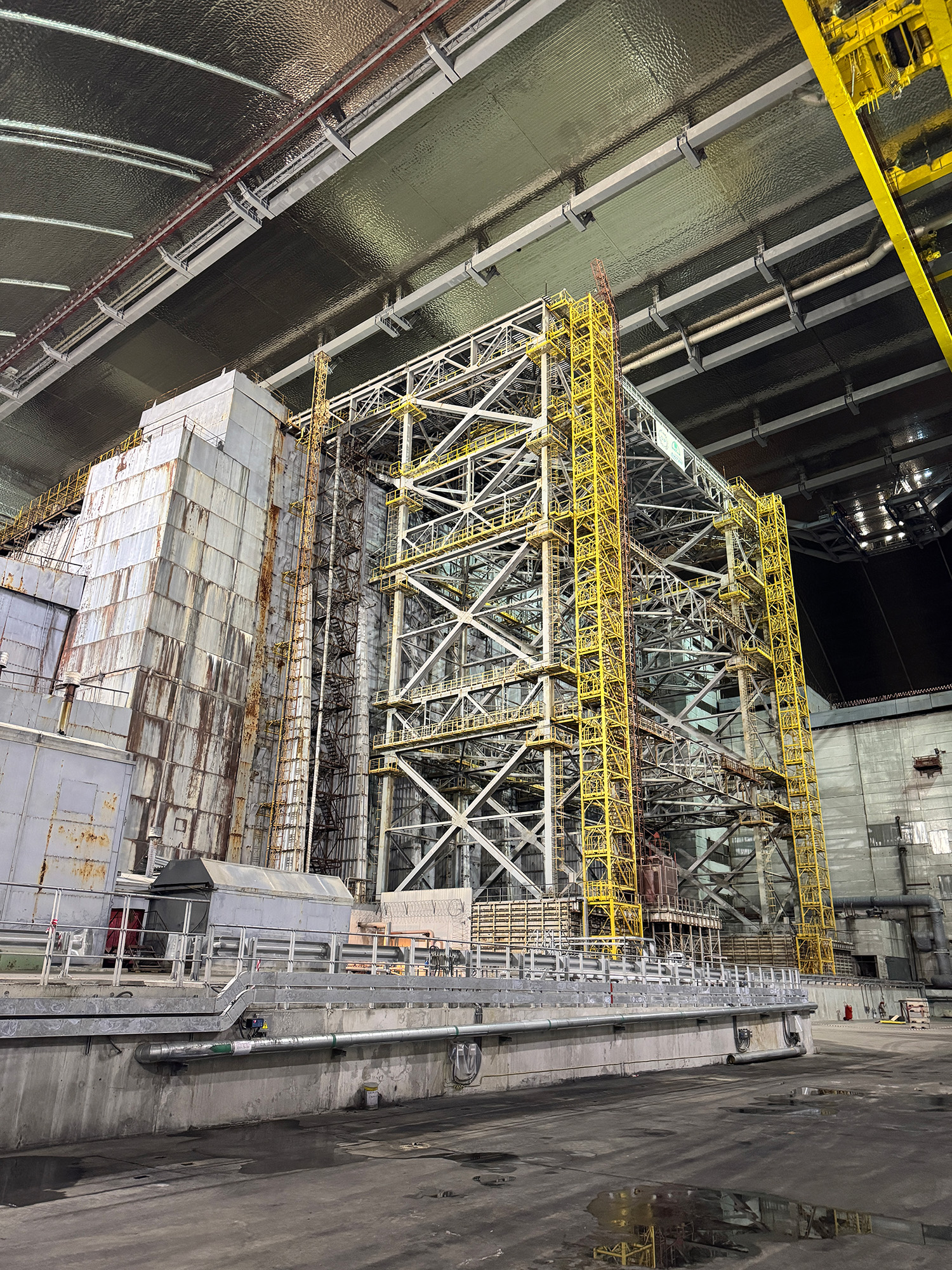
Inside the NSC, in front of the 'sarcophagus'
Pripyat, and Natalia’s Story
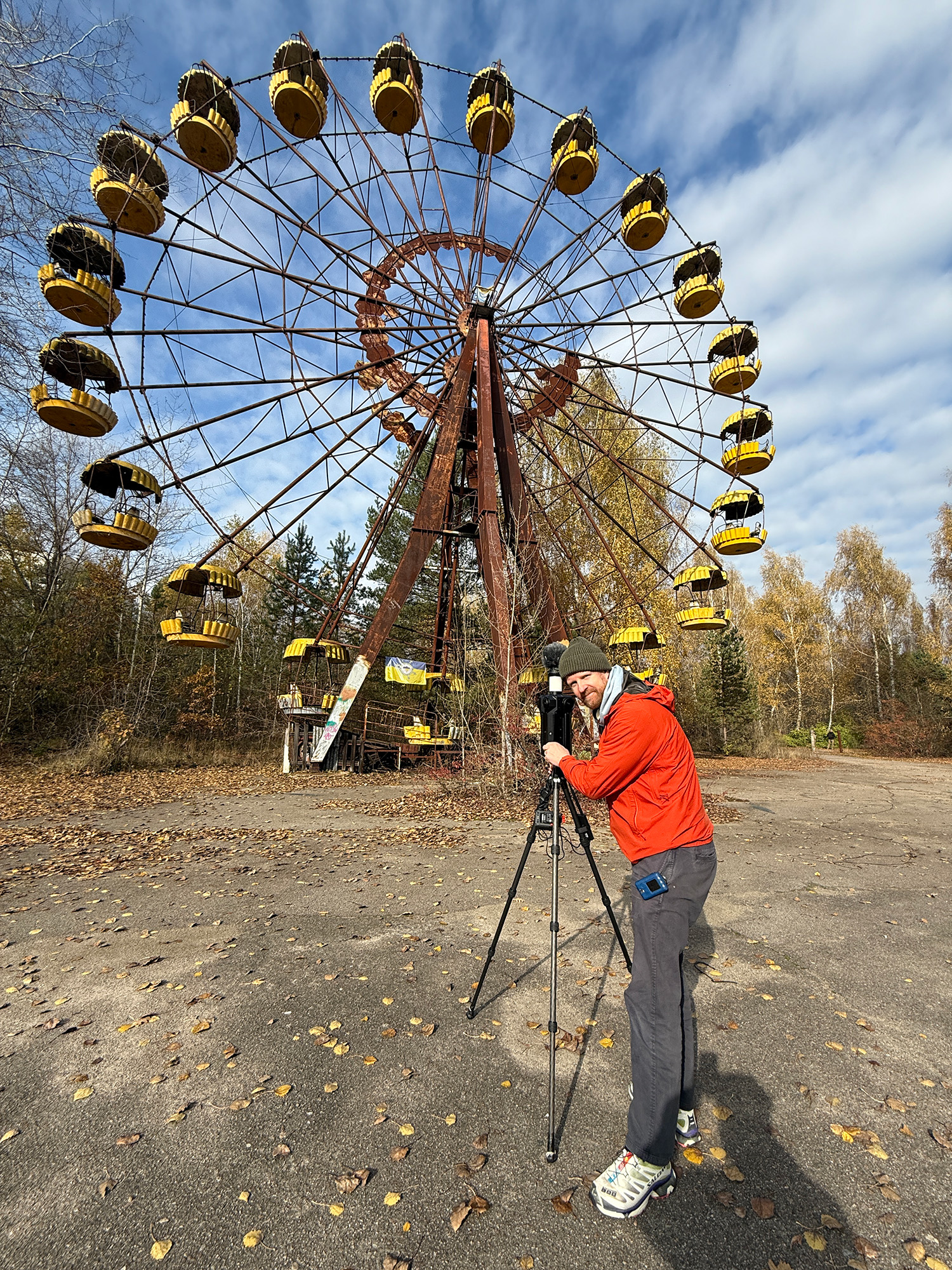
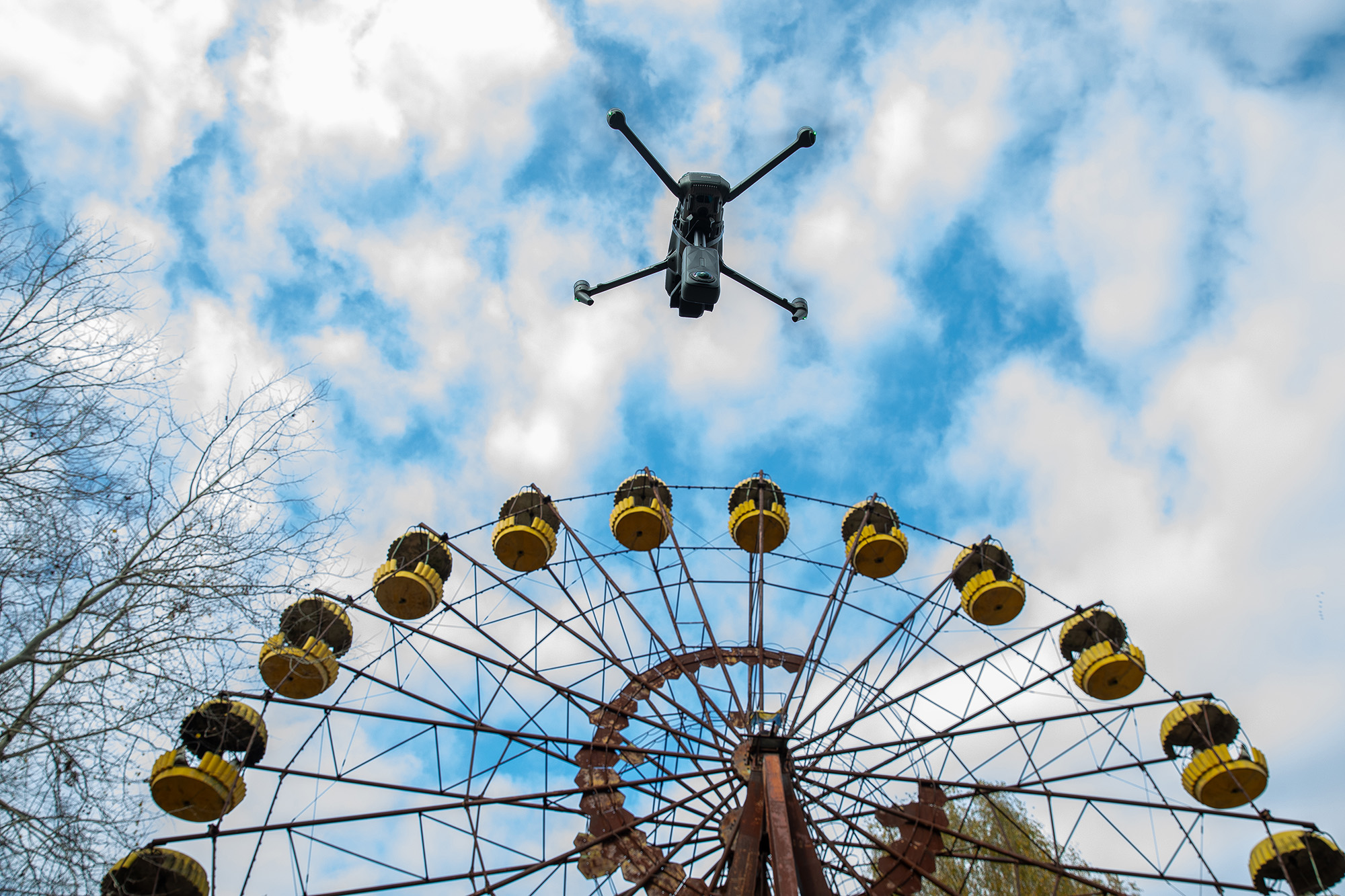
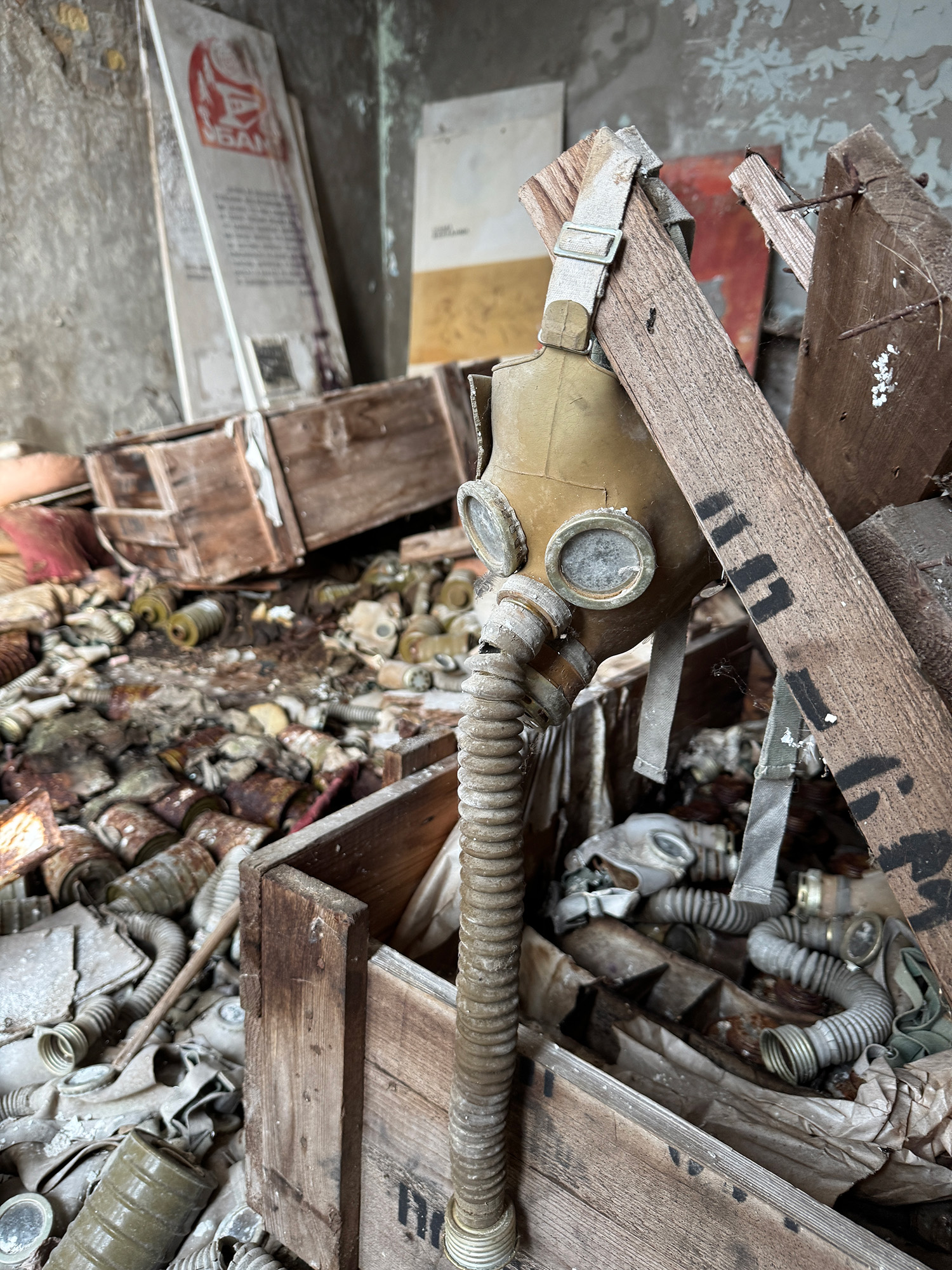
Around the plant is the 30km exclusion zone, and at its centre is Pripyat – the town built for the workers, evacuated 36 hours after the disaster, never reoccupied. We had it almost entirely to ourselves. Before the 2022 invasion it was a tourism site; today it is military territory. We captured the iconic Ferris wheel, the swimming pool, the school, the abandoned classrooms with books still open on the desks. It is a museum on a scale you simply cannot find anywhere else.
The emotional centre of the film is Natalia, who was 24 with a nine-month-old baby when the buses arrived. She was told she would be back in three days. She never was. Her interview, recorded for the film, sits alongside the original Soviet evacuation announcement, recreated in Ukrainian and bleeding into English.
Aerial Captures Over a Closed Airspace
Ukrainian airspace is largely closed to drones, but we secured rare permission to fly over the plant and Pripyat. Conditions made the bigger Meta cameras too risky, so we mounted Insta360 X5 rigs on smaller DJI Mavics and flew light. On most flights the connection would drop and the drone would freeze in mid-air before reconnecting. On the final flight, going for a shot of shipwrecks in a nearby lake, control was lost completely – the aircraft accelerated away at full speed and was never recovered. Most of the footage made it back; the drone did not.
The Result
The finished 360 film runs to around 7 minutes. It will be deployed by the EBRD via a dedicated VR app, ready to demo from a headset at events, donor briefings and the Bank’s annual meeting. A non-immersive cut will accompany the campaign for press and broadcast. The 360 will also be featured on YouTube, where the equirectangular projection allows viewers to drag and explore in 360 from a browser.
The film launches around the 40th anniversary of the disaster on 26 April 2026. The hope is straightforward: that putting decision-makers inside Chornobyl – even for ten minutes – makes the €500m repair bill feel like an urgent necessity.
“There's no better medium for this than VR. You can put the headset on and transport someone right into the heart of some of the most damaged areas of the power station.”
Henry Stuart, Founder, Visualise
Credits:
Client: European Bank for Reconstruction and Development (EBRD). Presenter / Director (EBRD): Jonathan Wells. Production: Visualise. Director: Henry Stuart. Post-Production: Jack Oestergaard-Churchill. Audio: Henrik Oppermann. With contributions from Natalia (evacuee, Pripyat 1986) and Viktor (shift supervisor, Chornobyl NPP). Field security via local frontline detail. Aerial captures by special permission of the Ukrainian authorities.