

Shooting 360 in a war zone: notes from inside Chornobyl
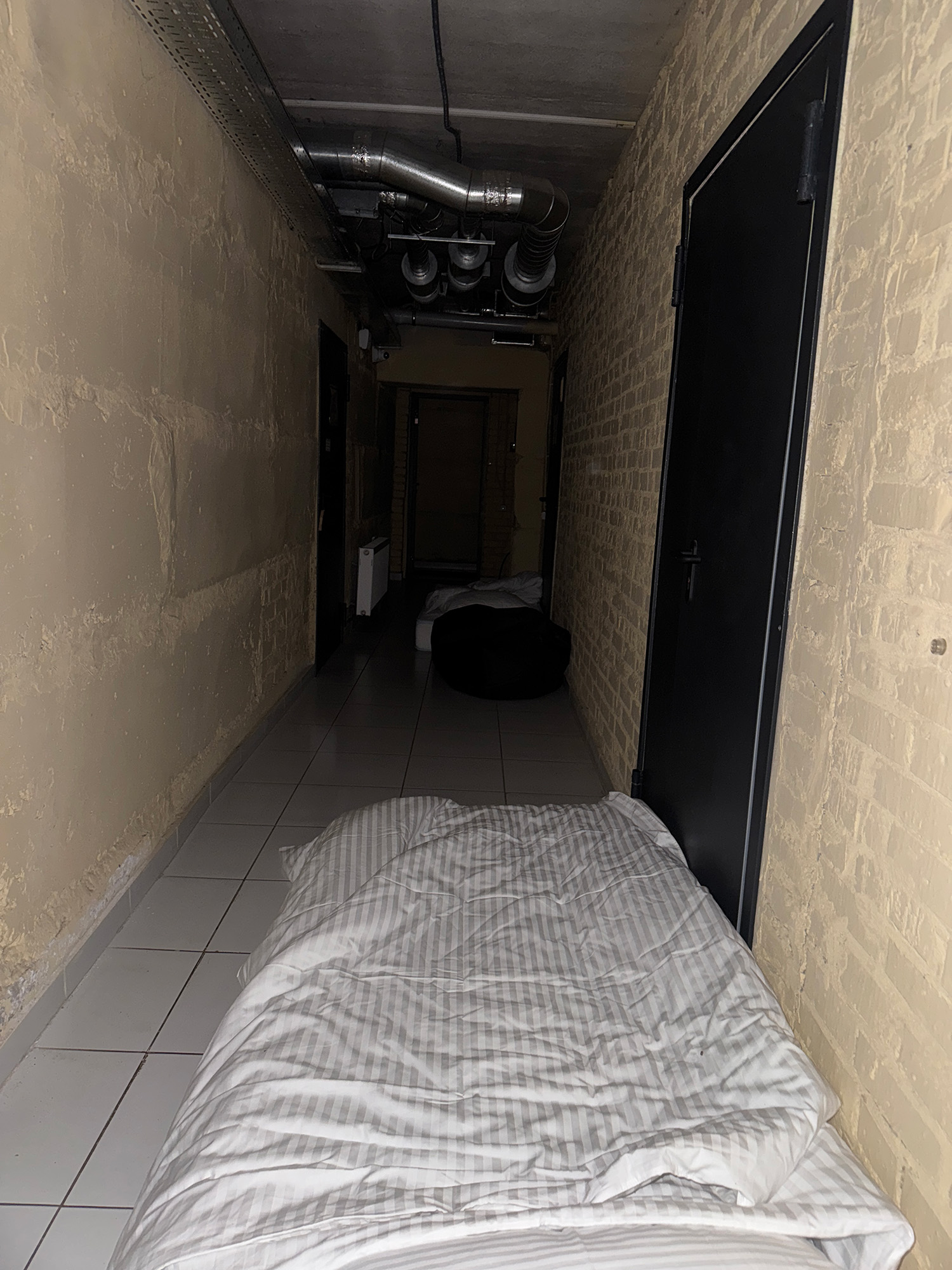
Our corridor/bedroom outside the exclusion zone
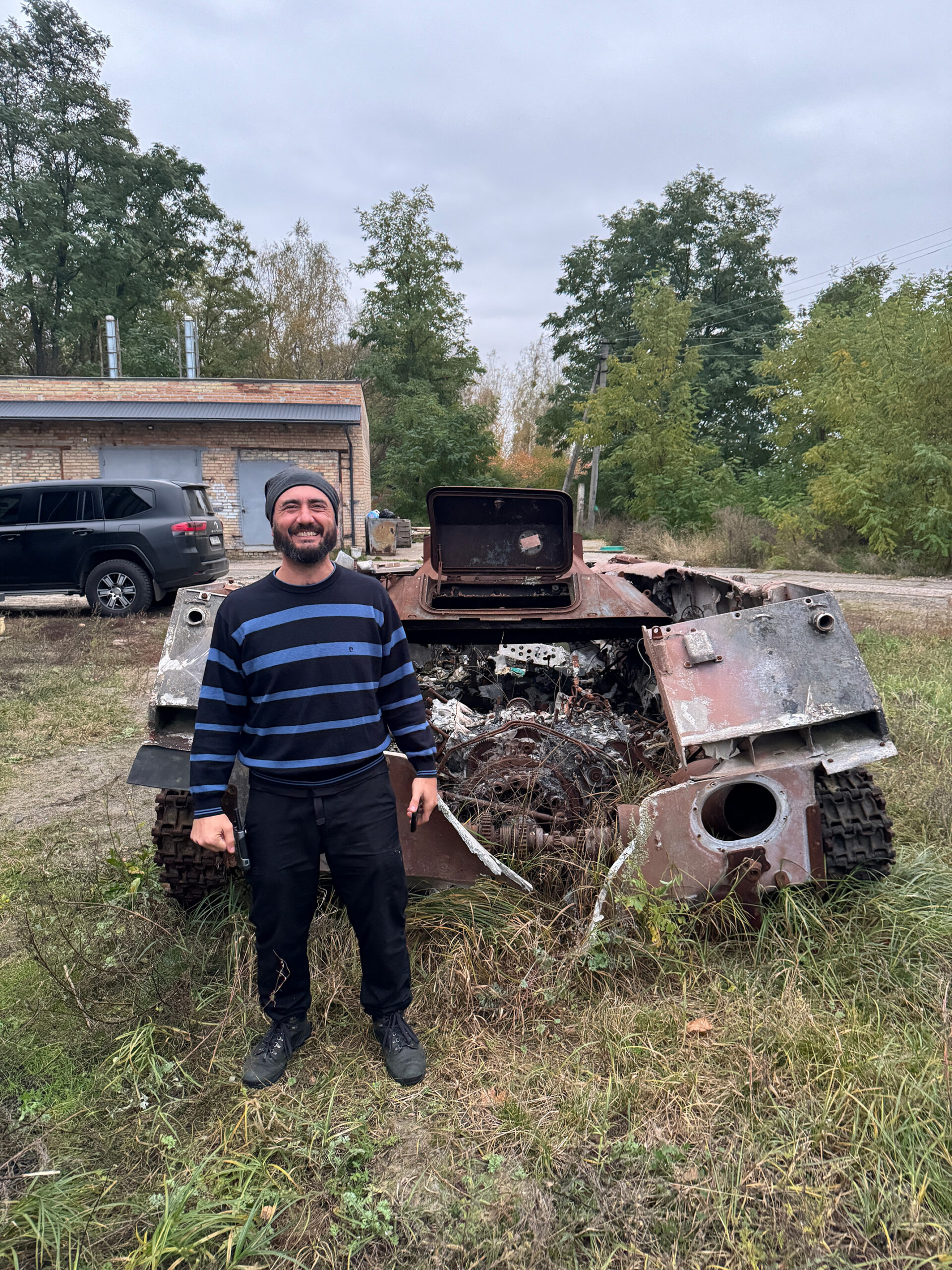
Nikko, the photographer in front of a Russian tank
Why Chornobyl, and why now
The work was for the European Bank for Reconstruction and Development. The EBRD has led the international effort to make Chornobyl safe since 1997. Their flagship project there is the New Safe Confinement, the giant steel arch that slid into place over the ruins of Reactor 4 in 2019. It cost €1.5bn, weighs three times as much as the Eiffel Tower, is tall enough to house the Statue of Liberty, and was designed to last a hundred years.
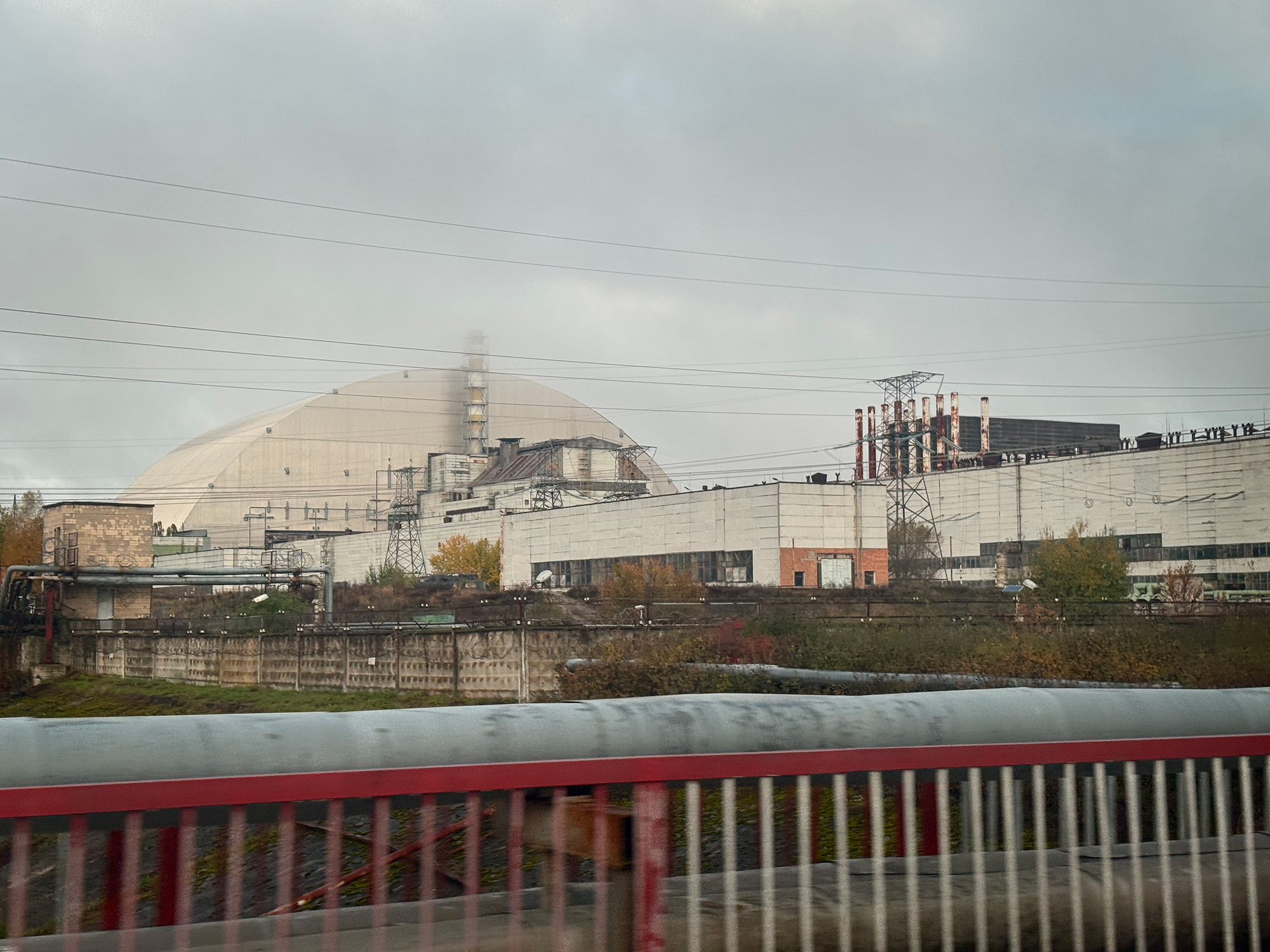
In February 2025 a Russian Shahed drone, flying at 85m to dodge radar, punched a fifteen square metre hole through it. The fire smouldered for seventeen days. The pressurised double-membrane that keeps radioactive dust contained and corrosion at bay was disabled. Without significant repairs, officials warn corrosion will set in by the end of the decade. The EBRD now needs to raise more than €500m to put it right.
The job, then, was straightforward to brief and almost impossibly hard to execute: produce a 360 VR film that would let donors and decision-makers see the damage, the site, and the human story for themselves, from the safety of a headset in a boardroom in Brussels or London or Tokyo. Without VR, none of these people would ever go. With VR, you can stand them in the middle of the control room of Reactor 3, identical to Unit 4 which exploded, and let them turn around and look.
That was the prize. Now we just had to get there.
Crossing the border in B7s
We flew into Lublin in eastern Poland and were picked up by armoured B7 vehicles – heavy, square, intimidating SUVs with thick glass that the security firm runs out of the back of nowhere. The drivers were frontline soldiers on R&R, doing crew transfer runs to make a bit of extra money. They were quick, professional, and very direct about what we were and were not allowed to photograph at any point on the route. We crossed into Ukraine and drove north toward the exclusion zone, which is now an entirely military area. There is no such thing as a tourist in Chornobyl in 2026.
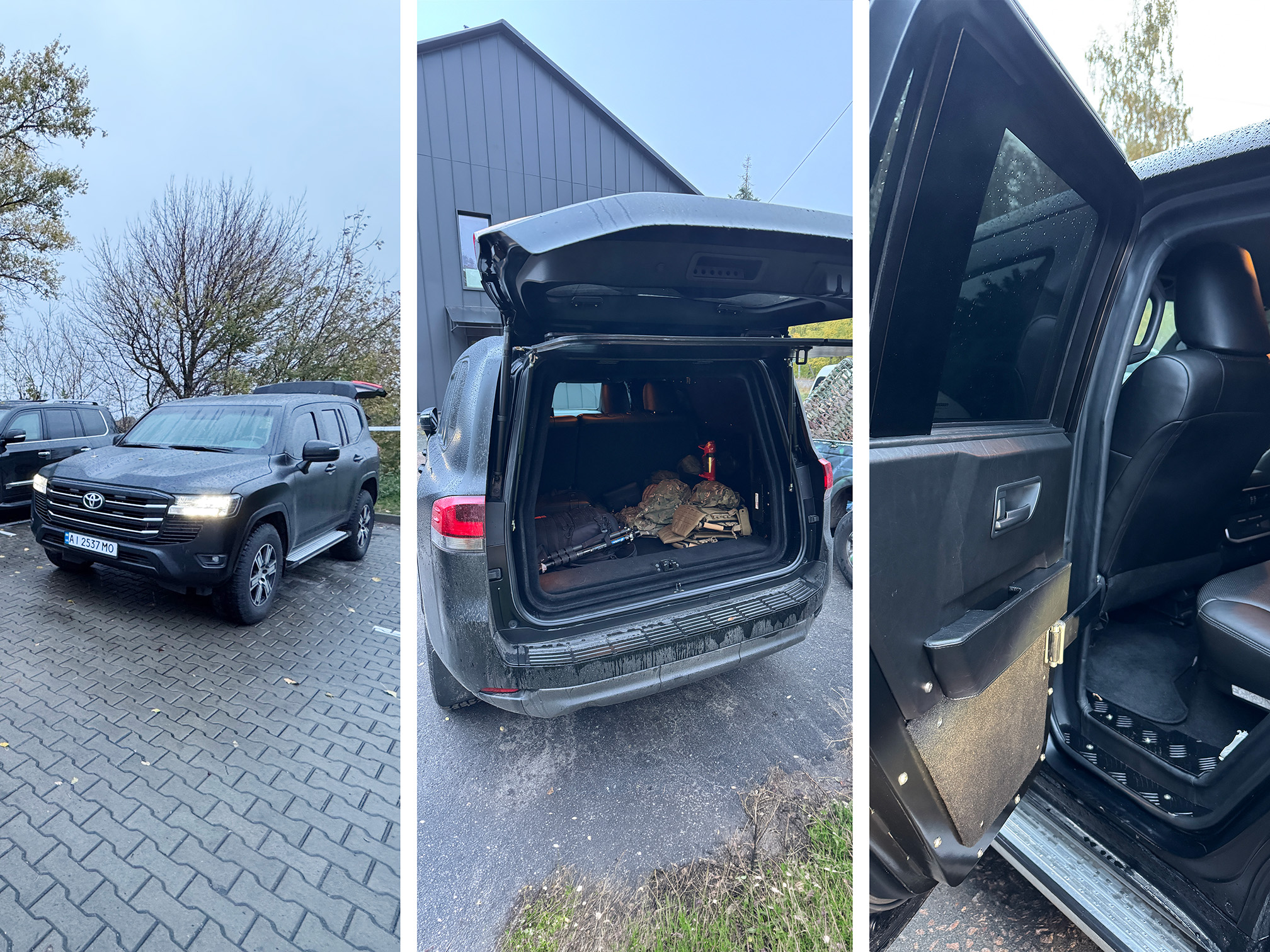
Our B7 Armoured Vehicle
The border itself is the part of the journey that takes longest. There is a lot of paperwork, a lot of waiting, and there is a real sense, the further in you go, that you have crossed into something that operates by different rules. We had a 16:9 broadcast crew with us for the standard cuts of the film, plus all of our 360 kit – large Meta cameras, Insta360 X5s for aerials, audio packs, tripods, tools, spares. Everything had to be inventoried for both ends of the trip.
On site: clingfilm, dosimeters, and the man with the Geiger counter
When you arrive at the plant you check in, you change clothes, and you get a personal dosimeter. The dosimeter is a small black box that beeps faster as the local dose goes up. You wear it for the entire shift. If your reading at the end of the day exceeds the threshold, you get rotated out for a while.
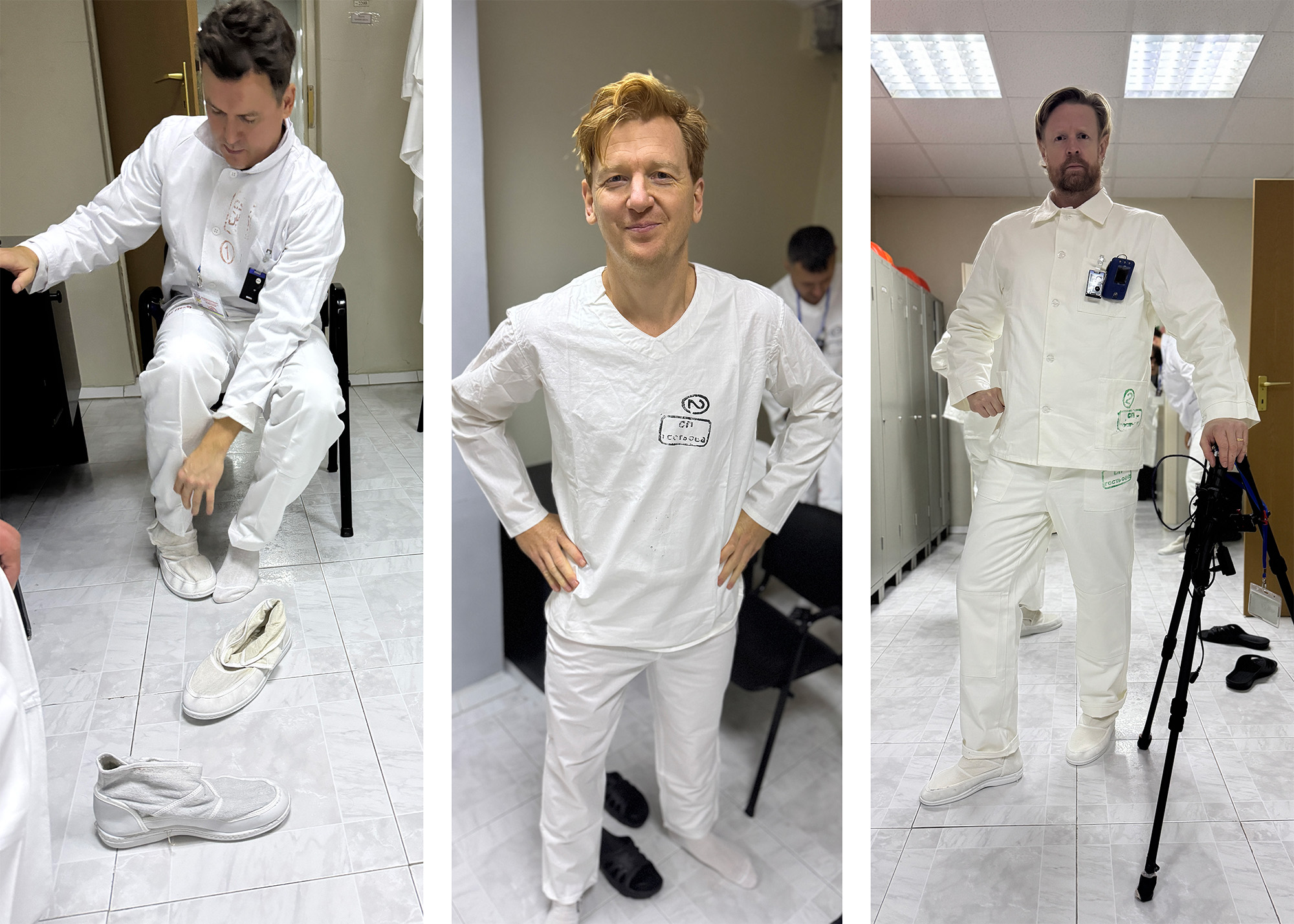
Chris West, Jonathan Wells and Henry Stuart
You also get a guide. Every visiting crew is followed at all times by a man with a Geiger counter, and he is empowered to confiscate any piece of kit that reads above the limit. This is a real constraint when your job is to put a tripod on the ground inside an actively contaminated environment. So before we started filming we wrapped every camera body, every tripod leg, every cable, every audio bag in clingfilm. We looked ridiculous. The kit looked like it had been packed for a particularly cautious picnic. But it worked. At the end of the trip every piece of equipment came out with us. I had been quietly terrified about having to call my business partner to tell him we had left the Meta Camera behind because it was too hot to take home.
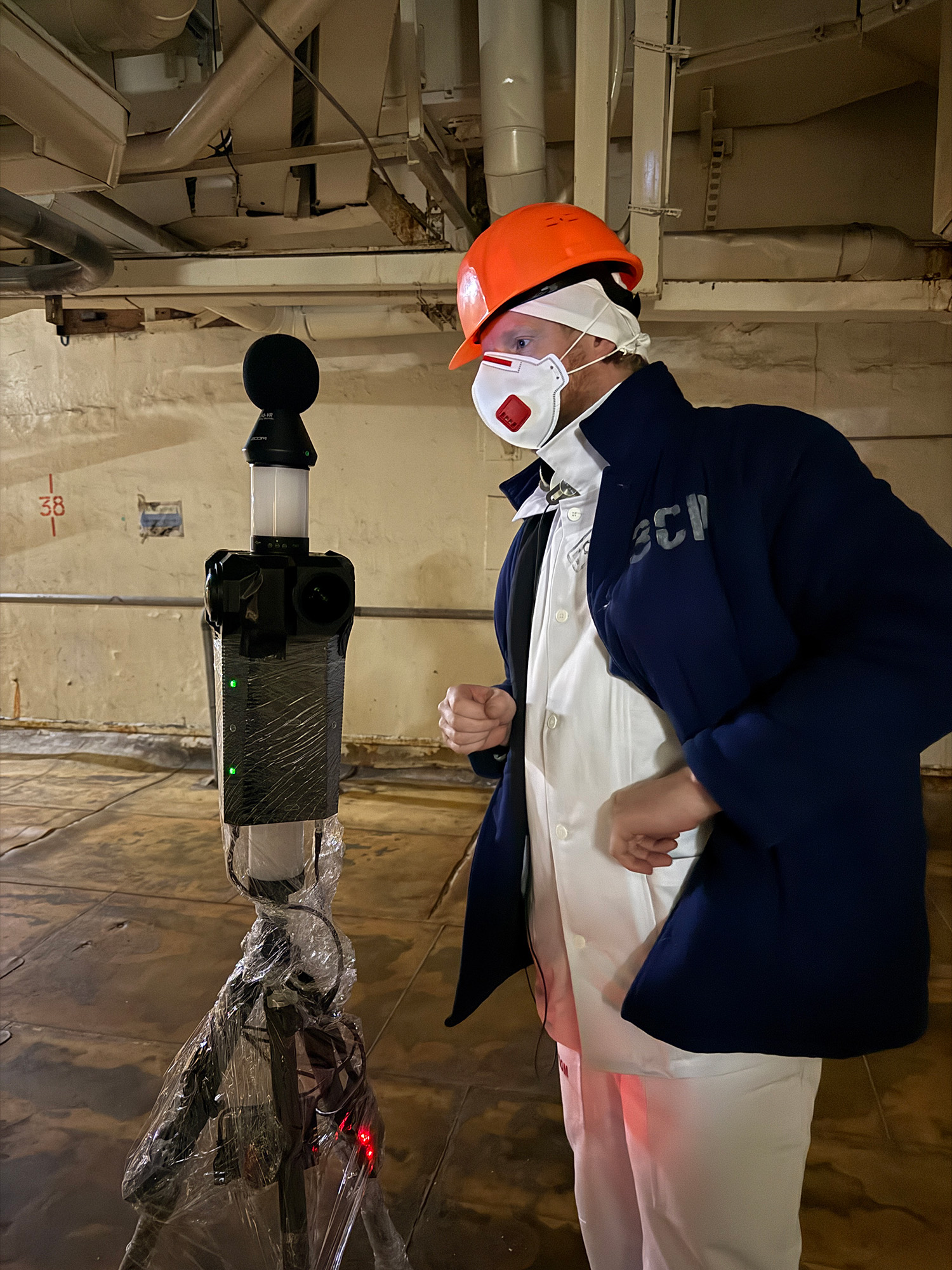
Henry Stuart filming with the Meta Three in Reactor Hall 3
The wardrobe routine is its own thing. You strip down to nothing, put on white cotton leggings and a vest, then a second white coverall over the top, then a heavy blue Soviet-era woollen jacket, then a hard hat. You repeat it in reverse on the way out. You repeat it again at the dosimeter station. You do this every time you go in and out of certain areas. Multiply that by a multi-day shoot and you have a real understanding of how layered the safety regime around this place still is, forty years on.
Filming inside the dome
The most technically demanding sequences were inside the New Safe Confinement itself. The arch is an active structure, not a museum piece, and the spaces inside it are working environments for the engineers who maintain it and the cranes that continue the painstaking work of dismantling the old sarcophagus beneath. We set up our 360 cameras both on the ground and in the upper reaches, with experts on hand to walk through the damage on camera. The footage is going to be one of the most powerful sequences in the film. The hole is real. The damage to the cladding is real. The fire scorching is real. In a flat 2D piece you would crop it and angle it. In 360 you cannot. The space is the space.
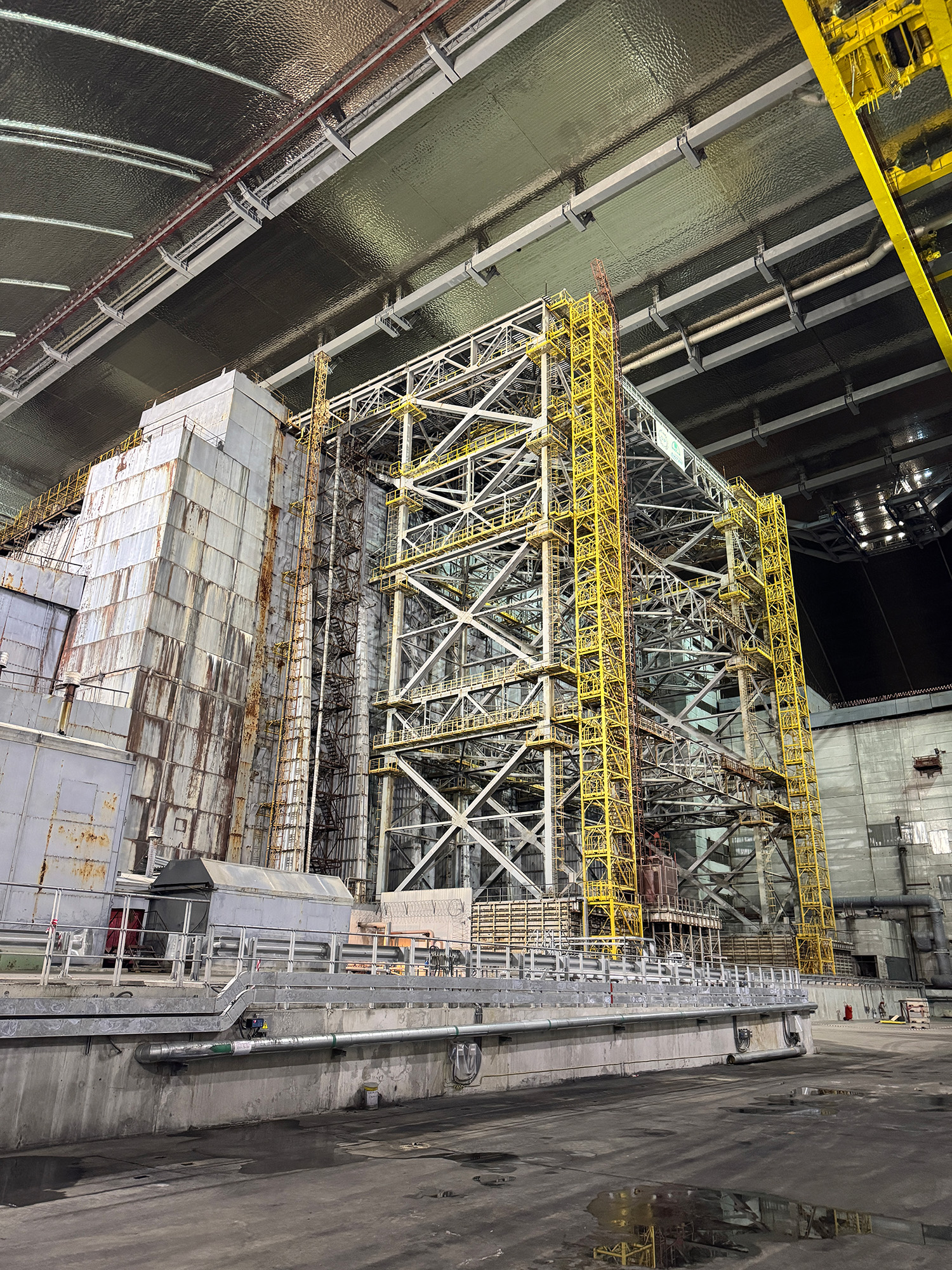
Inside the NSC, in front of the ‘sarcophagus’
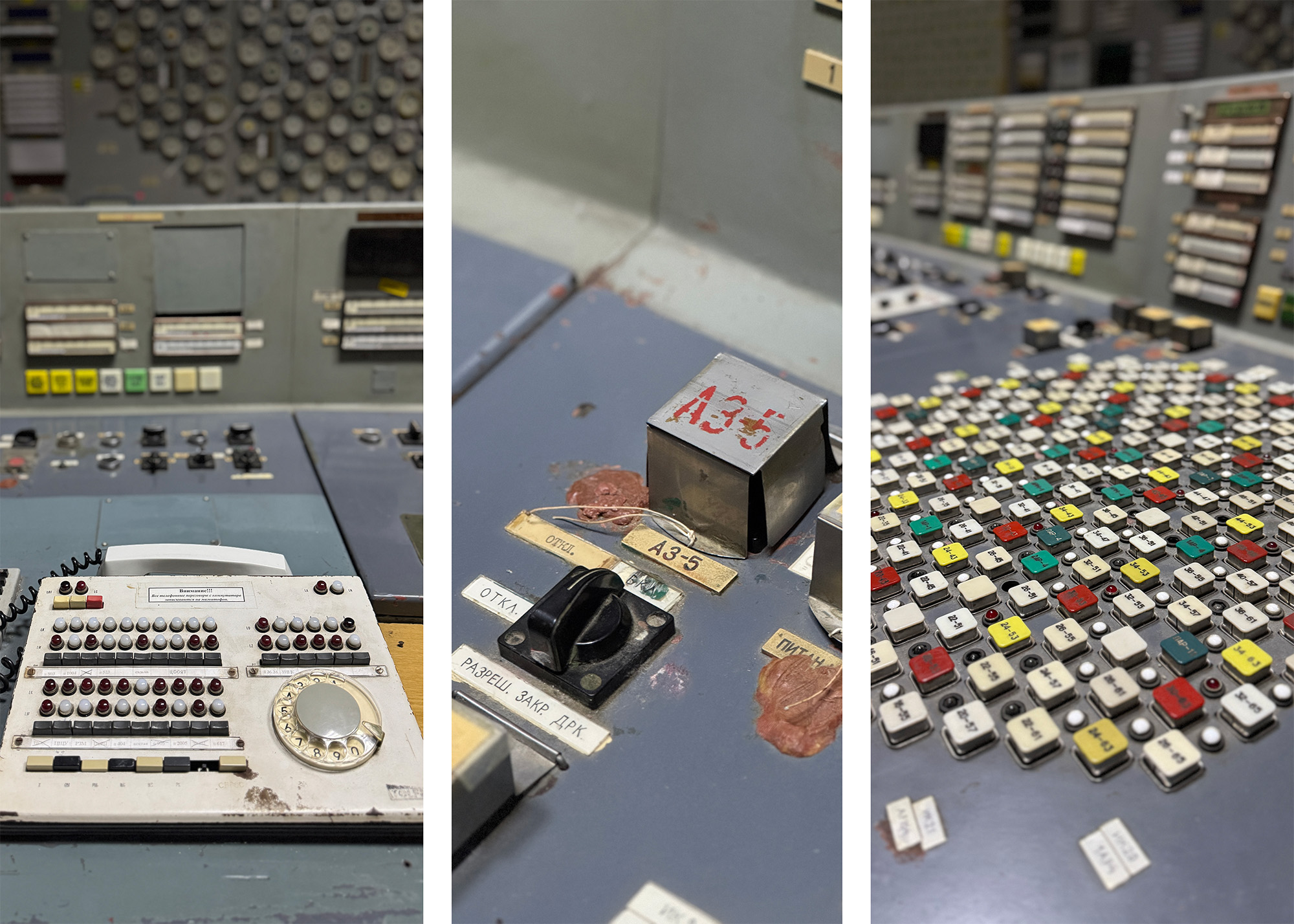
The same is true of the control room of Unit 3. Identical to Unit 4 in every detail, but accessible. The phones still have rotary dials. The radios still pump out faint music. There are ashtrays on the panels. The AZ-5 emergency-shutdown button – the one that, on the night of 26 April 1986, should have made everything safe and instead initiated the chain reaction – is exactly where it was that night. Filming there in 360 is a strange experience. You are not composing a shot, you are just witnessing a place. That is precisely what makes it so well suited to the medium and to the EBRD’s purpose with this film.
Aerials over closed airspace
Ukrainian airspace is largely closed to drones for obvious reasons. We secured rare permission to fly over the plant and over Pripyat, but with serious constraints. The bigger Meta Camera 360 rigs were too risky to send up – too much sensor, too much glass, too much value floating overhead in a contested sky. So we mounted Insta360 X5s on smaller DJI Mavics and went light.
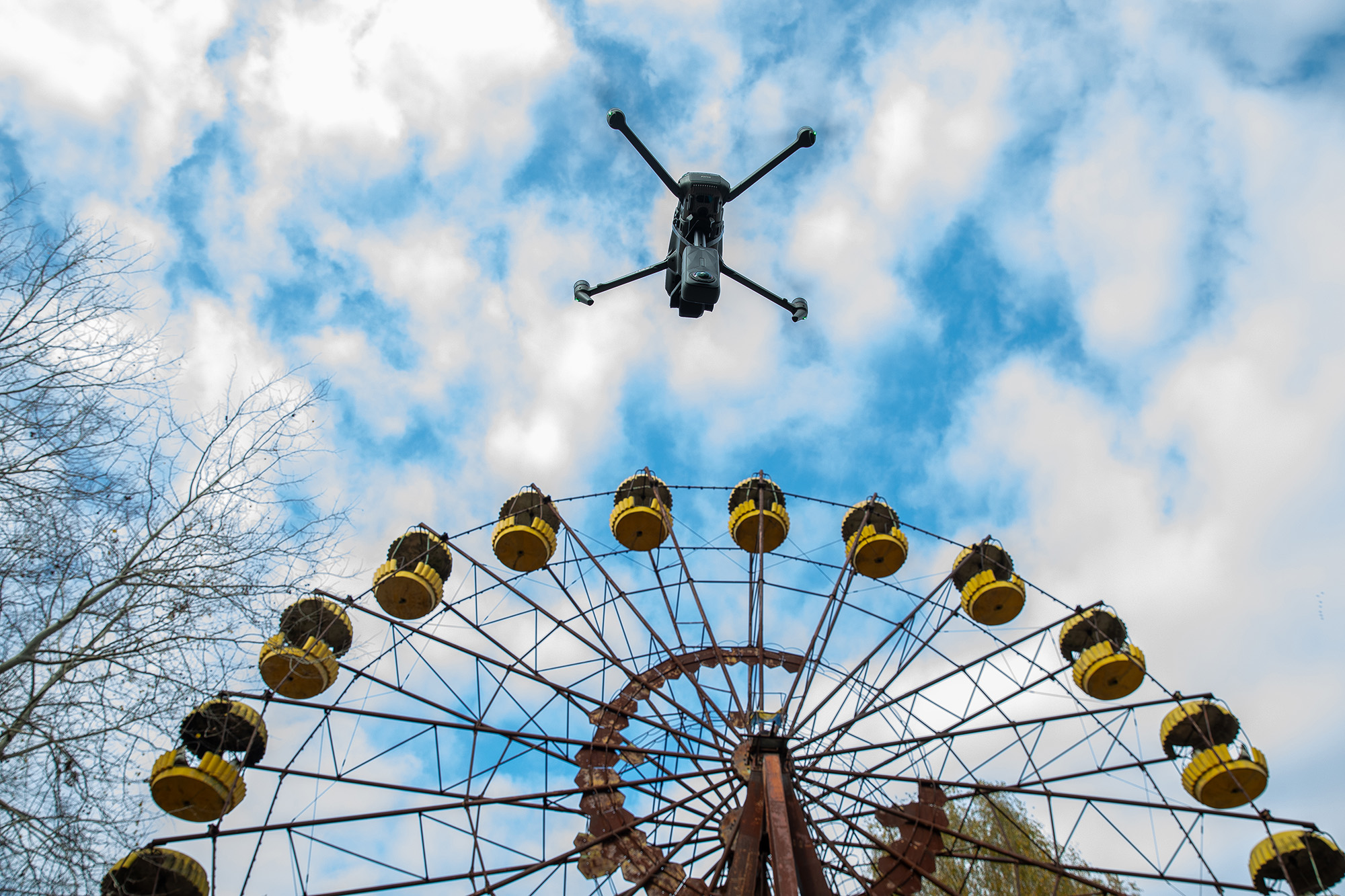
Coordination was a constant problem. There are friendly forces on the high ground around the site, and at any moment any one of them might be reacting to an alert, jamming a frequency, or doing something else entirely that affected our link to the drone. On most flights the drone would freeze in mid-air, the connection would drop for thirty seconds or a minute, and then control would come back. We learned to set up shots, pause, and wait it out.
On the last day of the shoot we tried to capture some shipwrecks in a lake near the plant. The drone took off, climbed, lost connection, and instead of hovering, it accelerated away at a speed I had never seen before. It must have hit one hundred miles an hour. We watched it disappear and never saw it again. We assume it was hijacked. That kind of loss is just part of the cost of operating in this environment.
Why it matters
It is easy to read all of this as adventure-shoot war stories, and think it’s all a lot of fun, to a degree it is. But the underlying point is more practical than that. Chornobyl is the textbook case for why VR exists as a medium.
Most of the donors the EBRD needs to convince – governments, multilaterals, philanthropic trusts, corporate CSR budgets – are never going to set foot in the exclusion zone. They are not allowed to. They cannot get permission, they cannot get insurance, and most importantly, they have neither the time nor the appetite to spend a week being driven around in armoured cars. So all that institutional fundraising is being done with PDFs and photographs and slides. It is being done at a distance from the thing itself.
Ten minutes in a headset shortcuts that distance. You stand where the engineers stand. You see the hole the drone made. You read the dials in Reactor 3. You hear the evacuation announcement playing out over the empty streets of Pripyat. And then you take the headset off and you write a different cheque from the one you would otherwise have written.
That is the only reason it is worth all the rest. The bunker nights, the clingfilm, the lost drone, the Soviet jacket and the constant low chatter of the Geiger counter. The film is a tool. The tool exists to move money toward a problem that radiation does not respect borders to solve.
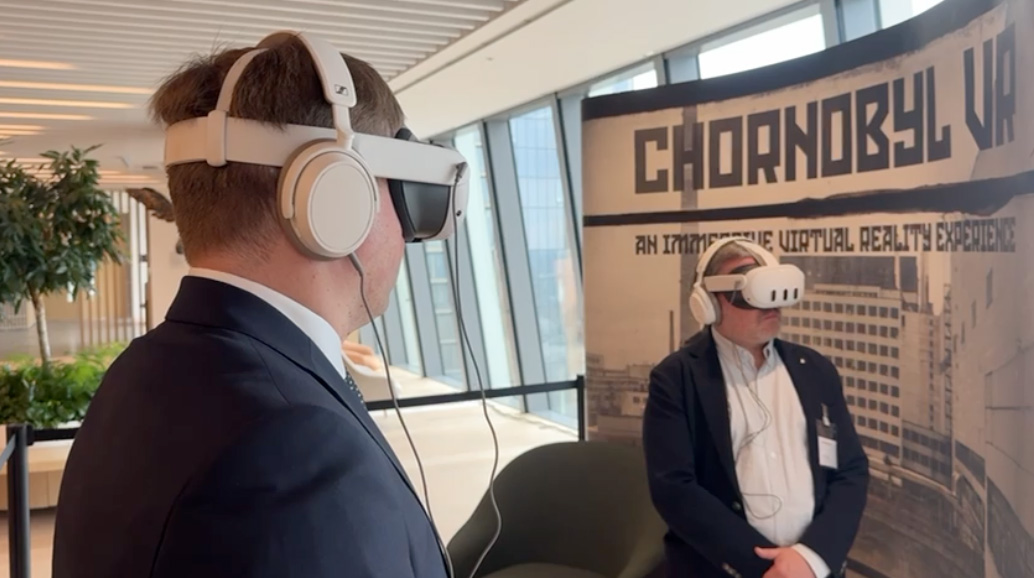
VR in use with the EBRD
What we have taken from it as a studio
A few practical takeaways for any team thinking about an immersive shoot in a hostile or restricted environment:
Plan for the fact that everything will take longer than it should. Border crossings, kit checks, wardrobe changes, escort coordination, weather, alerts. Build a schedule that has float in it, not one that is back-to-back from dawn to dusk. We over-planned and still lost most of one day to a security incident outside the zone.
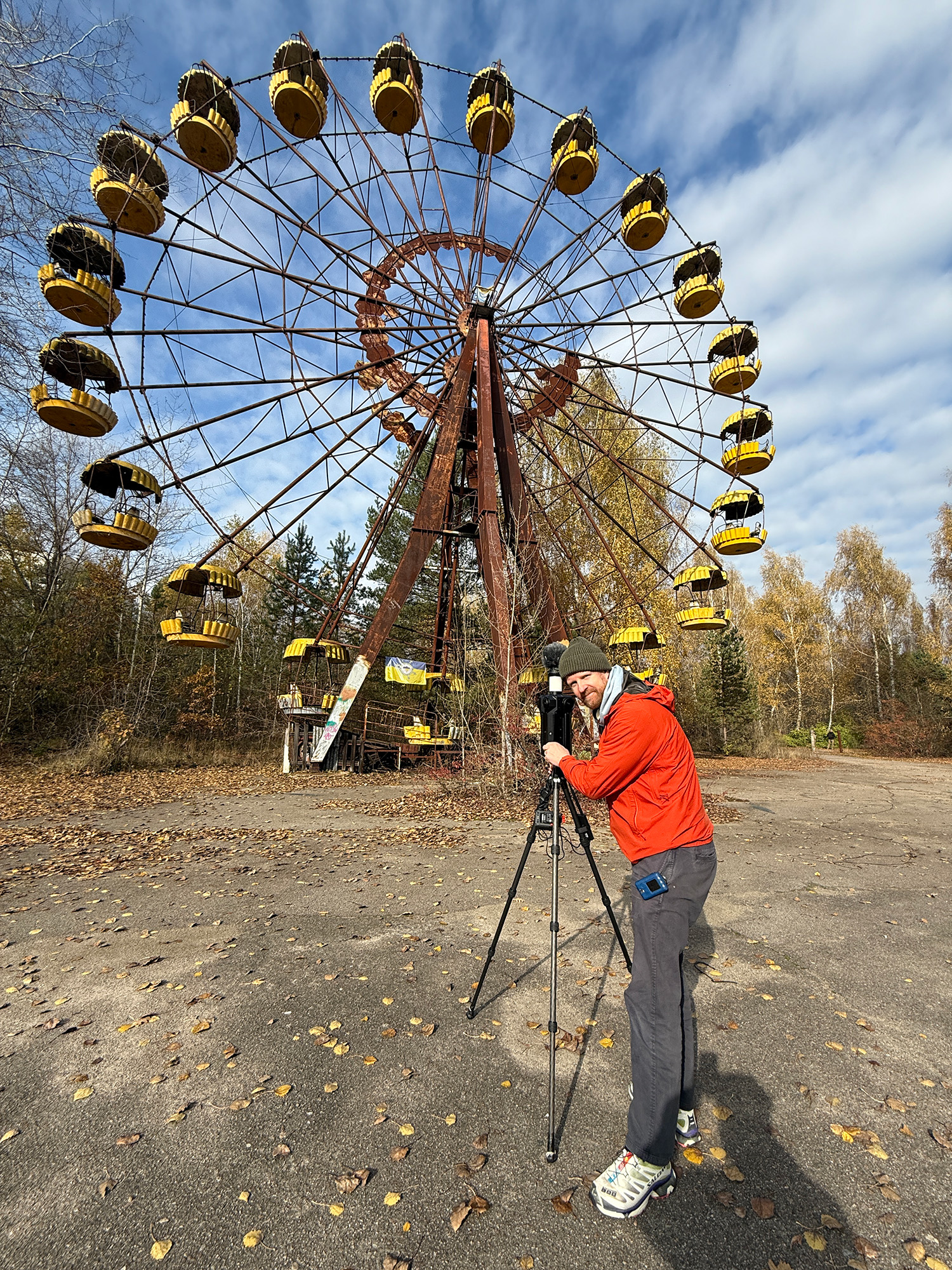
Wrap everything you can in protective material before you travel. Customs will hate you and the contamination guides will love you. The price of a roll of clingfilm is nothing compared to the price of leaving your hero camera in a quarantine bin in Ukraine.
Do not put your most expensive cameras on a drone in contested airspace. Pair down to small, light, replaceable rigs. Assume you will lose one. We did.
Have a presenter who can carry an interview in difficult conditions. Jonathan Wells, the EBRD’s Head of Video, presented and directed the on-camera narrative. Having him in front of the lens, asking the questions, keeping the energy up while wearing the same heavy blue jacket as the rest of us, made the difference between a film that documents Chornobyl and a film that explains it.
And lastly: remember why you are making it. Twenty minutes after the drone disappeared, we were back in the B7s heading for the border. None of us were thinking about the drone. We were thinking about the footage, and about the people who were going to see this place for the first time because of it.
That is what 360 is for.
The EBRD’s Chornobyl 360 VR film launches around the 40th anniversary of the disaster on 26 April 2026. Visualise produced the immersive film on location across the Chornobyl exclusion zone, the Reactor 3 control room, and inside the damaged New Safe Confinement. To find out more about the EBRD’s Chornobyl programme and the call for €500m+ in repair funding, visit ebrd.com.
Comments