

Immersive Content Just Grew a Box Office: The XR Developments That Matter Right Now
Four things happened in XR over the past fortnight, and not one of them was a headset launch. Taken together they are more interesting than any hardware announcement, because they are all about the unglamorous furniture of a working industry: venues, ticket prices, published specifications and headline acts.
Two weeks ago we wrote about the production pipeline growing up. This time the story is at the other end of the chain – distribution, audiences and the shopfront.
A.R. Rahman treats the headset as a release format
On 22 July, A.R. Rahman launched ARR Immersive on Apple Vision Pro. The opening line-up includes three performances that pair Kathak dance with the Western classical repertoire – Debussy’s Clair de Lune in spatial audio for the first time, alongside Rachmaninoff and Beethoven – plus a section, ARR Live, for concert recordings. A Meta Quest version is to follow.
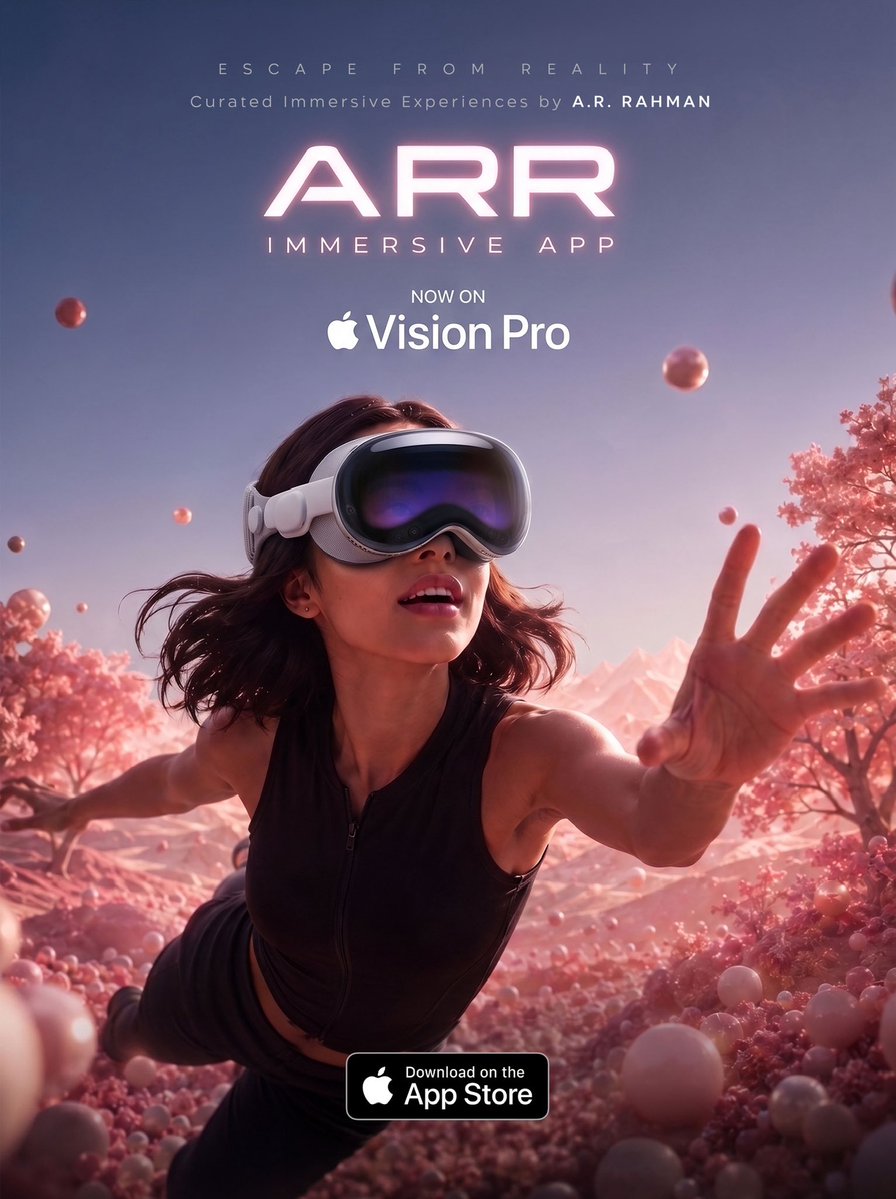
The headline writes itself: Oscar winner makes VR app. The genuinely interesting part is quieter. The app also carries Le Musk, Rahman’s 360-degree film that premiered at Cannes XR, and it has been re-edited specifically for Vision Pro’s centred viewing format, with new spatial audio mixes in Apple’s Spatial Audio Format.
That is not a port. A 360 film assumes an audience that will look anywhere, and it rewards them for doing so – the composition is distributed around the viewer. A headset app that assumes a seated viewer facing forwards needs the story recomposed towards the front, and the mix rebuilt to match the new geometry. Someone made hundreds of small editorial decisions by hand to make that transfer work.
We have spent fifteen years learning that immersive content does not travel between formats the way flat video does. A 360 film, a 6DoF headset piece and a dome show are three different grammars, not three exports from the same timeline. When we worked with the Philharmonia Orchestra, the difficult problem was never the picture. In music, the audience’s ears decide whether the thing works, and a spatial mix is its own deliverable with its own craft and its own budget line.

So the signal here is not celebrity endorsement. It is that an artist of Rahman’s standing treated the headset as a release format rather than a marketing stunt, and paid for the re-edit rather than dropping the original file in. That is how spatial music becomes something a label, a venue or a festival can commission, with a known scope and a known cost.
Forty minutes of free-roam VR, roughly 120 people an hour
In South Kensington, the Science Museum is running Smithsonian Starstruck, a free-roam virtual reality experience made by Fever with the Smithsonian Astrophysical Observatory. Visitors travel from the Fred Lawrence Whipple Observatory out to the Pillars of Creation and a black hole, guided by a virtual host. Tickets start at £14.40 on top of free museum admission, the minimum age is 10, and the VR section runs for 40 minutes.
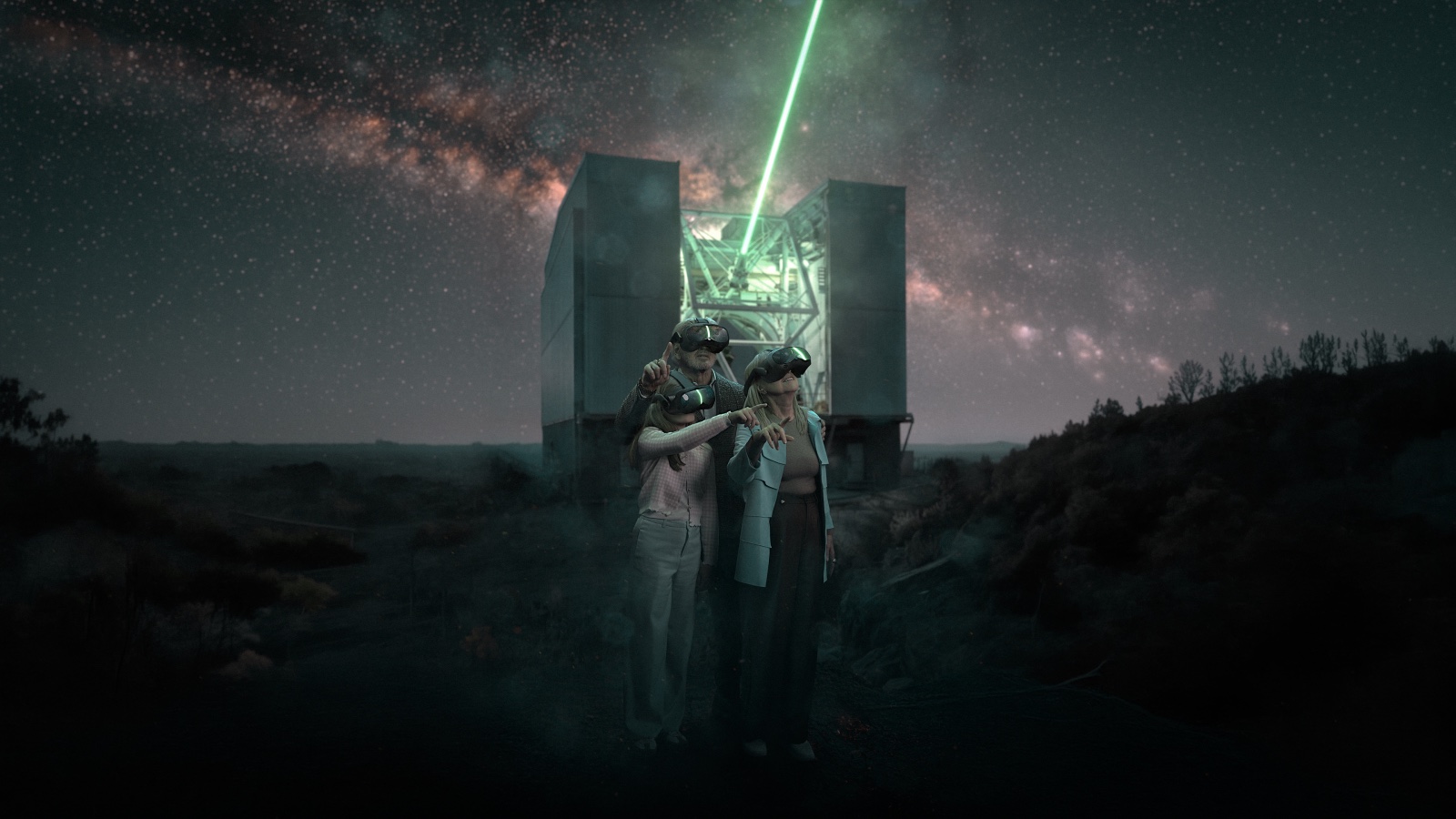
Two numbers in that listing matter more than the content description. Six guests enter per group, with groups staggered every three minutes. That is roughly 120 people an hour, and it is the figure that decides whether a permanent immersive installation is a business or a showreel. Venue teams ask about it immediately. Creative pitches almost never mention it.
The second number is the 40 minutes. For years the working assumption in immersive production was to keep headset time under about fifteen minutes – comfort, hygiene turnaround, queue economics. A national museum now selling a 40-minute headset experience to families, through a summer holiday, quietly retires that rule of thumb. If audiences will stay in for forty minutes, the form can carry actual narrative structure rather than a single spectacular beat.
Valve published a number you can build against
Ahead of the Steam Frame launch, Valve’s Great on Frame store section went live, listing certified titles including Portal 2 and The Lab. The certification bar is public and numeric: standalone VR titles must hold a consistent 90fps on-device, while flatscreen games running through emulation must reach 720p at 30fps with full controller support. SteamVR itself picked up a Steam Deck-style Quick Access panel and dashboard overhaul in beta on 18 July.
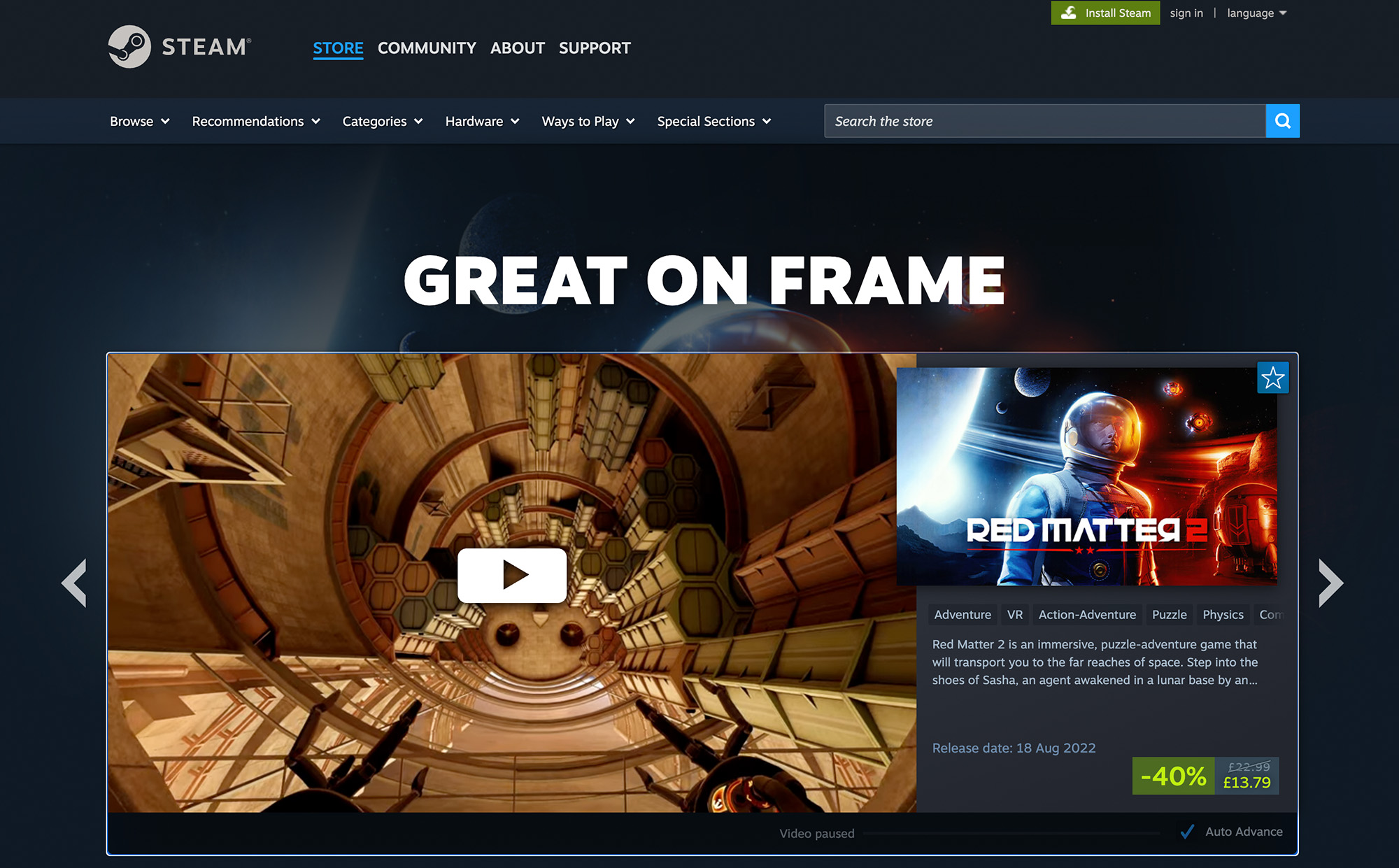
A published performance target sounds like housekeeping. In practice it is the thing producers have been missing. Scoping an immersive build against a stated frame-rate requirement is a very different conversation from scoping against a store review process whose thresholds you infer from experience.
Both platform holders now think the headset is a screen you wear
On 21 July, Meta added Xbox Game Pass Starter to Horizon+, bringing more than fifty non-VR games and ten hours of monthly cloud gaming to Quest owners, with controller emulation that maps Touch controllers to an Xbox pad rolling out shortly.
On its own it is a subscription bundle. Read alongside Valve certifying emulated flatscreen games at 720p and 30fps, it becomes a pattern: both platform holders are now betting that the mass-market case for a headset is being a large, private, comfortable screen. For anyone making immersive content, that is not a threat – it is the reason a general audience will own the hardware, get comfortable wearing it for long sessions, and be ready for a forty-minute piece when one arrives.
The honest caveat
Not everything this fortnight was cause for celebration. Magic Leap has cut 193 roles and is repositioning as a waveguide supplier rather than a headset maker. One of the field’s most heavily funded pioneers has concluded that the money is in supplying optics to other people’s devices. It is worth holding that alongside the good news: the medium is maturing, but maturity means consolidation as well as opportunity.
See It in Action
We have spent fifteen years making immersive work for cultural institutions, brands and broadcasters – from orchestral performance to free-roam experiences and 360 film. You can explore the range of that work at visualise.com/work.
If you are considering a permanent immersive installation, a spatial music release, or a piece that needs to work across more than one immersive format, we would be glad to talk. Get in touch at visualise.com/contact.
Comments