

VR Headset Optics: The Most Important Spec Nobody Publishes
Almost every argument about VR headsets is an argument about the display. Pixels per degree, refresh rate, field of view. This fortnight the most useful thing we read was about the two inches of ‘liquid’ glass in front of the display.
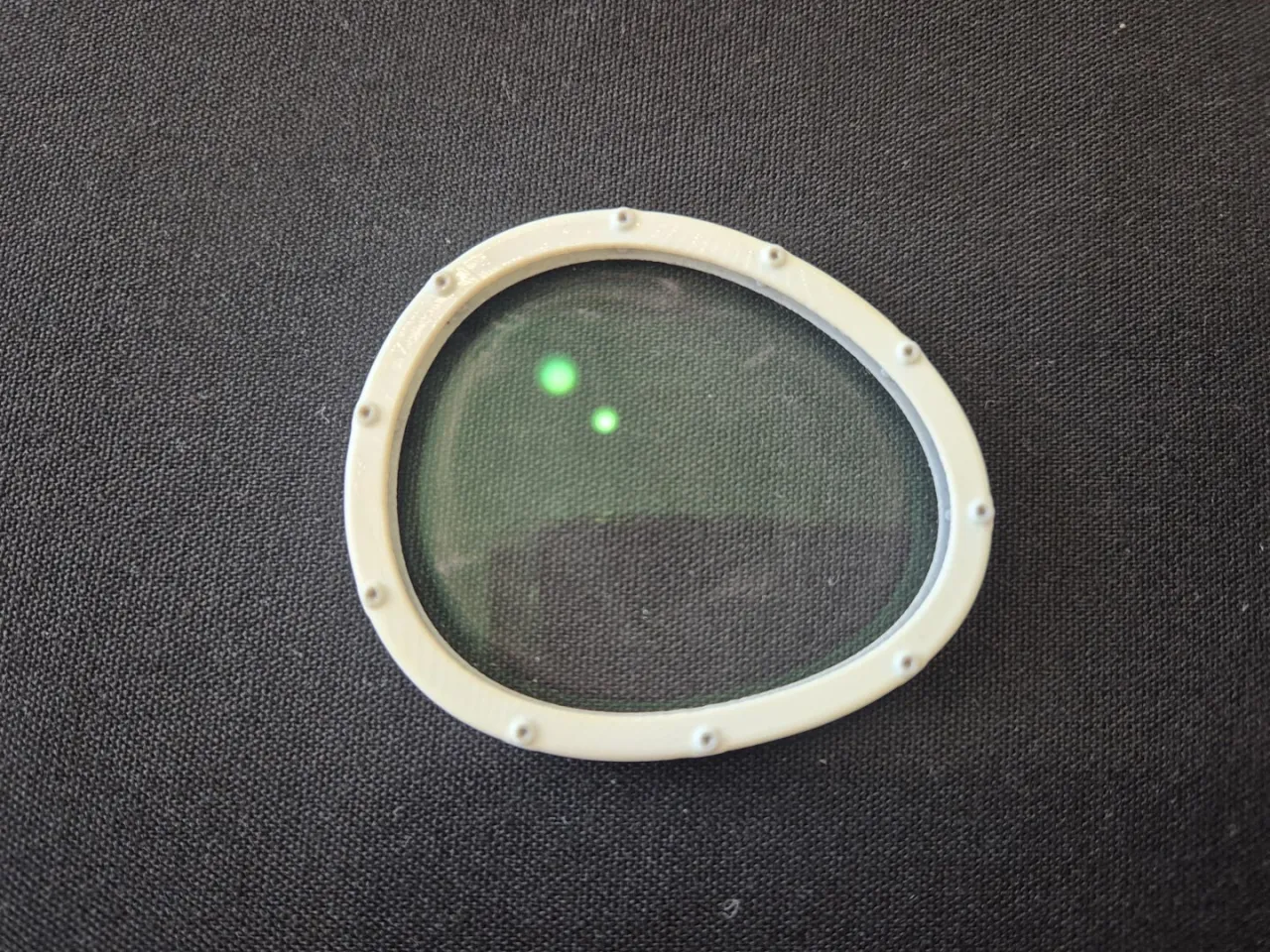
Oxford Optical Labs and the lens that changes shape
At AWE this month, Oxford Optical Labs demonstrated an adjustable fluid lens. The construction is disarmingly simple: a membrane containing a fluid, rigid at the rear and soft at the front, behaving, in the words of the journalist who handled it, rather like a balloon very full of water. A plastic insert holding magnets – the company calls it a deformer – snaps onto the lens and presses the surface at specific points. That mechanical pressure changes the optical properties. No electronics, no battery, no power draw.
The consequence is that one base lens, adjusted, can correct myopia, presbyopia and astigmatism. The company says some lab samples have lasted more than 15 years, and that the fluid is non-toxic if a lens breaks.
Then there is the number that should stop any producer mid-sentence. A mild 0.5 dioptre astigmatism, the write-up notes, may limit a user’s perceived resolution to as low as 13 pixels per degree. An uncorrected Quest 3 sits at roughly 25. That is half the picture, gone before a single frame of content renders, because of a prescription nobody measured.
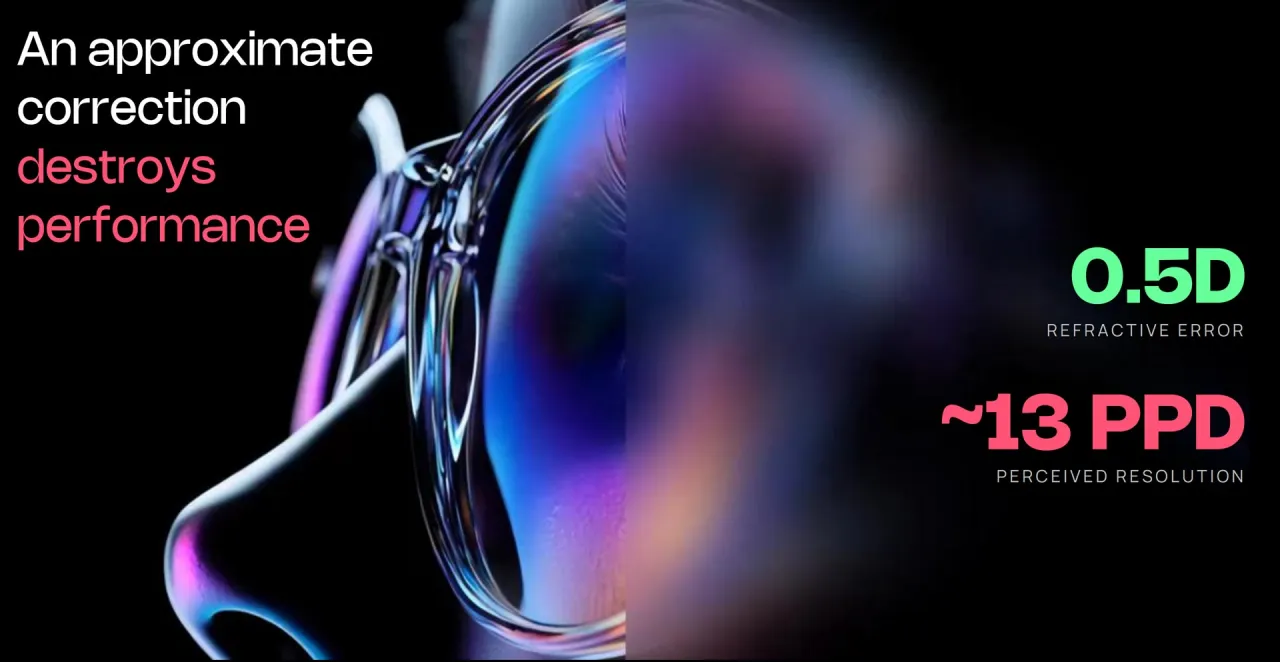
Image from the OOL presentation
The roadmap runs in three phases: customised prescription add-ons for location-based VR first, then lenses integrated into headsets in partnership with a manufacturer, then true varifocal with dynamic focus to address the vergence-accommodation conflict that has dogged this medium since the beginning.
Phase three deserves scepticism, and the hands-on supplies it. Varifocal needs eye tracking so the lens can change while the eye is mid-saccade, which means shifting optical parameters in around 70 milliseconds. The prototype took considerably longer than that. There are no announced partners and no dates. Going from a working prototype to a reliable product may take years.
The spec that never makes the box
Phase one is the phase nobody will write about, and it is the one that matters to us commercially this year.
We have spent 15 years putting headsets on members of the public. In retail windows, in visitor attractions, at brand activations where a queue of 300 people gets four minutes each. Those visitors arrive with whatever eyes they have. They take their glasses off because the headset will not fit over them, or they leave them on and squash them under the facial interface. Either way, they see a materially degraded version of the film we graded shot by shot.
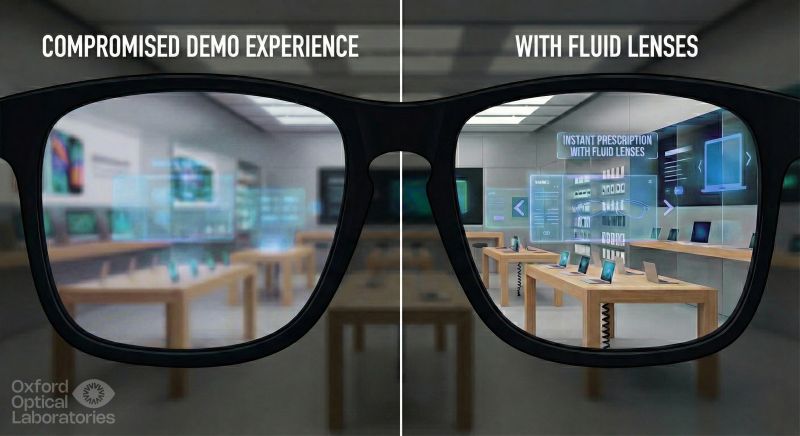
Nobody’s quality-control pass has a line for the visitor’s eye. We check the render, the audio, the tracking volume, the hygiene routine, the throughput. We do not check whether the person about to watch it can resolve it. If a snap-in prescription insert can be handed over with the headset the way an usher hands over 3D glasses at a cinema, that is not really an optics story. It is a quality-control story, and it would be the cheapest resolution upgrade available to a location-based experience.
ZEISS backs the enabling half
ZEISS has invested 2.2m euros in SeeTrue Technologies, a Finnish eye-tracking startup. Read alongside the optics story, this is the more telling of the two: any true varifocal system needs to know where the eye is looking and when it is moving, so eye tracking is not an adjacent feature but the enabling half. When a lens maker’s roadmap depends on gaze data, the interesting questions about who holds that data follow close behind. We will come back to those.
See It in Action
The optics question is not theoretical for us. Our VR work in retail and visitor attractions puts headsets on thousands of strangers, from Travel Nevada – Space Out Nevada to The Macallan Distillery VR Experience. In both cases the picture we delivered and the picture each visitor received were separated by a variable we could not control. Explore more of our work.
If you are planning an immersive installation where the public will wear the headsets, we would love to talk about the details that decide whether they see what you paid for. Get in touch at visualise.com/contact.
Comments