

Shooting 360 for a Room, Not a Headset
SGO, the Madrid company behind the Mistika VR stitching software, wrote up our work for Visit Qatar on their blog: Transporting audiences in the heart of Qatar with shared immersive experiences and Mistika VR. With our own case study now live, it seemed a good moment to point people to it. It’s a good read if you like the post-production side of things, and it covers something we don’t often get to talk about: what changes when a 360 film is going on a wall instead of into a headset.
Quite a lot, it turns out.
The job
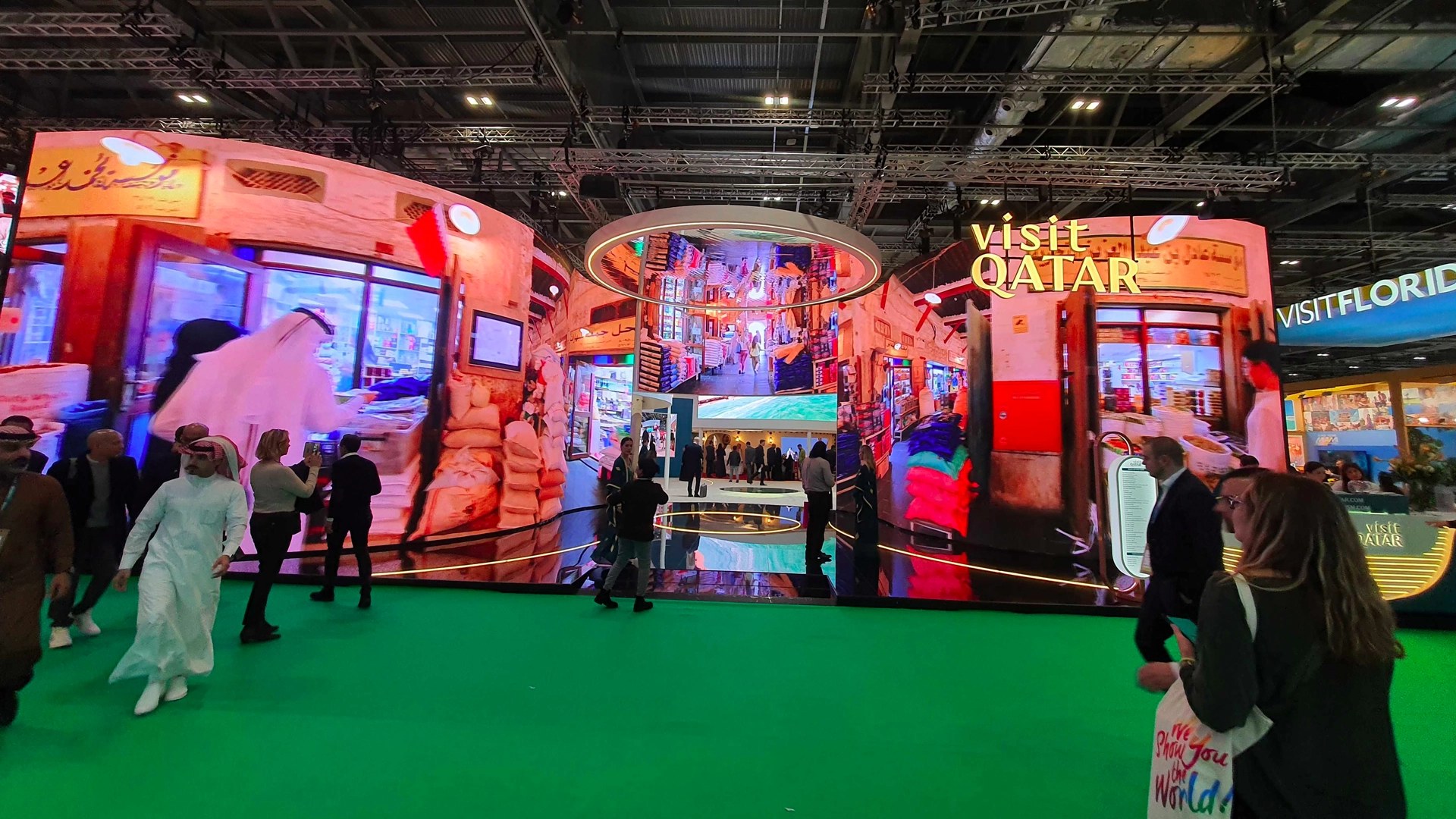
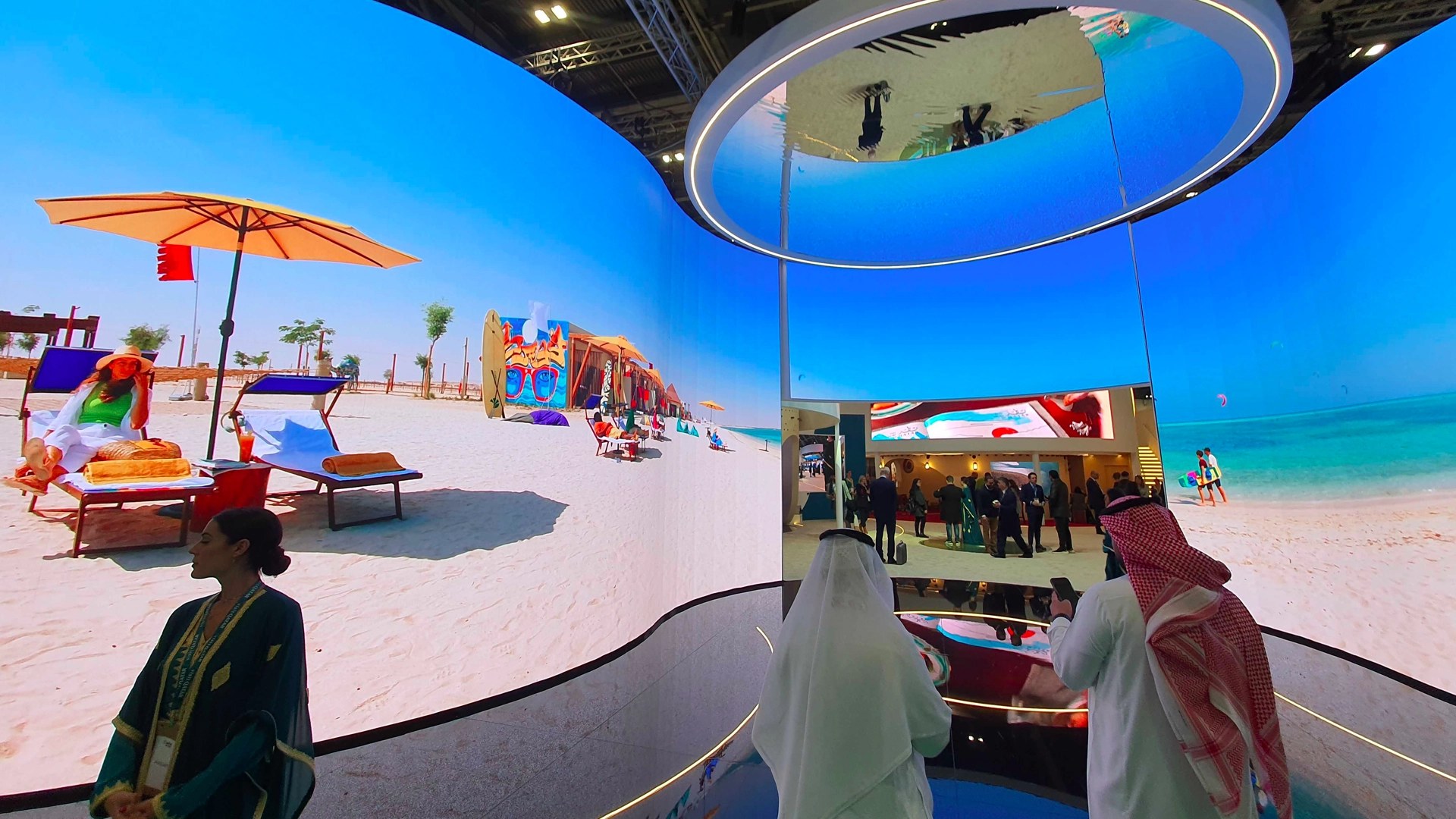
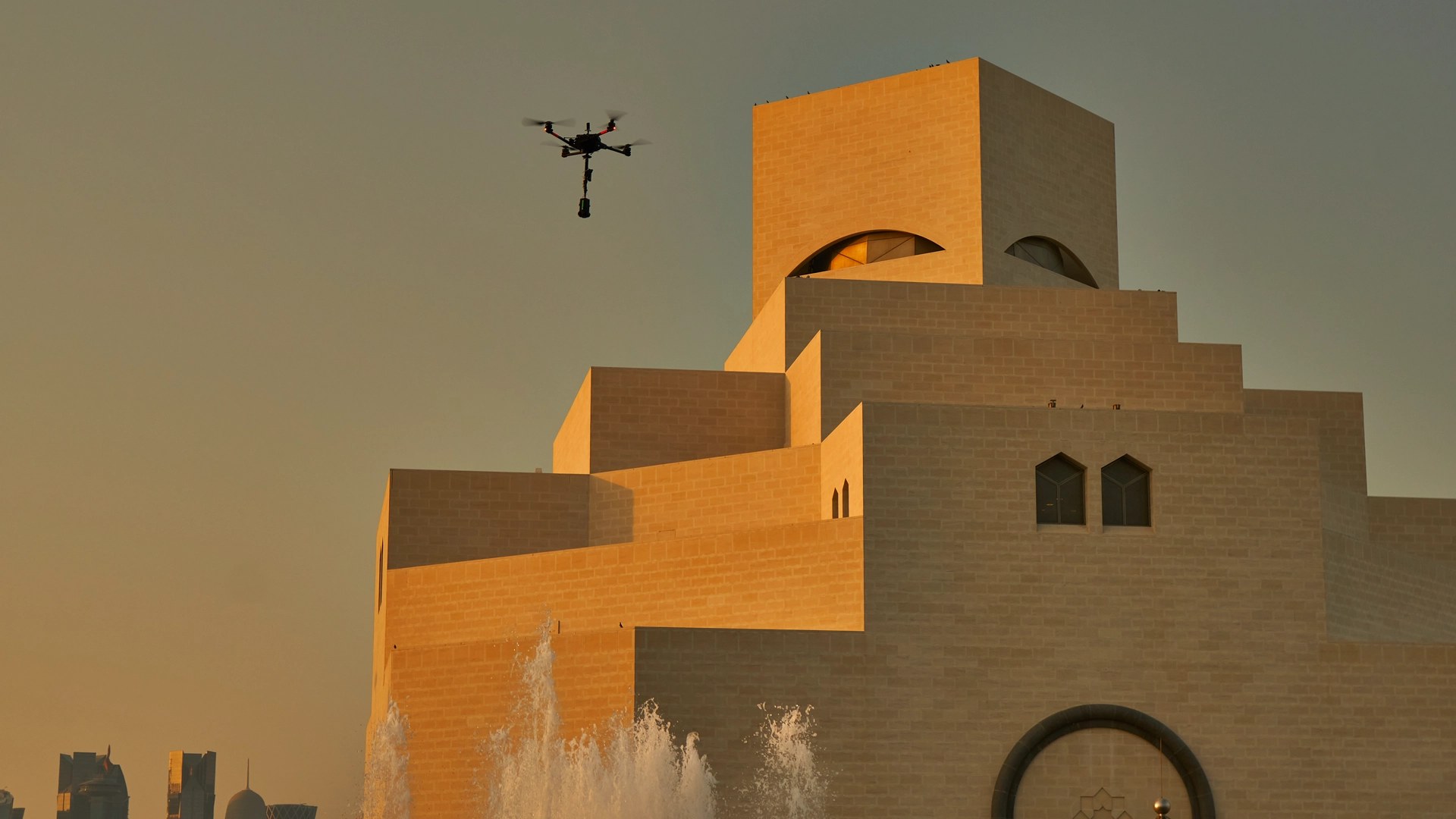
Visit Qatar wanted something that would stop people in the aisles at the big travel trade shows. We filmed around the country – markets, desert, coastline, the Museum of Islamic Art and the National Museum of Qatar – and the films ran in rooms of LED screens at World Travel Market in London and Arabian Travel Market in Dubai. Visitors walked in and stood inside the picture. The stand won Best Stand Feature at WTM London in 2022, and the content kept running at travel markets long afterwards, with a new version cut for a different set of screens most quarters.
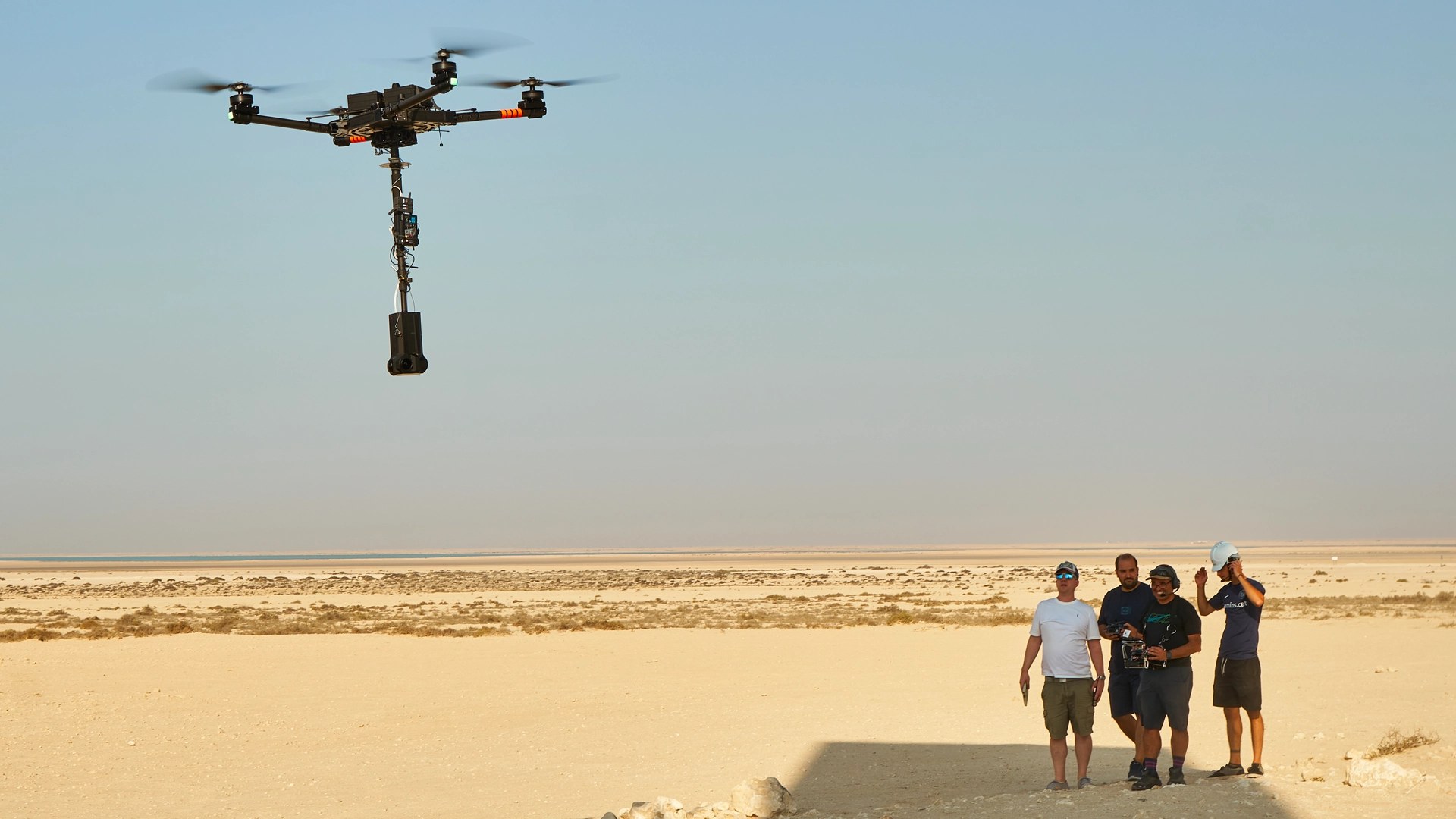
Our own Jack Østergaard-Churchill and freelancer Ignacio Ferrando Margelí were the DOPs. Matthew Stevens was DIT, which means he looked after the footage on set, and Pablo Ballester flew the heavy-lift drone in weather that didn’t always co-operate. Everything was shot on the Meta Three, the camera our sister company Meta Camera builds for big-screen playback, and finished at 12,500 x 6,250 pixels.
Why a room is different
In a headset you can look straight up and straight down. An LED room usually can’t show you that much. The screens give you a wide band round the middle and not a lot above or below it, so the framing changes: the horizon matters more, and the very top and bottom of the shot matter less.
Then there’s scale. Henry Stuart, our CEO, described it to SGO as “giantism”. If someone stands closer to the camera than the screens will be to the audience, they come out oversized on the wall, and the illusion falls apart. So the rule of thumb is to keep people at least as far from the lens as the screens will be from the visitors.
And no two stands were the same shape. It’s hard to judge a film for an odd-shaped wall from a drawing, so we built VR apps from the 3D models of each stand and reviewed the films in a headset, sitting on the screens as they would on the day, before anything was built.
The post-production bit
Most of the shots move. Dollies, the drone, a camera travelling through a market. Moving shots are where stitching gets hard. Stitching just means joining the views from each of the camera’s lenses into one picture, and the joins show up most when things move across them.
Matthew made quick low-res stitches in Mistika VR on set each day, so the edit could start while we were still shooting. Afterwards Jack refined them using optical flow, which is software that works out how each pixel is moving so it can blend the joins. “Optical flow is always essential to give our stitches that final ‘brush’,” as he put it to SGO. Editing and clean-up went through Premiere Pro and After Effects, with stabilisation in Mocha Pro and Syntheyes, plus some manual tracking where those ran out.
At 12.5K you can’t edit the full-resolution files on a normal machine without it grinding to a halt. So we cut with proxies, which are lightweight low-res copies of every shot, and only went back to the full-resolution stitches for the final clean-up. It’s a bit of a faff to set up, and on this job it was crucial.
Why we keep coming back to rooms
A headset is one person at a time. A room full of screens lets a group stand in the same place, point at things and take photos, and that’s a lot of what kept the Qatar stand busy.
The full SGO piece, with more from Jack and Henry on the workflow, is on their site. And our own write-up of the five years we spent filming Qatar, from the first headset films for the Ministry to the LED floors at Arabian Travel Market, is in the Visit Qatar case study.