
Visit Qatar - Walk-in Immersive Stands
360 films of Qatar, shot at 12.5K and shown in walk-in LED rooms at World Travel Market and Arabian Travel Market
We filmed Qatar on and off from 2020 to 2025. It started with headset films about Qatari culture for the Ministry of Culture, Tourism and Sport. It ended up as rooms of LED screens you could walk into at World Travel Market and Arabian Travel Market, and won Best Stand Feature at WTM London in 2022.
Starting with culture
The first commissions covered the things Qatar is proudest of: pearl diving, horse riding, camel racing and traditional dances. We shot them in 360, which just means the camera sees in every direction and the viewer picks where to look. The films went into VR headsets, and the ministry took them round the world to show Qatari culture to people who’d never been.
Before the World Cup
Then Visit Qatar came in. Before the 2022 World Cup they wanted a series of films on the best things to do in the country: city streets and cultural life, wide-open landscapes and the big institutions. We filmed at the Museum of Islamic Art, and at the National Museum of Qatar, which is shaped like a desert rose and is quite something to set a camera down in front of.
Everything was shot at 12.5K on the Meta Three, the camera our sister company Meta Camera builds. That’s a lot more resolution than a headset needs. But these films were heading for screens several metres high, and that’s where you’d see the difference.
Getting the shots
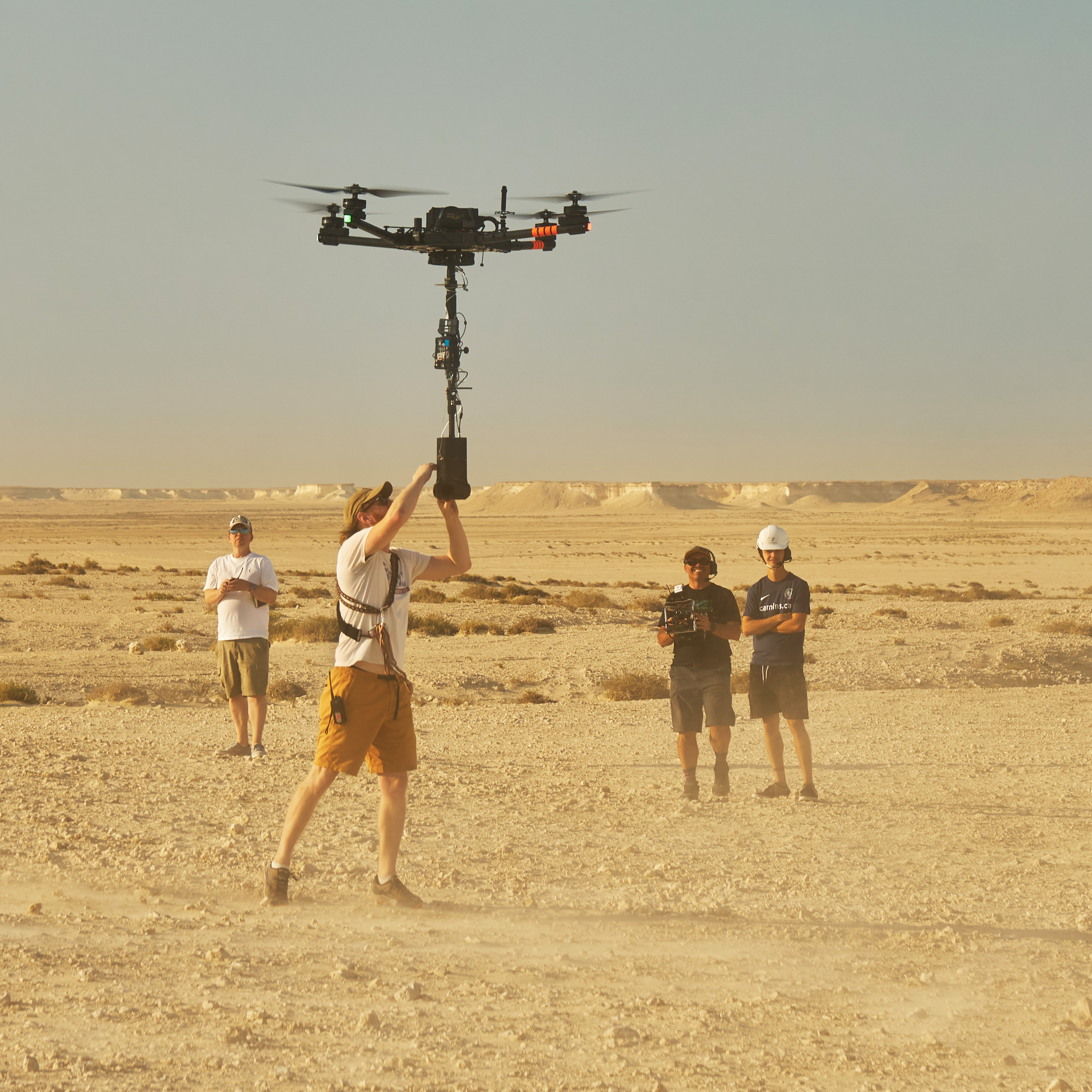
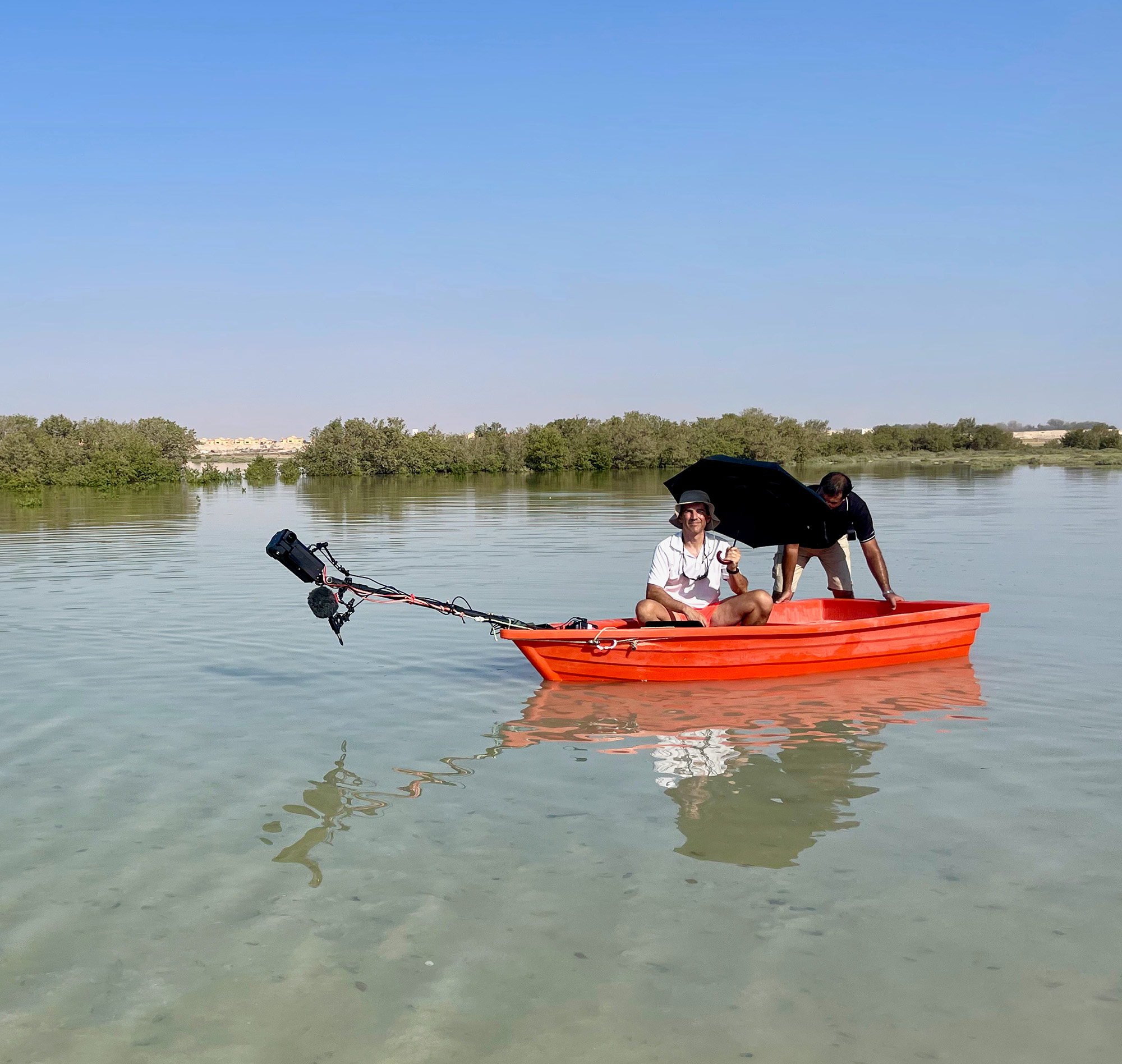
The hardest part wasn’t the filming. It was getting the kit, the crew and the permits to the right place at the right time, through some of the trickiest bureaucracy we’ve dealt with. Drones are all but banned in Qatar, so bringing in our heavy-lift Alta X, a drone big enough to carry the 360 camera, took months of planning.
And the light doesn’t hang about. In the desert the sun comes up and goes down quickly, and those few minutes either side are by a long way the most interesting time to shoot. So a lot of days were built around two short windows, with everything rigged and waiting before the sun moved.
Walking into the content
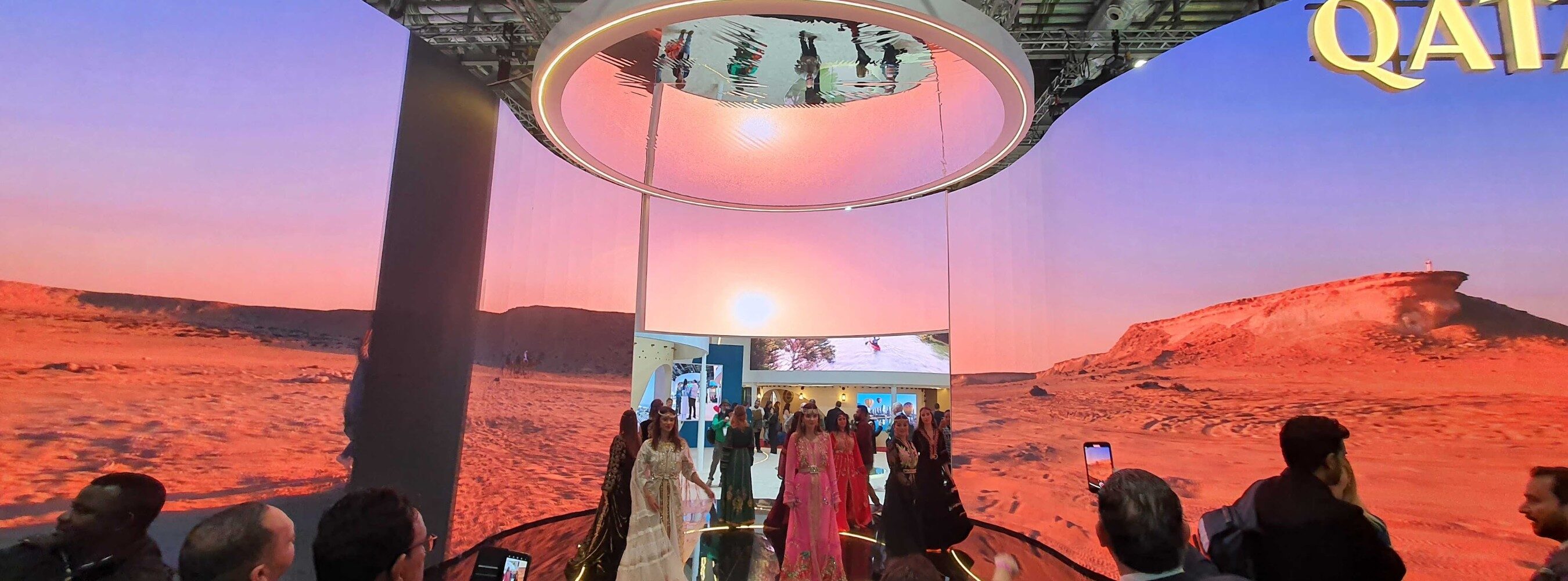
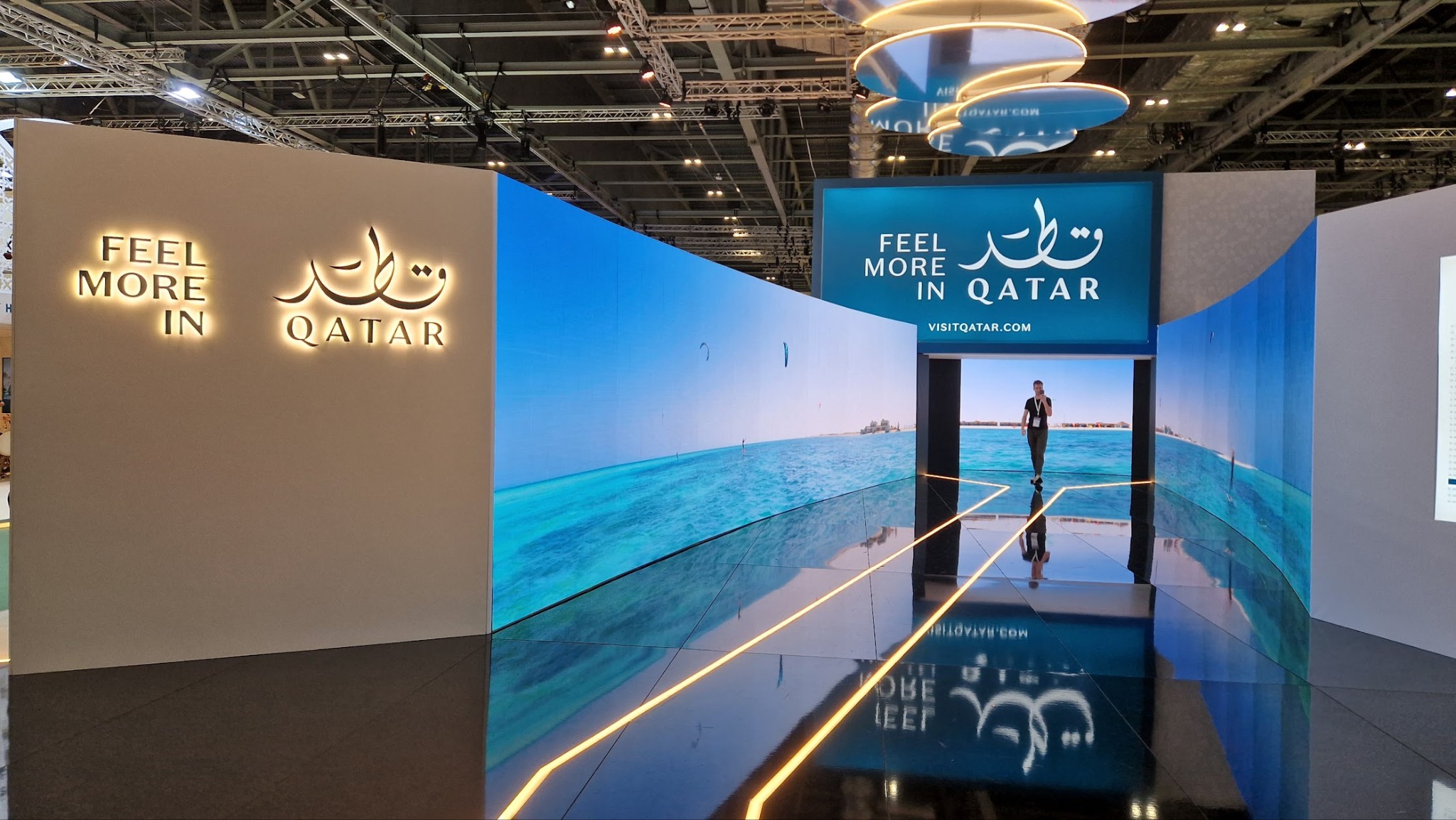
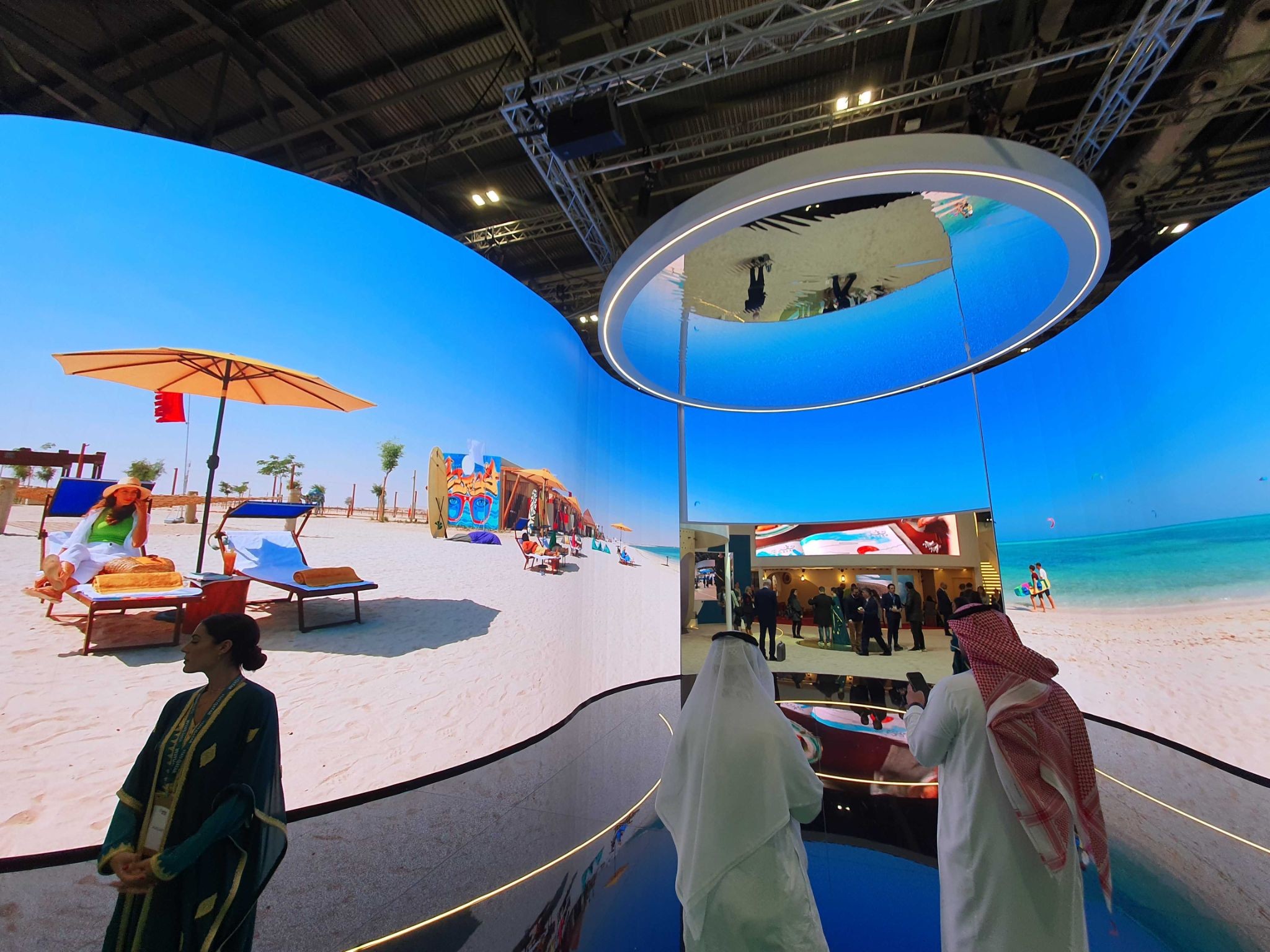
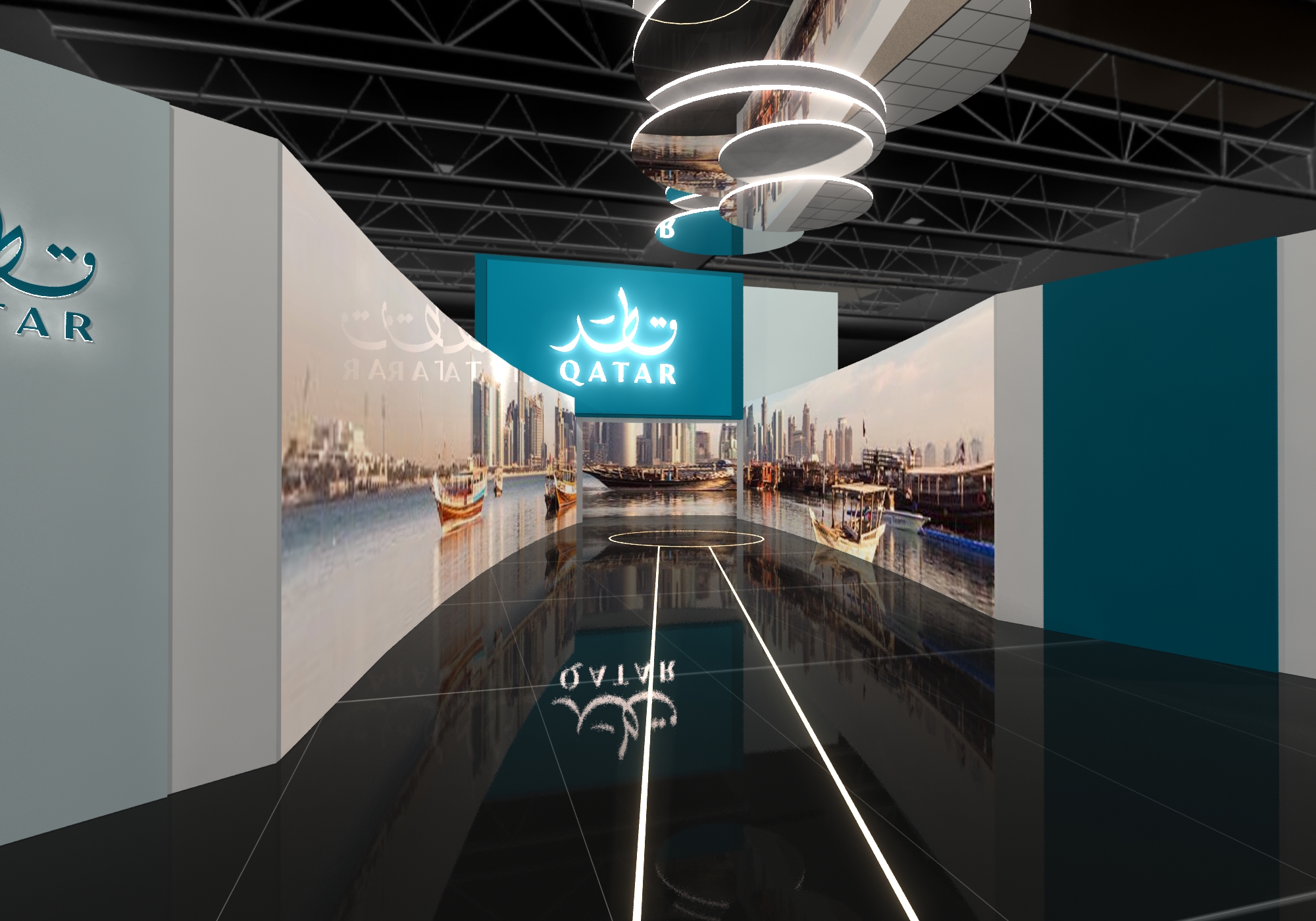
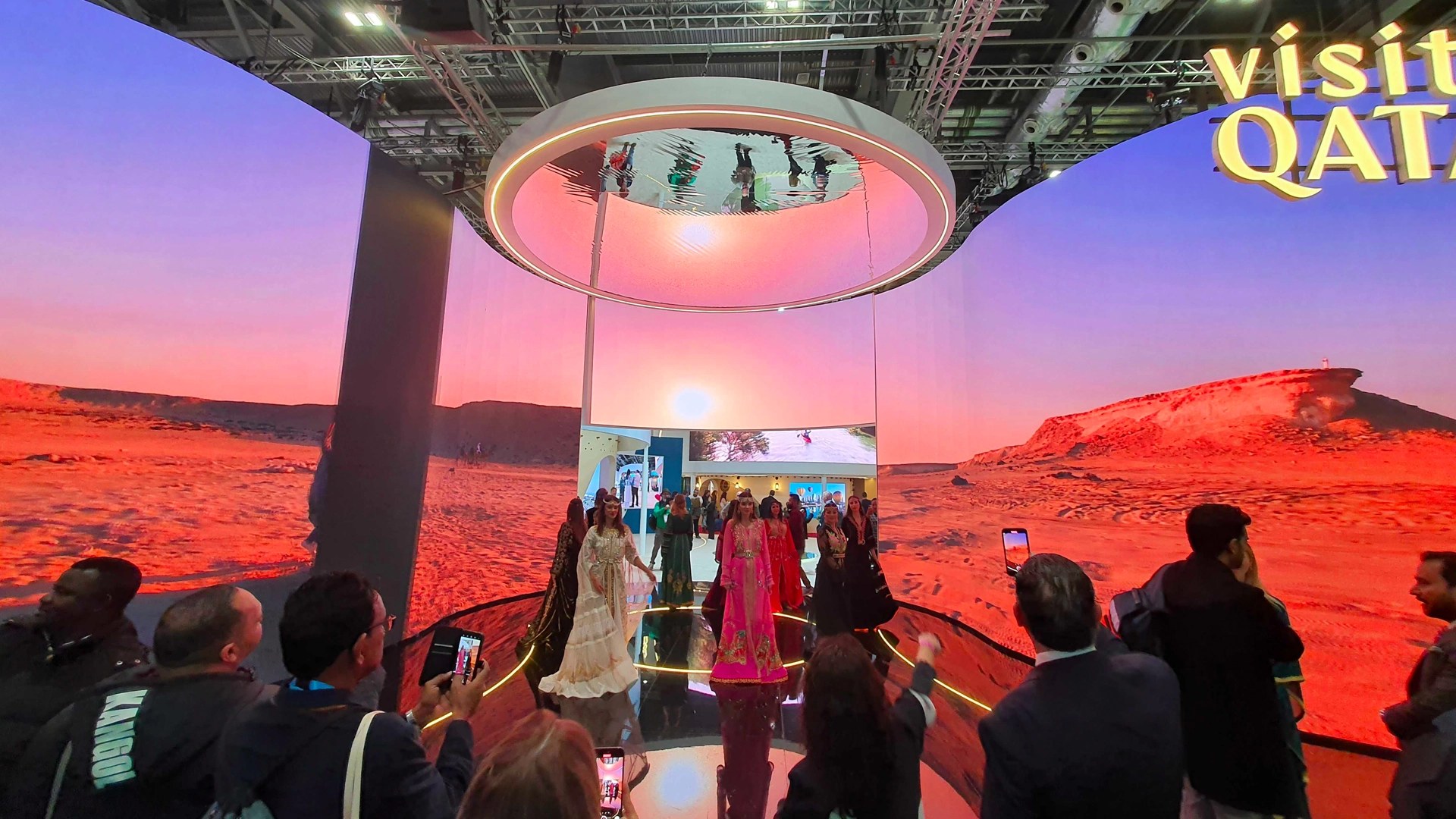
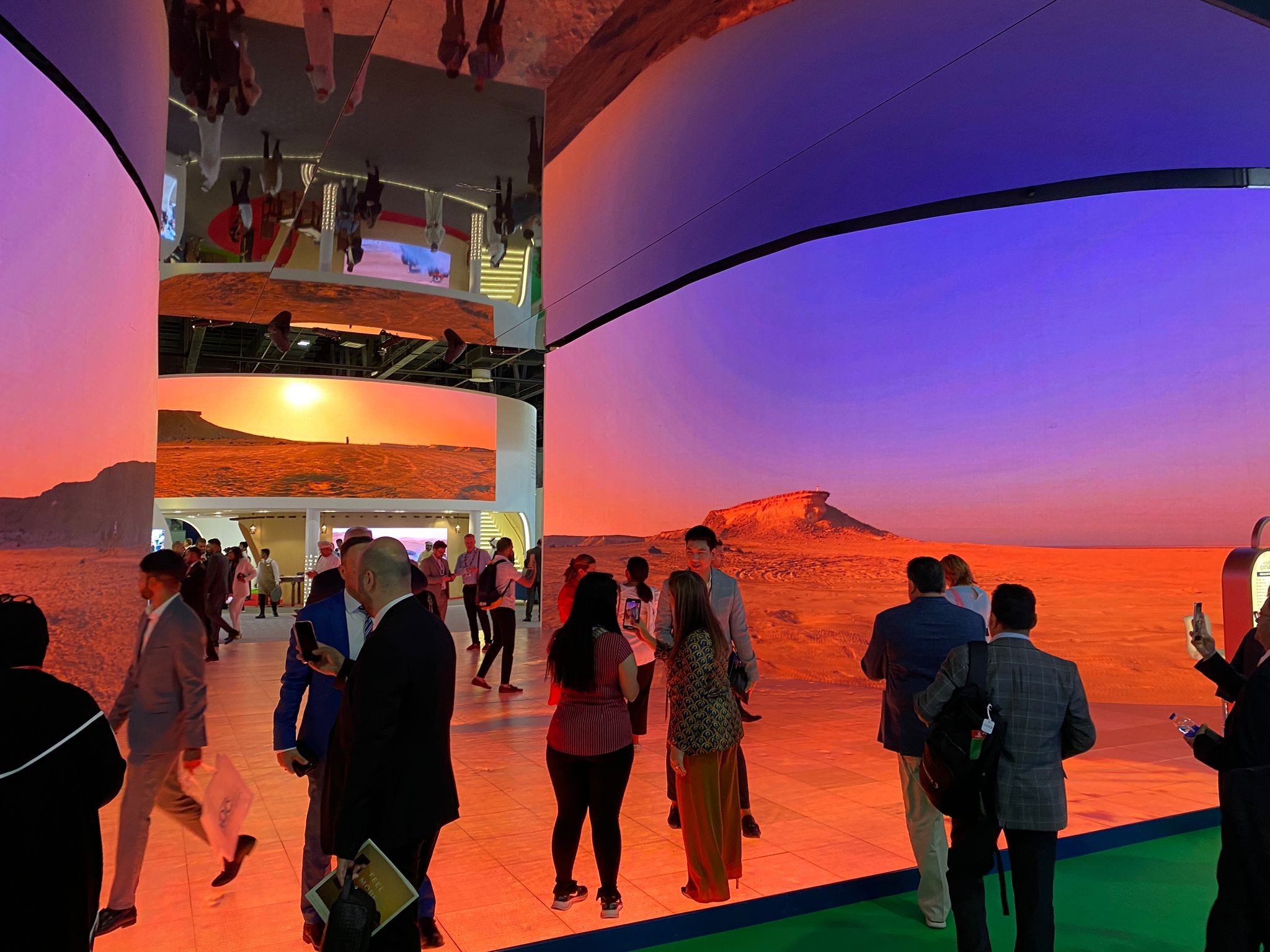
At World Travel Market in London and Arabian Travel Market in Dubai, the films ran on huge LED walls built in a different shape for each show. The first versions wrapped right round visitors, with mirrored floors and ceilings so the picture carried on above and below them. Later versions added LED floors as well, so people were standing on the water or the sand.
Odd-shaped screens are hard to judge from a drawing. So we built our own VR apps from the 3D models of each stand and reviewed every film in a headset as it would sit on the real walls, long before anything was built. It took the guesswork out of it.
Shooting for a room
A film for an LED room needs shooting differently from one for a headset. In a headset you can look straight up and straight down. The walls give you a wide band round the middle and not much above or below it, so the horizon does more of the work and the very top and bottom of the shot matter less.
Scale catches people out too. If someone stands closer to the camera than the screens will be to the audience, they come out as giants on the wall and the illusion goes. So the rule of thumb is to keep people at least as far from the lens as the screens will be from the visitors.
At 12.5K the files are far too heavy to edit directly. Our DIT, Matthew Stevens, made quick low-res stitches in Mistika VR on set each day (stitching just means joining the views from each lens into one picture), so the edit could start while we were still filming. Jack Østergaard-Churchill then refined the stitches with optical flow, which blends the joins on moving shots, and we cut with lightweight proxies before going back to full resolution for the final clean-up. SGO, the company behind Mistika VR, wrote up the workflow if you’d like the detail.
The result
The stand won Best Stand Feature at WTM London in 2022. And the films kept working long after the award, with a new version cut for a different set of screens most quarters. The campaign ran from 2020 to 2025 across headsets, trade shows and the build-up to the World Cup. It’s one of the longest-running pieces of immersive work we’ve done.
Credits:
DOP: Jack Østergaard-Churchill. DOP: Ignacio Ferrando Margelí. DIT: Matthew Stevens. Drone: Pablo Ballester.