

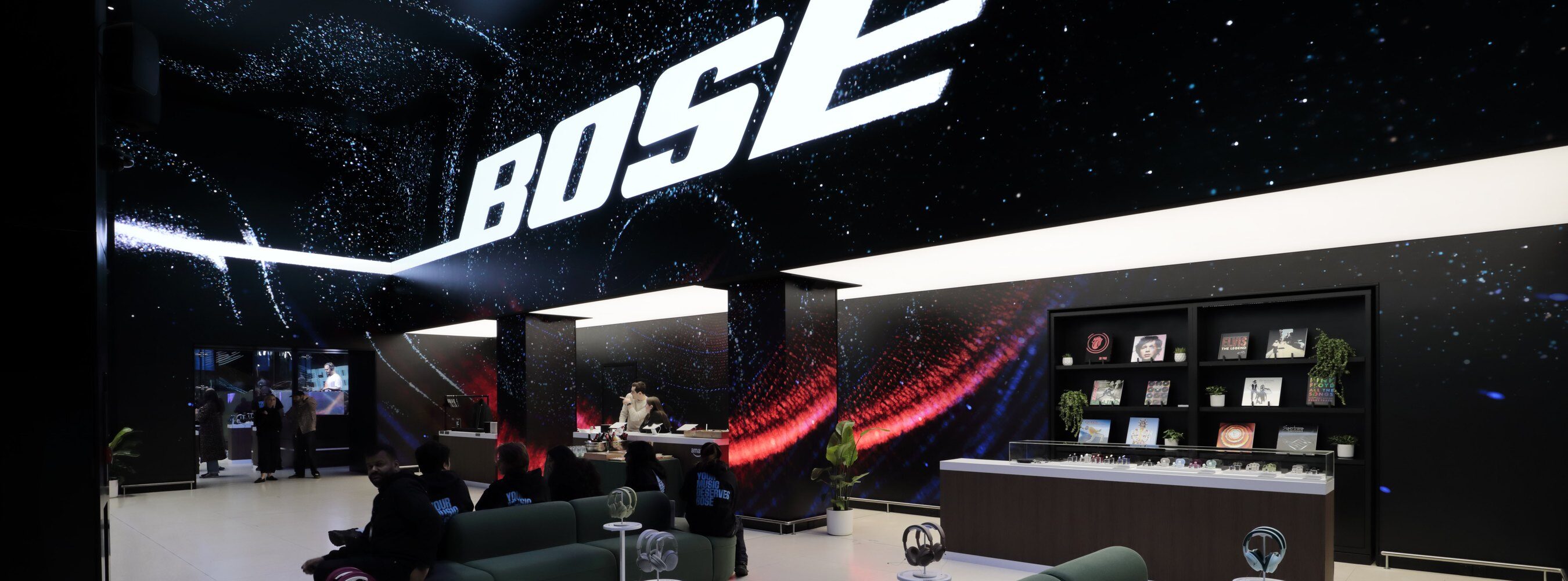
Bose at Future Stores, Oxford Street
A two-minute particle show cut to an original track, across the LED walls and ceilings of two shops on Oxford Street
ResultOpened on Oxford Street on 2 November, looping all day across ten LED walls and ceilings in two stores.
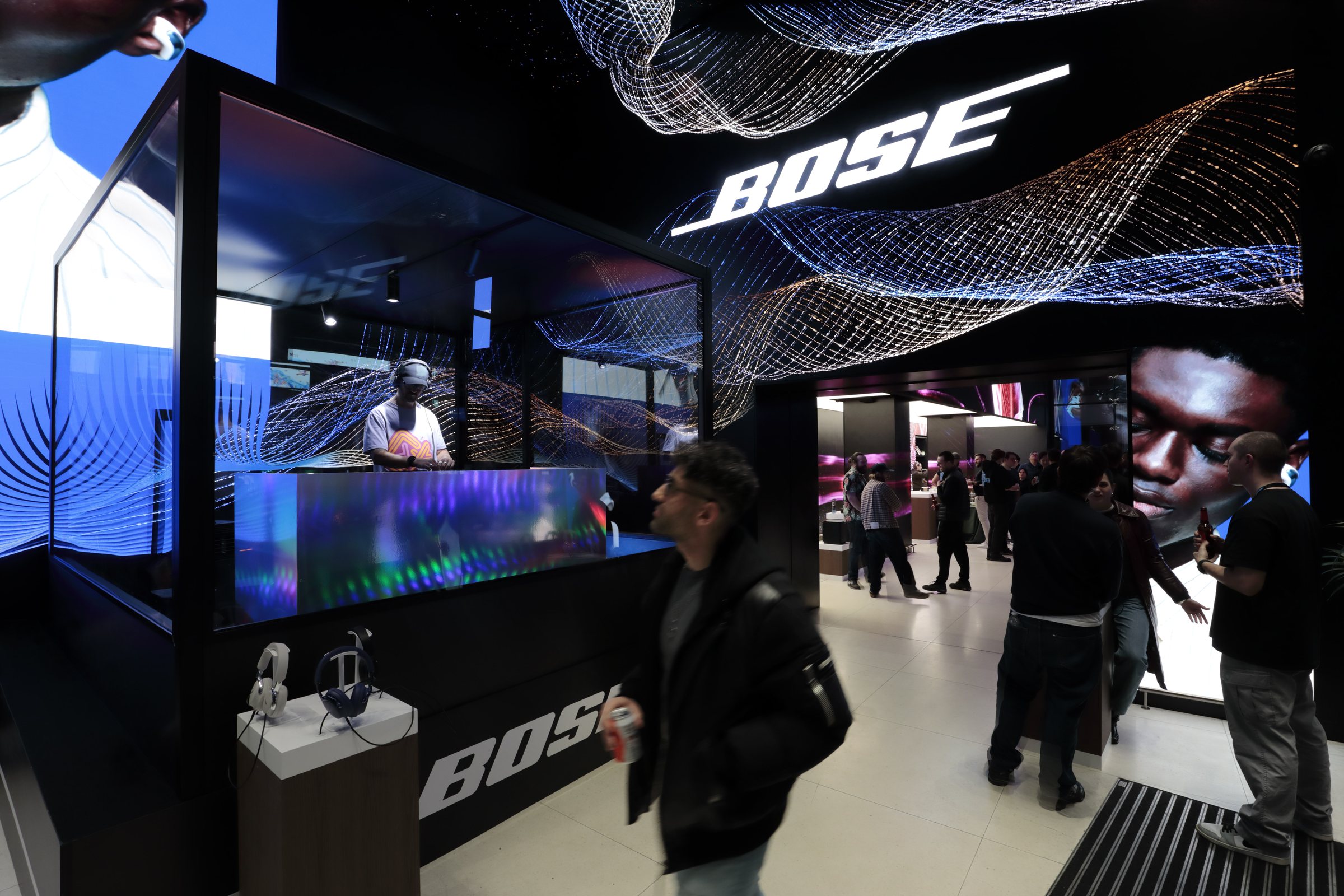
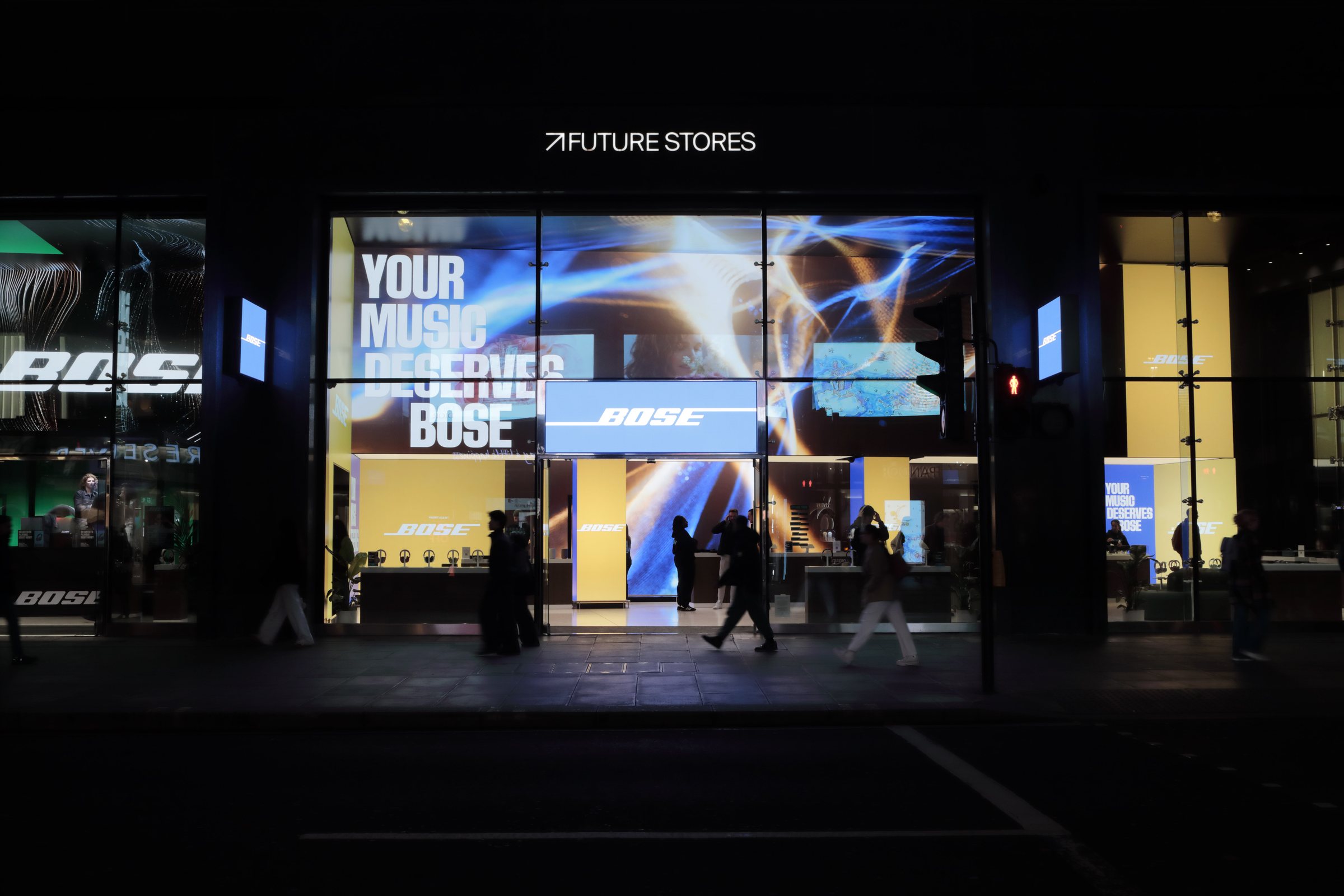
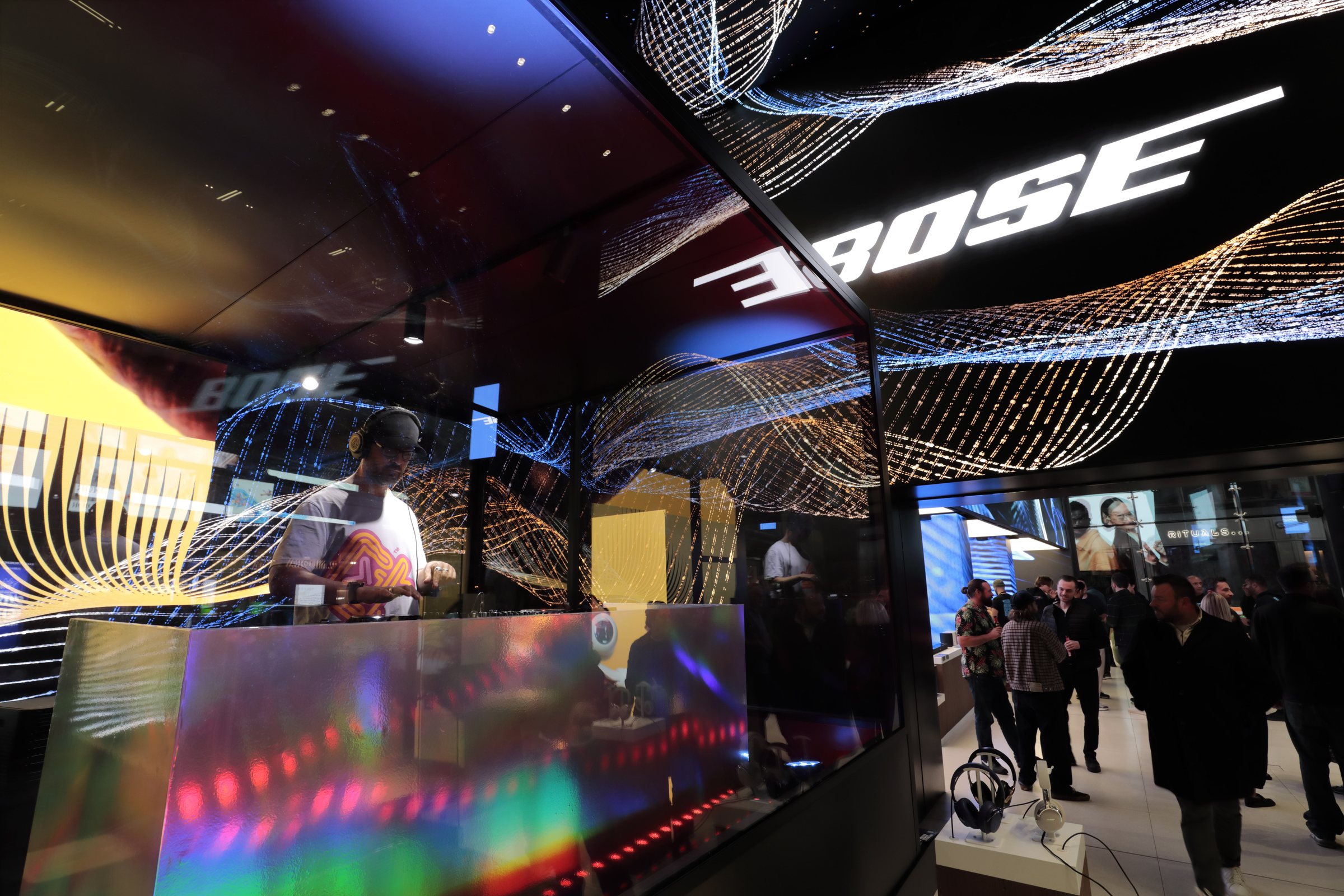
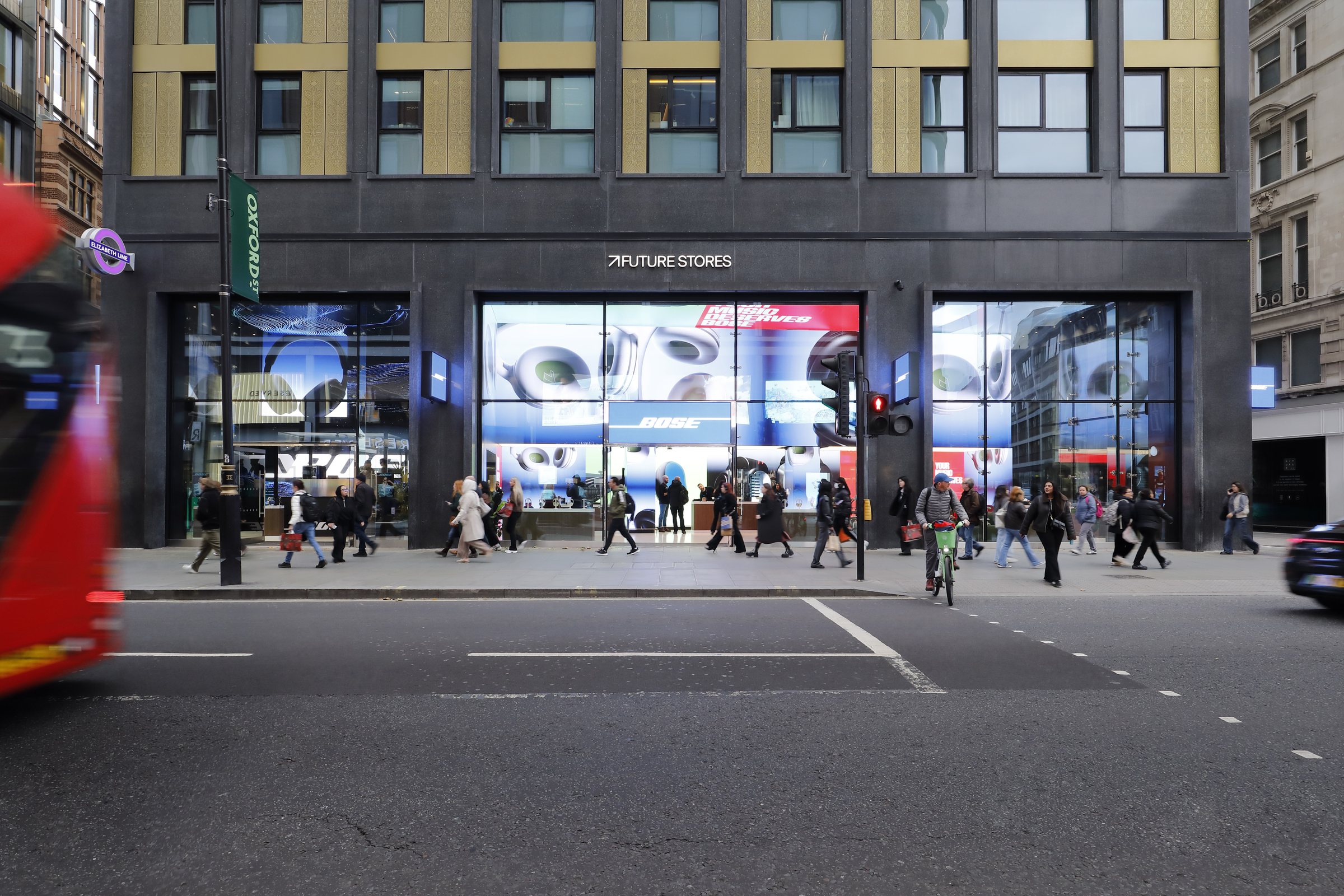
For two weeks in November, Bose took over Future Stores at 95 Oxford Street. It’s two shops joined by an archway, with LED on nearly every wall and ceiling, and Burson brought us in to fill them. We made a two-minute show out of particles – millions of tiny points of light – that moves to an original soundtrack and takes its colour from Bose’s new campaign films. It played on a loop, all day, across both rooms.
The brief
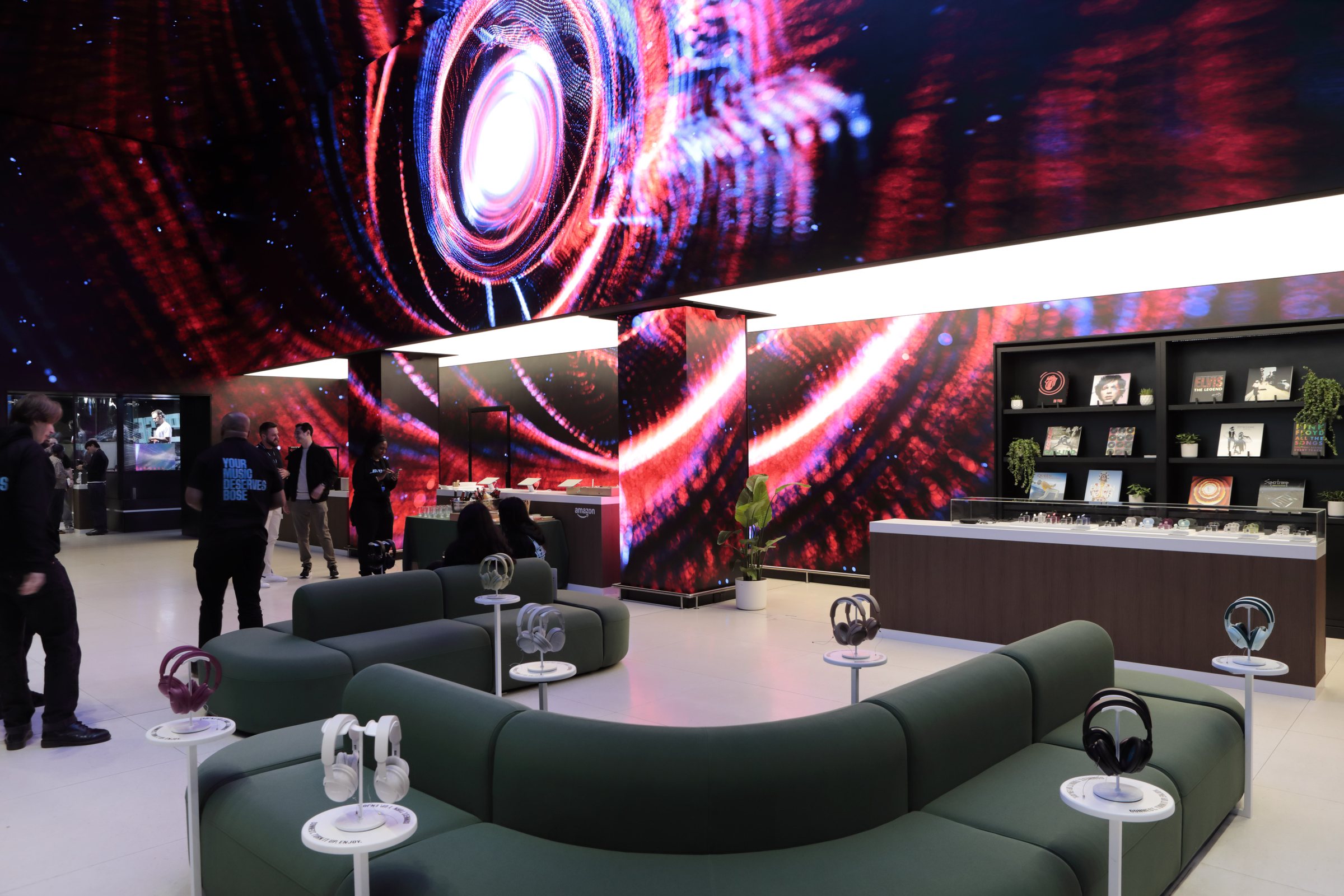
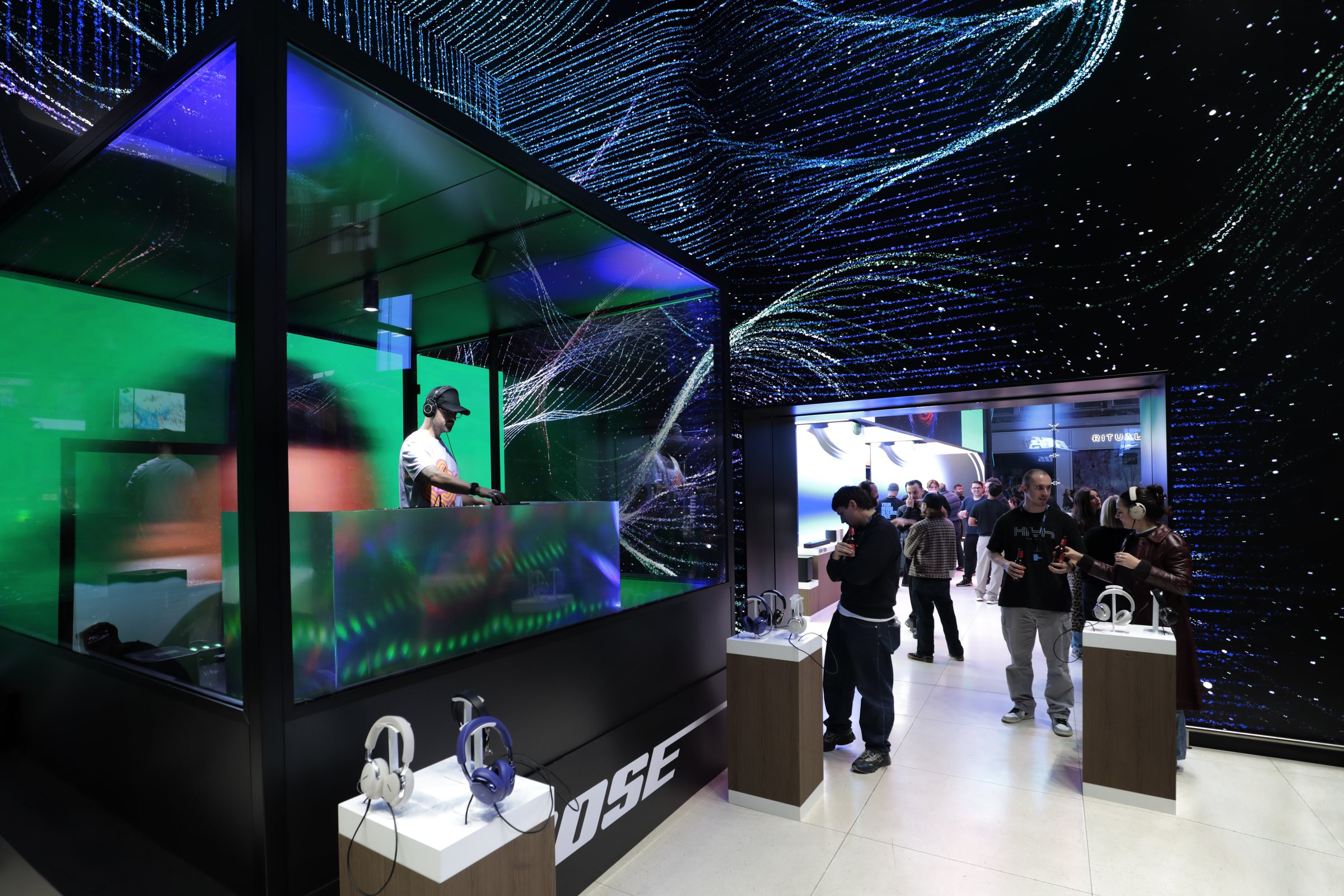
Burson’s idea was a simple one: Everything sounds better on good headphones. The smaller room, Store A, has a glass box in the middle with a DJ or a band inside. It’s soundproofed, so from the shop floor you can see them playing but can’t hear a thing until you put on a pair of Bose headphones. The bigger room, Store B, has the sofas, the product bar and most of the screen.
Our part was everything on those screens. Concept, design and motion for both rooms, an original track from our Head of Sound, Henrik Oppermann, and getting it all onto the venue’s media servers looking the way it should.
Ten screens, one picture
Future Stores is quite a space to fill. There are ten LED surfaces across the two rooms, played out as fourteen separate video files and around 145 million pixels in all. Store B’s ceiling is angled. Several of the walls are split across files for playback but have to read as one continuous picture. And the venue asks you to go easy on white, yellow and red, because big bright washes run the LEDs hot.
The venue’s 3D model was made for planning the space and wasn’t much use for lining video up. So we built our own. Every scene was previewed on a 3D version of both rooms, wall by wall, before anything was rendered for real. That’s how we worked out what the glass box and the pillars would hide, and where the walls and ceilings would and wouldn’t line up.
Inside the music
Store B gets the main show. It’s built from particles in a real-time 3D engine (Web GL) that runs in a web browser, then rendered out frame by frame at the full size of every wall. It starts calm, builds through a pulse and a groove, opens out into flowing waves and a tunnel, and ends on a close-up of the headphones and the Bose logo.
Henrik wrote the track, then split it into stems – separate tracks for the bass and the accents – so each could drive a different layer of the particles. The finished soundtrack is baked into the video files themselves, so picture and sound can’t drift apart, however long it loops.
Here’s the whole thing, captured on the Store B screens.
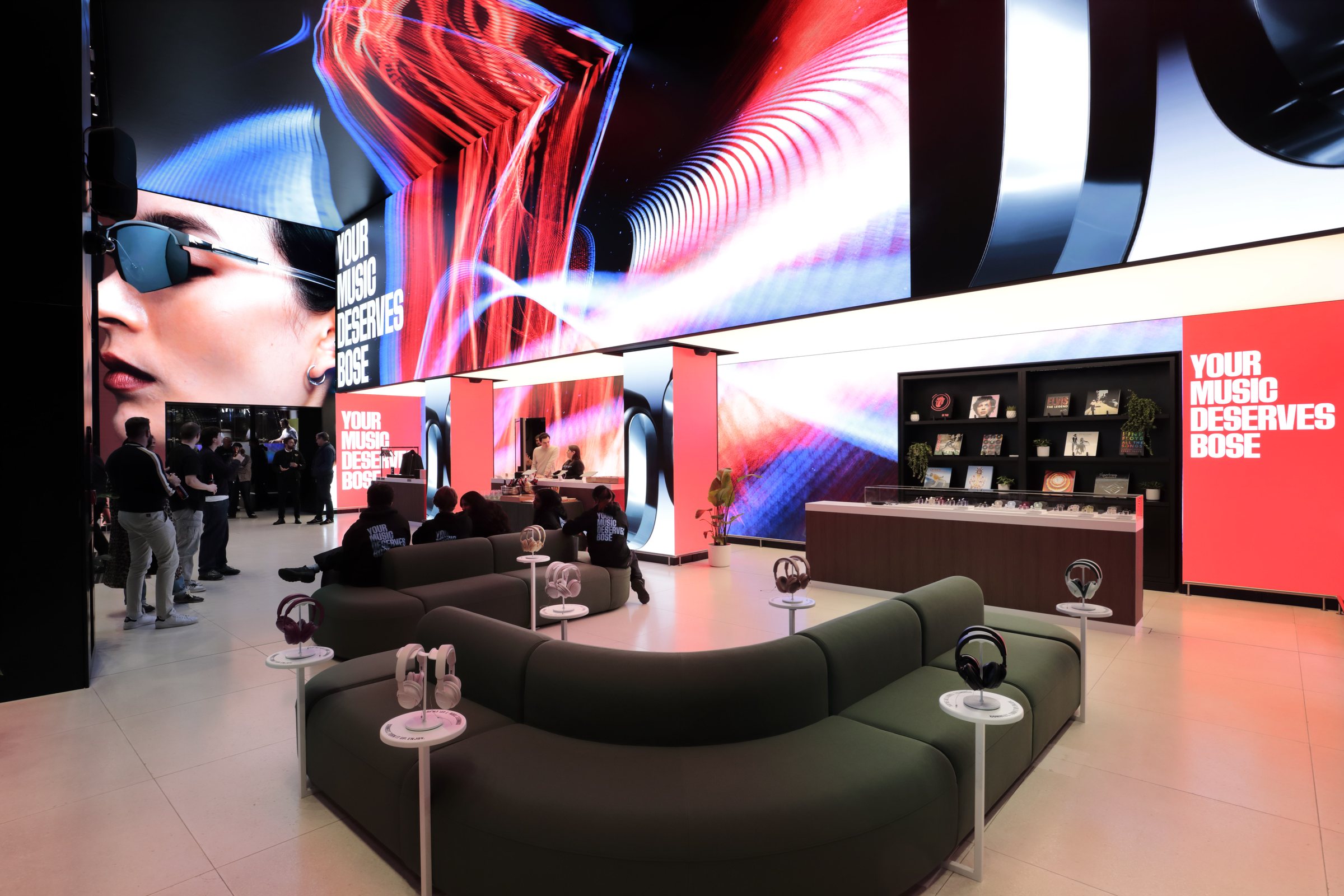
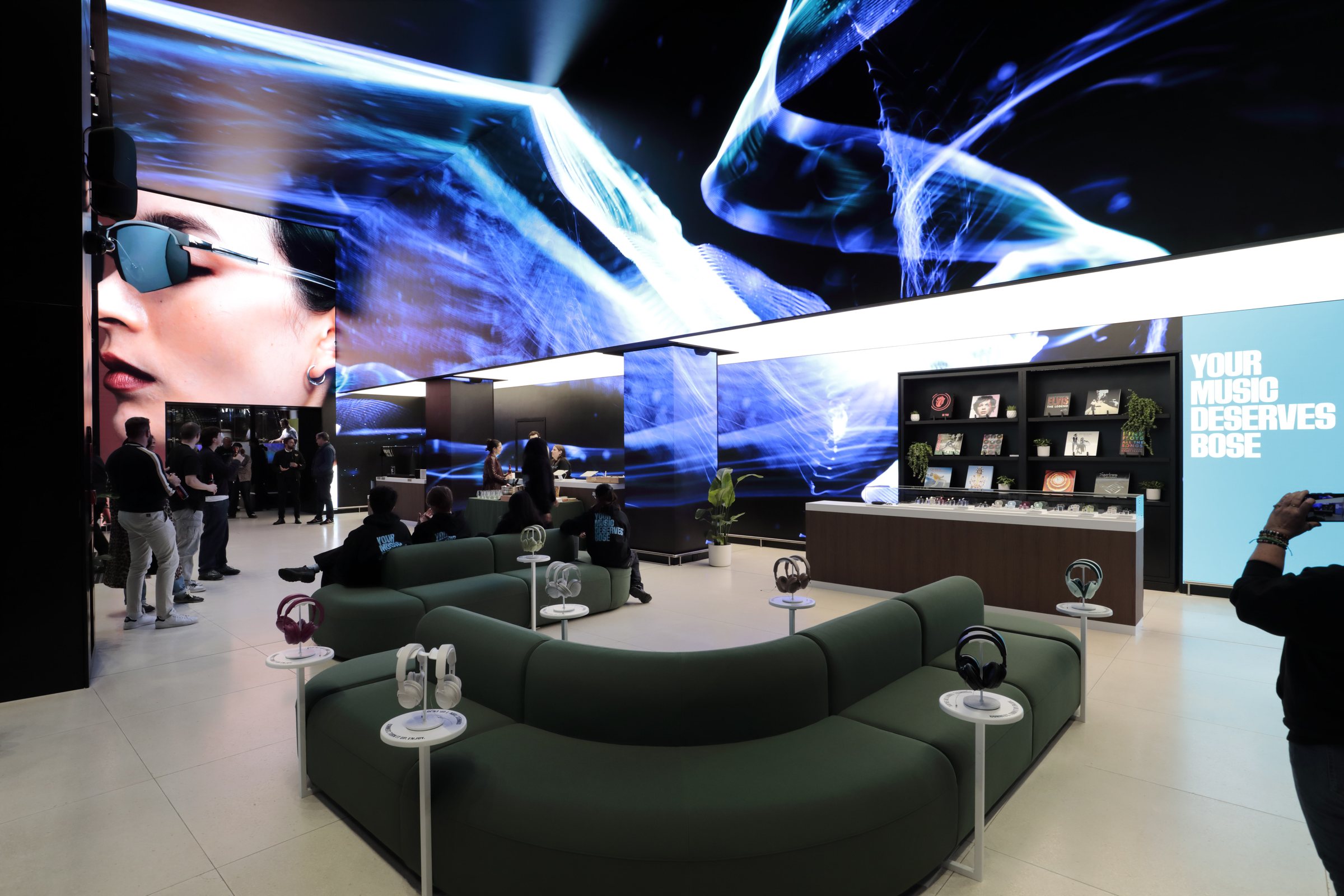
The same corner of Store B a moment later. The particles take their colour from whichever campaign film is playing.
The campaign, in the colour
Bose’s new campaign is built on bold, clashing colour pairs – blue and red, yellow and pale blue, green and pink – with short films for four of its newest headphones and earbuds. Big blocks of solid colour are the one thing the venue asks you to avoid, so the colour comes in through the films. The particles pick up the colour of whichever film is playing, and once the last one has finished they slowly cycle through the Bose palette.
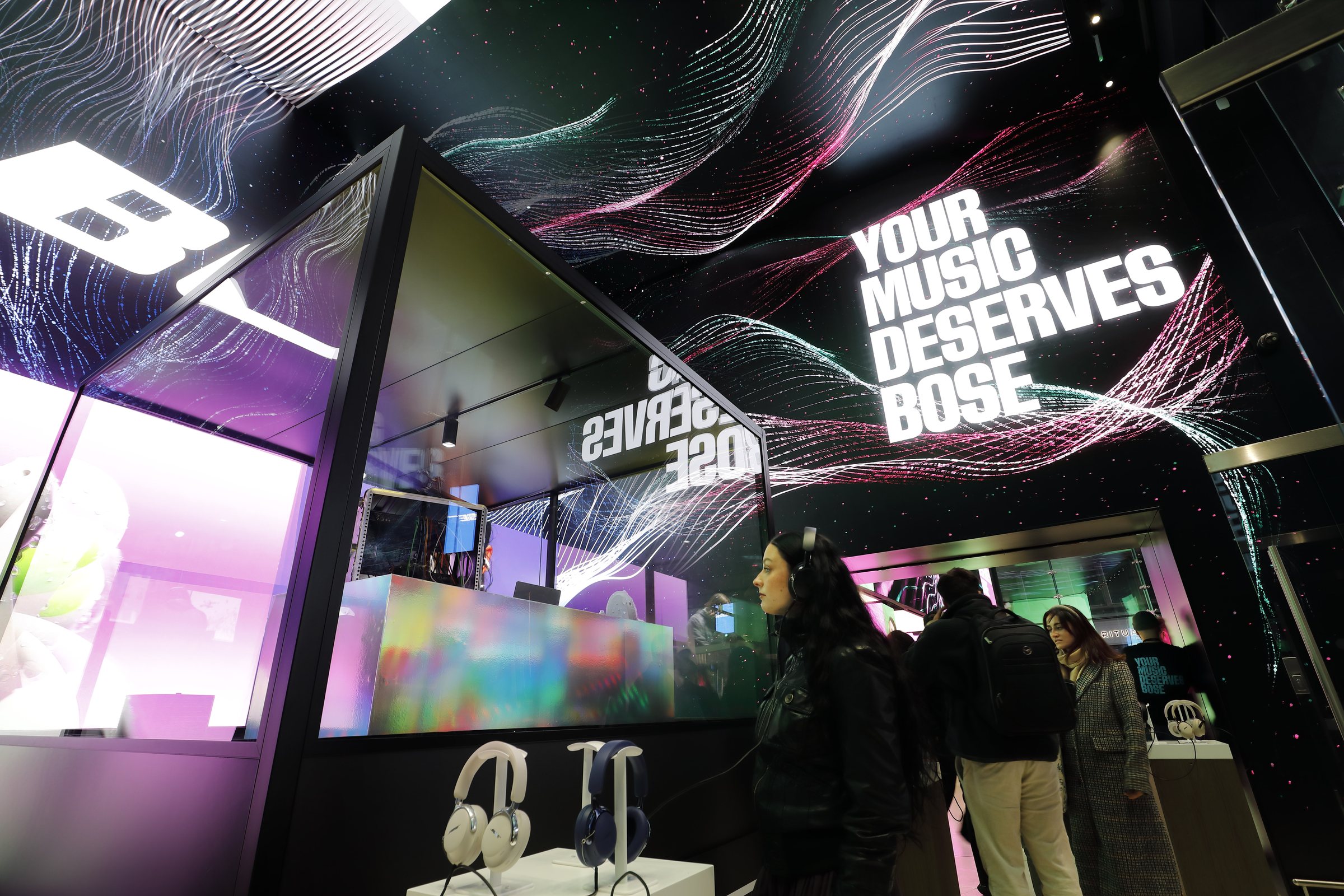
The films land on the beat, in different sizes and positions, and keep the middle of the room clear. Towards the end they build in from the outer walls towards the centre, Your Music Deserves Bose slides across the ceiling, and on the drop they all vanish at once.
The Silent Symphony room
Store A works differently. The performers in the glass box change through the day, and so does the music, so nothing on the walls could be cut to what they’re playing. The room is led by the campaign films instead, with lines and colour blocks around them taking their colour from whatever’s on, and four of the Store B particle scenes running across the walls and ceiling. That’s what ties the two rooms together. Walk through the archway and it still feels like one show.
The short version:
What nearly went wrong
Four weeks before opening, the show looked very different. We’d built particle versions of real places – a jungle, an underwater scene, a murmuration of starlings, a festival crowd. Bose came back and asked for something music-first, closer to the campaign, with no nature in it at all, in the picture or the sound. It was the right call. But it meant starting the show again with a month to go.
So we rebuilt it around a track. Less than two weeks later, Bose’s creative team in the US asked for more groove and a proper crescendo, and Henrik reworked the music again. None of that left much slack. The venue plays HAP files, a video format made for media servers, which just means very big files that play back smoothly at that size. They have to be exactly 30 frames a second, and each full render took about half a day, with another half to upload. The final files went up on the Saturday night before opening, and Future Stores’ technical team came in early on the Monday to load them.
The result
It opened on 2 November, looping all day across both rooms while the live sets carried on in the glass box. The experience ran for a full week.
Having been through it once, we now know those two rooms inside out: the pixel maps, the playback pipeline, and what the LEDs will and won’t take.
Services usedVFX ProductionInteractive Web Experiences
More work forDomes, LED and immersive roomsProduct launches and retail
Planning an immersive stand or room?
Tell us what you have in mind and we will reply within one working day.
Credits:
Creative direction: Henry Stuart. Producer: Anna Firbank. Lead motion design: Mo Mousavi. Original music and sound design: Henrik Oppermann. Agency: Burson. Build: Stitch. Venue and photography: Future Stores.