
3D Scanning
3D Scanning of Locations and Sets

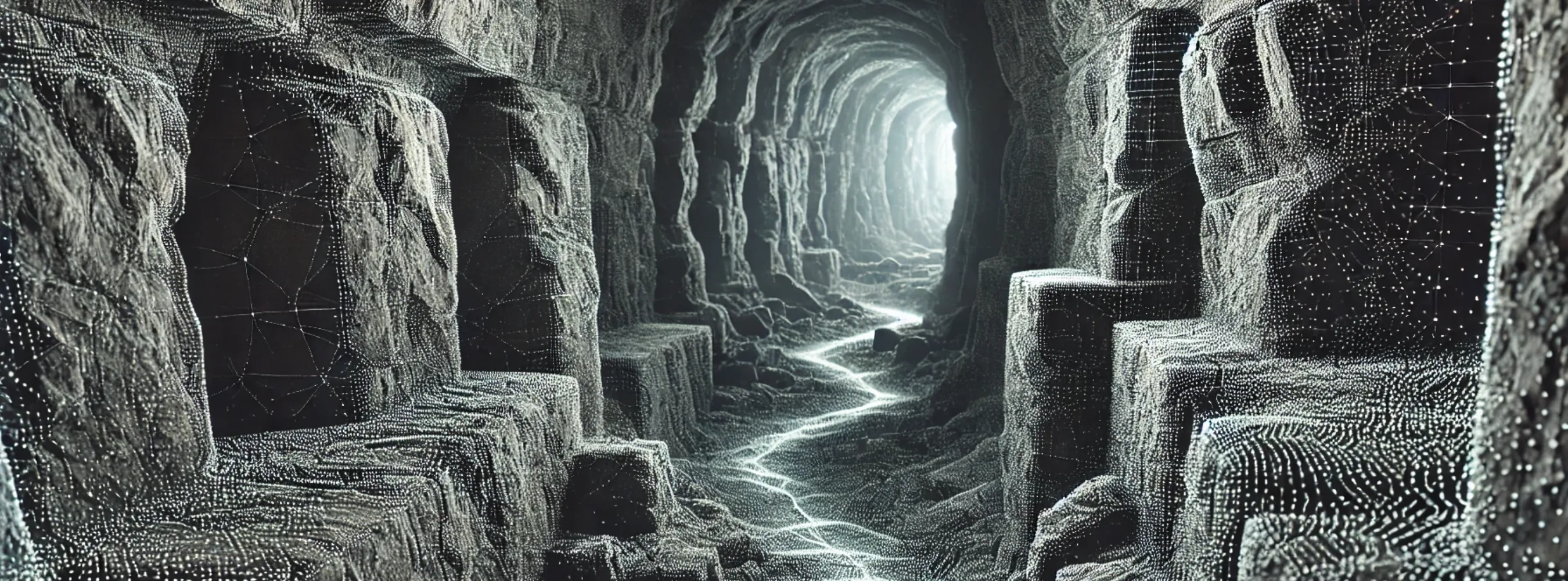
Visualise is able to offer high quality 3D scans of locations, sets, cultural heritage sites and many more locations where detailed digital twins are needed.
This content can be used in virtual production stages, in games, film, TV, VR and other immersive applications.
3D scanning usually requires the creation of a laser based point-cloud, which can vary in it’s density for practical or creative reasons.
Visualise are able to scan and post-produce detailed digital twins of locations. Lidar scans are combined with high resolution photos to create perfect digital versions of the real world.
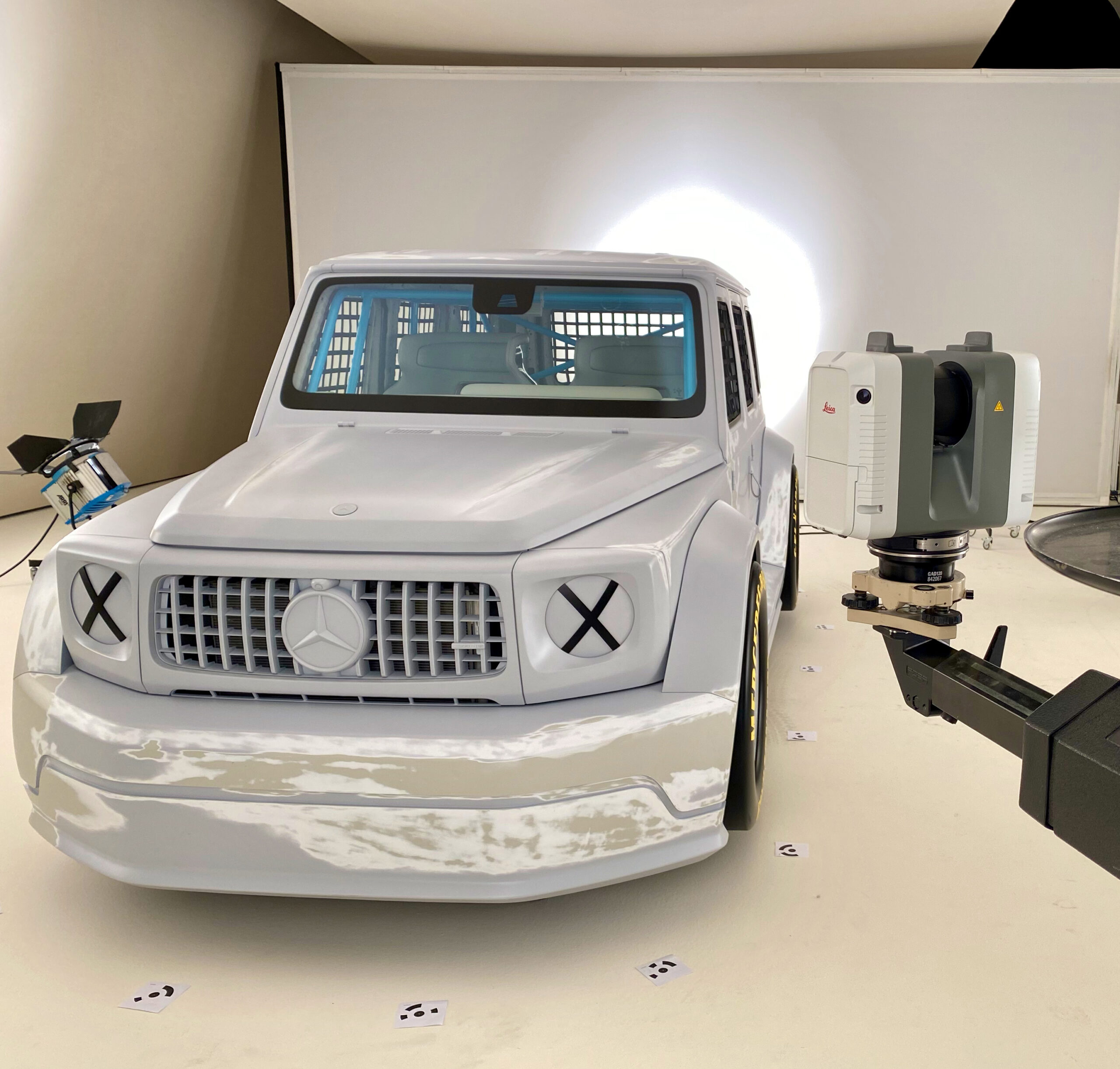
We have scanned sets, tunnels, woodlands, historical sites and even cars. This image to the left shows our scanning and photogrammetry of ‘Project Geländerwagen’ for Mercedes-Benz.
We scanned the car using the Leica RTC 360 and combined the scans with photos shot of the car from all angles. Reflective glass surfaces were then replaced in post production.
We’re fully versed in using Leica systems for point cloud and general scanning and then overlaying the models with detailed layers of photography (photogrammetry). We can make models the size of whole towns and can use the models in VR applications, 3D exploration online, as 3D prints or within 3D software for research.
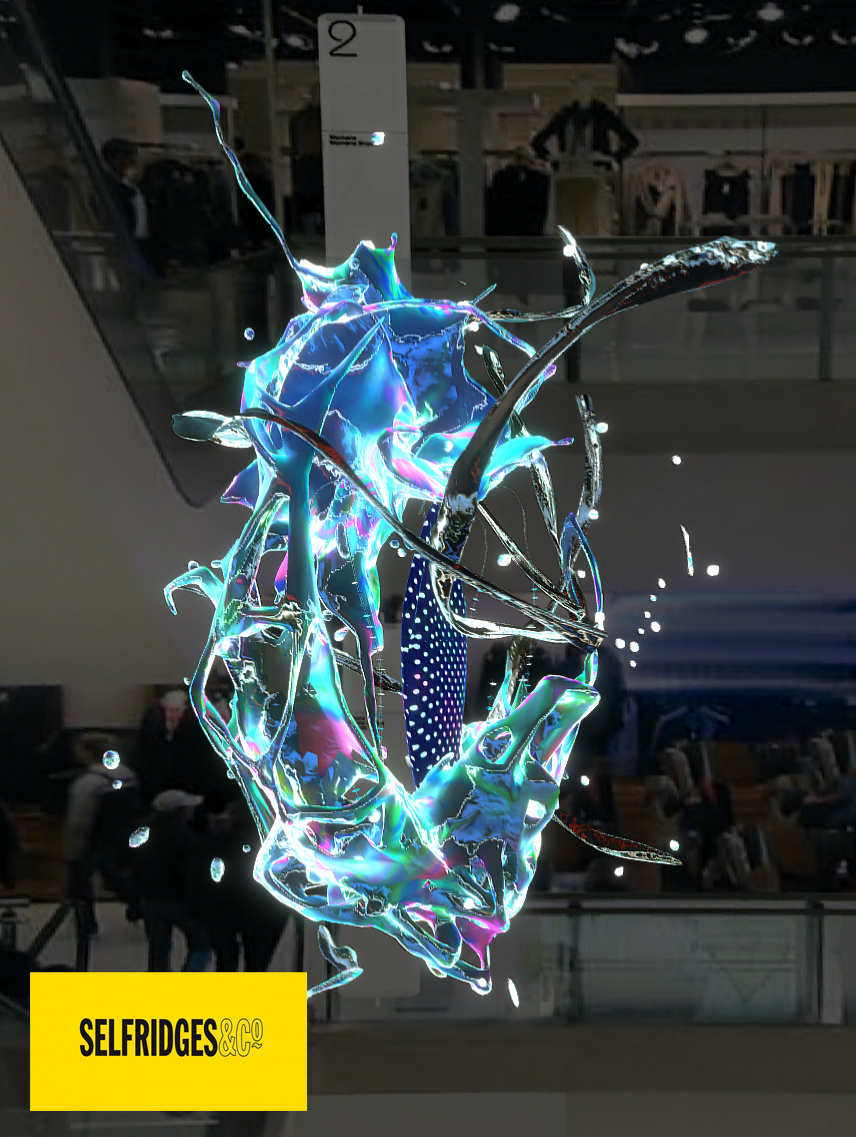
Selfridges ‘Digital Falls’
Working with the artist Jon Emmony we produced this digital, augmented reality, artwork for Selfridges London.
“The more intimate pieces on the lower ground floor enable visitors to have a very one-on-one experience with the artwork, while the gigantic pieces higher in the atrium emphasise the grand scale of the architecture that the artwork is designed for.”
Jon Emmony
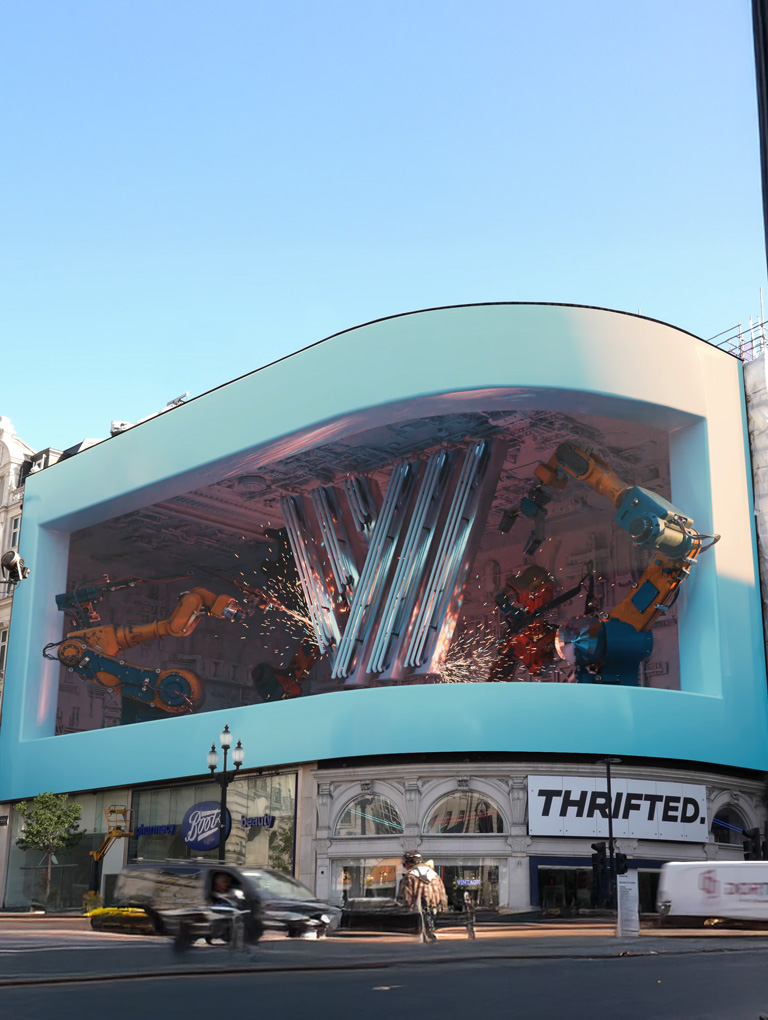
3D Billboard – Piccadilly Lights
Piccadilly Circus 3D Billboard Takeover by Visualise
“Visualise have been working on 'anamorphic' or 3D billboards. This test was done with Piccadilly Lights where we went on to complete the project for Fiona Banner - Disarm. ”
Henry Stuart
FAQs
What's the difference between 3D scanning and 360° photography?
A 3D scan captures the geometry of a space or object - a model you can move through, measure and relight - while 360° photography and film capture photographic views from fixed points. They solve different problems and we often combine them: photography for how a place really looks, scan data for how it fits together. Our virtual factory tour for Bentley shows where that kind of capture work ends up - a space people can genuinely explore.
What can we use a 3D scan for once you've captured it?
The same capture can feed several outputs: virtual tours and walkthroughs, digital twins for planning and training, environments for VFX and CG work, placement guides for augmented reality, and simply an archival record of a space at a moment in time. It is worth deciding the priority output before the shoot, because it changes how we capture.
How much does 3D scanning cost?
It depends on the size of the space, how much detail you need and how easy it is to get access. Scanning a single object is a very different job from scanning a working factory.
As a guide, scan-based virtual tours typically sit within our VR apps and virtual tours band of £25,000 to £70,000, excluding VAT. Registered non-profits receive a 20% discount.
How long does scanning take on site?
Usually less time than clients expect - a day or two for most spaces. The real work is in processing and quality control afterwards. The thing that most often delays a project is not the capture or the processing but approval cycles, so we plan those in from the start.
Are there spaces that don't scan well?
Yes, and we will tell you before you spend money. Glass, mirrors, water and highly reflective surfaces confuse most capture methods, and spaces full of moving people need careful planning or out-of-hours access. If we think your space is risky we will survey it first, and if the technique is genuinely unproven for your case we will propose a small paid test capture before you commit to the full job.
Other Services
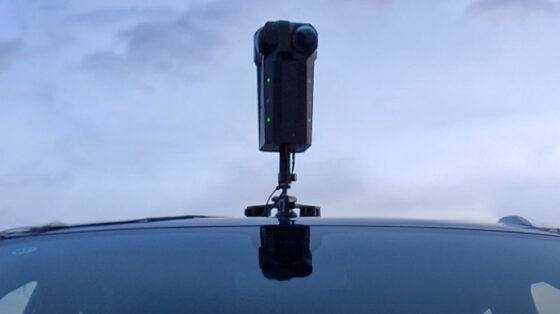
360° Video production
Live-action 360 that feels natural, looks premium, and is comfortable to watch. Shot mono or stereo with spatial audio, distributed where it works best - headsets, domes, LED, YouTube and socials.
Augmented Reality (AR)
From product try-ons to location takeovers. WebAR for reach, app AR for advanced features, social AR for shareability. We design to the real constraints so the experience actually lands.